




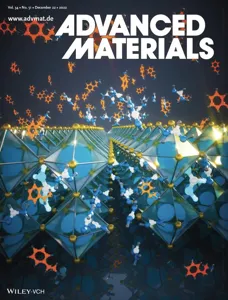
Elucidating the impact of A-site cation change on photocatalytic H2 and O2 evolution activities of perovskite-type LnTaON2 (Ln = La and Pr)
文献信息
发布日期
2017-07-31
DOI
10.1039/C7CP03714G
影响因子
3.676
作者
Maged F. Bekheet, Judy N. Hart, Junie Jhon M. Vequizo, Akira Yamakata, Kunio Yubuta, Aleksander Gurlo, Masashi Hasegawa, Kazunari Domen
查看原文
摘要
Transition metal (oxy)nitrides with perovskite-type structures have been regarded as one of the promising classes of inorganic semiconductor materials that can be used in solar water splitting systems for the production of hydrogen as a renewable and storable energy carrier. The performance of transition metal (oxy)nitrides in solar water splitting is strongly influenced by the crystal structure-related dynamics of photogenerated charge carriers. Here, we have systematically assessed the influence of A-site cation exchange on the visible-light-induced photocatalytic H2 and O2 evolution activities, photoanodic response, and dynamics of photogenerated charge carriers of perovskite-type LnTaON2 (Ln = La and Pr). The structural refinement results reveal the orthorhombic Imma and Pnma structures for LaTaON2 and PrTaON2, respectively; the latter has a more distorted crystal structure from the ideal cubic perovskite due to the smaller size of Pr3+ cations. Compared with LaTaON2, PrTaON2 exhibits lower photocatalytic H2 and O2 gas evolution activities and photoanodic response owing to an excessive amount of intrinsic defects associated with anionic vacancies and reduced tantalum species stemming from a long high-temperature nitridation process under reductive NH3 atmosphere. Transient absorption signals evidence the faster decay of photogenerated electrons (holes) in Pt (CoOx)-loaded LaTaON2 than that in Pt (CoOx)-loaded PrTaON2, consistent with the photocatalytic and photoelectrochemical performance of the two photocatalysts. This study suggests that in addition to selecting a suitable A-site cation, it is prerequisite to synthesize LnTaON2 (Ln = La and Pr) crystals with a low defect density to improve their photo-conversion efficiency for solar water splitting.
相关文献
Tailoring degree of esterification and branching of poly(glycerol sebacate) by energy efficient microwave irradiation
Chi Ching Lau, Mustafa Kemal Bayazit, Junwang Tang
2017-06-12
Paper
DOI: 10.1039/C7PY00862G
A three-dimensional porphyrin-based porous organic polymer with excellent biomimetic catalytic performance
Wei Zhu, Zheng-Dong Ding, Xuan Wang, Tao Li, Rui Shen, Yunxing Li, Zaijun Li, Xuehong Ren, Zhi-Guo Gu
2017-07-05
Communication
DOI: 10.1039/C7PY00876G
Oxygen tolerant photopolymerization for ultralow volumes
Robert Chapman
2017-02-16
Paper
DOI: 10.1039/C7PY00007C
Application of an addition–fragmentation-chain transfer monomer in di(meth)acrylate network formation to reduce polymerization shrinkage stress
Parag K. Shah, Christopher N. Bowman
2017-06-21
Paper
DOI: 10.1039/C7PY00702G
A facile route to well-defined imidazolium-based poly(ionic liquid)s of enhanced conductivity via RAFT
Karol Erfurt, Anna Chrobok, Andrzej Zięba
2017-08-02
Paper
DOI: 10.1039/C7PY01046J
Simultaneous enhancement of performance and insensitivity to active layer thickness for OPVs by functionalizing π-spacer's side chain
Fagui He, Jidong Zhang
2016-07-13
Paper
DOI: 10.1039/C6PY00920D
A degradable cross-linked polymer containing dynamic covalent selenide bond
Weihong Lu, Xiangqiang Pan, Zhengbiao Zhang, Jian Zhu, Nianchen Zhou, Xiulin Zhu
2017-06-01
Paper
DOI: 10.1039/C7PY00719A
您可能还喜欢
化合物问答
如何储存1,2-环己二酮环乙缩醛(CAS号:4746-96-7)?
1,2-环己二酮环乙缩醛应储存在阴凉、干燥、通风良好的地方,避免阳光直射。建议使用密封容器保存,并保持环境温度在室温范围内,远离火源和热源。
4746-96-71,4-Dioxaspiro[4.5]d...
化合物问答
Ecopladib(CAS号:381683-92-7)的市场或研究趋势如何?
Ecopladib作为一种新型的药物,主要应用于治疗高胆固醇等疾病。目前,市场和研究趋势显示,Ecopladib因其独特的药理作用而受到关注。随着对心血管疾病治...
381683-92-7Ecopladib
化合物问答
2,3-Dimethyl-3H-imidazo[4,5-c]pyridine(CAS号:52538-09-7)通常如何合成?
2,3-二甲基-3H-咪唑[4,5-c]吡啶通常通过咪唑和2,3-二甲基吡啶的缩合反应合成。具体来说,将咪唑和2,3-二甲基吡啶在适当的溶剂中进行加热或加压反应...
52538-09-72,3-Dimethyl-3H-imid...
化合物问答
2,3,4,5-tetrahydro-1H-3-苯并氮杂环;盐酸盐(CAS号:17379-01-0)的市场或研究趋势如何?
该化合物在药物化学和有机合成中有一定的应用。近年来,随着对新型药物化合物的需求增加,该化合物的研究趋势主要集中在探索其生物活性,尤其是其在神经系统疾病治疗中的潜...
17379-01-02,3,4,5-Tetrahydro-1...
68-90-6(2-Ethyl-1-benzofura...
化合物问答
如何储存盐酸甘氨酸丁酯(CAS号:13048-99-2)?
盐酸甘氨酸丁酯应储存在阴凉、干燥、通风良好的地方,避免阳光直射和高温环境,温度应控制在25℃以下。储存容器应密封,避免与空气中的水分和酸性物质接触,以防发生水解...
13048-99-2Butyl glycinate hydr...
化合物问答
什么是2-Iodo-N,N-dimethylbenzamide(CAS号:54616-46-5)?
2-碘-N,N-二甲基苯胺是一种有机化合物,化学名为2-Iodo-N,N-dimethylbenzamide。其分子式为C<sub>9</sub>H<sub>1...
54616-46-52-Iodo-N,N-dimethylb...
16817-90-6N-Cyclohexylglycinam...
化合物问答
5-溴-2-(4H-1,2,4-三唑-4-基)吡啶(CAS号:959240-99-4)的市场或研究趋势如何?
随着医药、农药和新材料领域的发展,该化合物作为关键中间体的应用日益增多。特别是在药物合成中,由于其独特的化学性质,可以用于合成多种药物分子。未来的研究趋势可能集...
959240-99-45-Bromo-2-(4H-1,2,4-...
化合物问答
2,4-二溴-6-三氟甲基嘧啶(CAS号:785778-00-9)通常如何合成?
2,4-二溴-6-三氟甲基嘧啶通常通过溴化反应合成。首先,将6-三氟甲基嘧啶与溴化剂(如液溴)在适当的溶剂(如二氯甲烷、四氢呋喃)中反应,加入适当的催化剂(如四...
785778-00-92,4-Dibromo-6-(trifl...
来源期刊
Physical Chemistry Chemical Physics

CiteScore:
5.5
自引率:
10.3%
年发文量:
3036
Physical Chemistry Chemical Physics (PCCP) is an international journal co-owned by 19 physical chemistry and physics societies from around the world. This journal publishes original, cutting-edge research in physical chemistry, chemical physics and biophysical chemistry. To be suitable for publication in PCCP, articles must include significant innovation and/or insight into physical chemistry; this is the most important criterion that reviewers and Editors will judge against when evaluating submissions. The journal has a broad scope and welcomes contributions spanning experiment, theory, computation and data science. Topical coverage includes spectroscopy, dynamics, kinetics, statistical mechanics, thermodynamics, electrochemistry, catalysis, surface science, quantum mechanics, quantum computing and machine learning. Interdisciplinary research areas such as polymers and soft matter, materials, nanoscience, energy, surfaces/interfaces, and biophysical chemistry are welcomed if they demonstrate significant innovation and/or insight into physical chemistry. Joined experimental/theoretical studies are particularly appreciated when complementary and based on up-to-date approaches.
推荐化合物
![3,3-Dimethyl-1-{[(2-methyl-2-propanyl)oxy]carbonyl}-L-proline structure](https://cnstatic.chemtradehub.com/structs/174/174060-98-1-5268.webp "3,3-Dimethyl-1-{[(2-methyl-2-propanyl)oxy]carbonyl}-L-proline structure")
推荐供应商






免责声明
本页面提供的学术期刊信息仅供参考和研究使用。我们与任何期刊出版商均无关联,也不处理投稿事宜。如有投稿相关咨询,请直接联系相关期刊出版商。
如发现页面信息有误,请发送邮件至 support@chemtradehub.com 联系我们。我们将及时核实并处理您的问题。