









![2,2,2-Trifluoro-N-[(1S)-1-phenylethyl]acetamide structure](https://cnstatic.chemtradehub.com/structs/399/39995-51-2-8484.webp "2,2,2-Trifluoro-N-[(1S)-1-phenylethyl]acetamide structure")
Silica nanoparticle monolayers on a macroion modified surface: formation mechanism and stability
文献信息
发布日期
2017-07-27
DOI
10.1039/C7CP03876C
影响因子
3.676
作者
M. Morga, Z. Adamczyk, D. Kosior
查看原文
摘要
Even though silica nanoparticles and their monolayers find a broad field of applications, only a few studies providing a quantitative description of silica nanoparticle deposition at solid/liquid interfaces have been reported in the literature. Given the deficit of reliable experimental data, the goal of this work is to acquire thorough physicochemical characteristics of amorphous silica nanoparticle deposition. Silica nanoparticle monolayers of controlled coverage were formed on macroion (PAH)-modified mica. The size of the particles determined by dynamic light scattering (DLS), atomic force microscopy (AFM) and scanning electron microscopy (SEM) was equal to 28 nm. The electrophoretic mobility and the zeta potential of the particles were also determined as a function of ionic strength and pH. Using a well-defined suspension, systematic studies of particle deposition kinetics were carried out. The coverage of the self-assembled particle monolayers was determined by AFM and SEM imaging. Particle deposition was carried out under diffusion controlled transport conditions. For long deposition times, the saturation coverage was attained, systematically increasing with ionic strength up to 0.48 for I = 0.15 M NaCl. The deposition kinetic runs were adequately interpreted using the random sequential adsorption (RSA) model. This model was also used to determine the specific density of silica particles that confirmed their porous structure. In addition, the particle desorption kinetics was studied using AFM and SEM methods. It was confirmed that silica nanoparticle desorption was negligible within the time period of 60 hours. Our experimental data proved, therefore, that it is feasible to produce uniform and stable silica particle monolayers of desired coverage in the self-assembly processes, controlled by the bulk suspension concentration and the ionic strength. Such monolayers may find practical applications as substrates for selective protein and nanoparticle deposition, or various catalytic applications.
相关文献
Effect of trehalose polymer regioisomers on protein stabilization
M. Jane Strouse
2017-07-03
Paper
DOI: 10.1039/C7PY00700K
Amphiphilic dendrons with a pyrene functional group at the focal point: synthesis, self-assembly and generation-dependent DNA condensation
Yi Han, Bo Zhu, Ying Chen, Zhishan Bo, Yulan Chen
2017-07-26
Paper
DOI: 10.1039/C7PY01052D
Aqueous RAFT at pH zero: enabling controlled polymerization of unprotected acyl hydrazide methacrylamides
Emily A. Hoff, Brooks A. Abel, Chase A. Tretbar, Charles L. McCormick, Derek L. Patton
2016-10-17
Communication
DOI: 10.1039/C6PY01563H
Long-subchain Janus-dendritic copolymers from locally confined click reaction and generation-dependent micro-phase separation
Peng-Yun Li, Jia-Min Li, Lian-Wei Li, Xiao-Dong Ye, Wei-Dong He
2017-06-06
Paper
DOI: 10.1039/C7PY00551B
Thermoresponsivity of polymer solution derived from a self-attractive urea unit and a self-repulsive lipophilic ion unit
Shogo Amemori, Kazuya Iseda, Shizuka Anan, Toshikazu Ono
2017-06-12
Paper
DOI: 10.1039/C7PY00591A
Ring-expansion cationic polymerization of vinyl ethers
Makoto Ouchi, Hajime Kammiyada, Mitsuo Sawamoto
2017-06-06
Minireview
DOI: 10.1039/C7PY00638A
Phenyl acrylate is a versatile monomer for the synthesis of acrylic diblock copolymer nano-objects via polymerization-induced self-assembly
S. L. Canning, V. J. Cunningham, L. P. D. Ratcliffe, S. P. Armes
2017-07-25
Paper
DOI: 10.1039/C7PY01161J
Injectable cationic hydrogels with high antibacterial activity and low toxicity
Hong Du, Xuxia Yao, Xiaodong Li, Zhiquan Shen
2016-08-17
Communication
DOI: 10.1039/C6PY01346E
Well-defined triblock copolymers of polyethylene with polycaprolactone or polystyrene using a novel difunctional polyhomologation initiator
Reem A. Alshumrani, Nikos Hadjichristidis
2017-08-04
Paper
DOI: 10.1039/C7PY01079F
您可能还喜欢
化合物问答
如何储存1,2-环己二酮环乙缩醛(CAS号:4746-96-7)?
1,2-环己二酮环乙缩醛应储存在阴凉、干燥、通风良好的地方,避免阳光直射。建议使用密封容器保存,并保持环境温度在室温范围内,远离火源和热源。
4746-96-71,4-Dioxaspiro[4.5]d...
化合物问答
Ecopladib(CAS号:381683-92-7)的市场或研究趋势如何?
Ecopladib作为一种新型的药物,主要应用于治疗高胆固醇等疾病。目前,市场和研究趋势显示,Ecopladib因其独特的药理作用而受到关注。随着对心血管疾病治...
381683-92-7Ecopladib
化合物问答
2,3-Dimethyl-3H-imidazo[4,5-c]pyridine(CAS号:52538-09-7)通常如何合成?
2,3-二甲基-3H-咪唑[4,5-c]吡啶通常通过咪唑和2,3-二甲基吡啶的缩合反应合成。具体来说,将咪唑和2,3-二甲基吡啶在适当的溶剂中进行加热或加压反应...
52538-09-72,3-Dimethyl-3H-imid...
化合物问答
2,3,4,5-tetrahydro-1H-3-苯并氮杂环;盐酸盐(CAS号:17379-01-0)的市场或研究趋势如何?
该化合物在药物化学和有机合成中有一定的应用。近年来,随着对新型药物化合物的需求增加,该化合物的研究趋势主要集中在探索其生物活性,尤其是其在神经系统疾病治疗中的潜...
17379-01-02,3,4,5-Tetrahydro-1...
68-90-6(2-Ethyl-1-benzofura...
化合物问答
如何储存盐酸甘氨酸丁酯(CAS号:13048-99-2)?
盐酸甘氨酸丁酯应储存在阴凉、干燥、通风良好的地方,避免阳光直射和高温环境,温度应控制在25℃以下。储存容器应密封,避免与空气中的水分和酸性物质接触,以防发生水解...
13048-99-2Butyl glycinate hydr...
化合物问答
什么是2-Iodo-N,N-dimethylbenzamide(CAS号:54616-46-5)?
2-碘-N,N-二甲基苯胺是一种有机化合物,化学名为2-Iodo-N,N-dimethylbenzamide。其分子式为C<sub>9</sub>H<sub>1...
54616-46-52-Iodo-N,N-dimethylb...
16817-90-6N-Cyclohexylglycinam...
化合物问答
5-溴-2-(4H-1,2,4-三唑-4-基)吡啶(CAS号:959240-99-4)的市场或研究趋势如何?
随着医药、农药和新材料领域的发展,该化合物作为关键中间体的应用日益增多。特别是在药物合成中,由于其独特的化学性质,可以用于合成多种药物分子。未来的研究趋势可能集...
959240-99-45-Bromo-2-(4H-1,2,4-...
化合物问答
2,4-二溴-6-三氟甲基嘧啶(CAS号:785778-00-9)通常如何合成?
2,4-二溴-6-三氟甲基嘧啶通常通过溴化反应合成。首先,将6-三氟甲基嘧啶与溴化剂(如液溴)在适当的溶剂(如二氯甲烷、四氢呋喃)中反应,加入适当的催化剂(如四...
785778-00-92,4-Dibromo-6-(trifl...
来源期刊
Physical Chemistry Chemical Physics

CiteScore:
5.5
自引率:
10.3%
年发文量:
3036
Physical Chemistry Chemical Physics (PCCP) is an international journal co-owned by 19 physical chemistry and physics societies from around the world. This journal publishes original, cutting-edge research in physical chemistry, chemical physics and biophysical chemistry. To be suitable for publication in PCCP, articles must include significant innovation and/or insight into physical chemistry; this is the most important criterion that reviewers and Editors will judge against when evaluating submissions. The journal has a broad scope and welcomes contributions spanning experiment, theory, computation and data science. Topical coverage includes spectroscopy, dynamics, kinetics, statistical mechanics, thermodynamics, electrochemistry, catalysis, surface science, quantum mechanics, quantum computing and machine learning. Interdisciplinary research areas such as polymers and soft matter, materials, nanoscience, energy, surfaces/interfaces, and biophysical chemistry are welcomed if they demonstrate significant innovation and/or insight into physical chemistry. Joined experimental/theoretical studies are particularly appreciated when complementary and based on up-to-date approaches.
推荐化合物
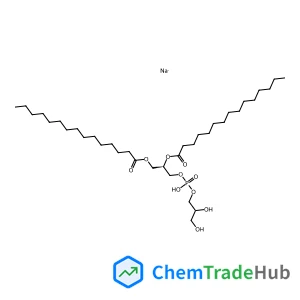
1,2-dipentadecanoyl-sn-glycero-3-phospho-(1'-rac-glycerol) (sodiuM salt)
CAS号:
322647-32-5
分子式:
C36H71NaO10P
![2-Methyl-2-propanyl 3-(2-{2-[(4-formylbenzoyl)amino]ethoxy}ethoxy)propanoate structure](https://cnstatic.chemtradehub.com/structs/180/1807521-09-0-71f3.webp "2-Methyl-2-propanyl 3-(2-{2-[(4-formylbenzoyl)amino]ethoxy}ethoxy)propanoate structure")
推荐供应商






免责声明
本页面提供的学术期刊信息仅供参考和研究使用。我们与任何期刊出版商均无关联,也不处理投稿事宜。如有投稿相关咨询,请直接联系相关期刊出版商。
如发现页面信息有误,请发送邮件至 support@chemtradehub.com 联系我们。我们将及时核实并处理您的问题。