








![5-Methyl-4,5,6,7-tetrahydropyrazolo[1,5-a]pyrazin-2-amine structure](https://cnstatic.chemtradehub.com/structs/122/1227210-33-4-8d64.webp "5-Methyl-4,5,6,7-tetrahydropyrazolo[1,5-a]pyrazin-2-amine structure")
Nonequilibrium self-assembly induced Liesegang rings in a non-isothermal system
文献信息
发布日期
2018-01-25
DOI
10.1039/C7CP08469B
影响因子
3.676
作者
Andrés Arango-Restrepo, Daniel Barragán, J. Miguel Rubi
查看原文
摘要
We propose a model to show the formation of Liesegang rings under non-isothermal conditions. The model formulates reaction–diffusion equations for all components intervening in the process together with an evolution equation for the temperature. The reactive parts in these equations follow from the analysis of the non-equilibrium self-assembly (NESA) process undergone by the meso-particles which make up the patterns. The solution of these equations enables us to know the concentration of each component, the spherical structures diameter, and the system temperature as a function of time and radial position. The values found for the structures diameter and the rings position are in agreement with the experiments. The results for the system temperature with peaks at the rings positions suggest that heat accumulates at these positions as a consequence of the dissipation inherent to the NESA process. Our model enables us to rationalize how from non-homogeneous initial conditions a transient self-organization process involving formation of self-assembled structures may produce macroscopic patterns. It can, in general, be used to analyze pattern formation due to diffusion–reaction–precipitation processes with potential applications in the design of advanced materials.
相关文献
A red-emitting fluorescent probe for the detection of Hg2+ in aqueous medium, living cells and organisms with a large Stokes shift
Lei Yang, Yuanan Su, Yani Geng, Haiqing Xiong, Jinliang Han, Qian Fang, Xiangzhi Song
2018-06-20
Paper
DOI: 10.1039/C8OB00831K
Recent developments and applications of cyanamides in electrophilic cyanation
Manthena Chaitanya, Pazhamalai Anbarasan
2018-08-31
Review Article
DOI: 10.1039/C8OB01770K
Rationalisation of a mechanism for sensing single point variants in target DNA using anthracene-tagged base discriminating probes
Jean-Louis H. A. Duprey, Dario M. Bassani, Eva I. Hyde, Gediminas Jonusauskas, Christian Ludwig, Alison Rodger, Neil Spencer, Joseph S. Vyle, John Wilkie, Zheng-Yun Zhao, James H. R. Tucker
2018-08-15
Paper
DOI: 10.1039/C8OB01710G
Converting a weaker ATP-binding site inhibitor into a potent hetero-bivalent ligand by tethering to a unique peptide sequence derived from the same kinase
Samanth Reddy Kedika
2018-08-17
Paper
DOI: 10.1039/C8OB01406J
Tandem radical cyclization of N-methacryloyl benzamides with CBr4 to construct brominated isoquinolinediones
Songhai Huang, Pengfei Niu, Yingpeng Su, Dongcheng Hu, Congde Huo
2018-10-02
Paper
DOI: 10.1039/C8OB01964A
Silver-catalyzed regioselective hydroamination of alkenyl diazoacetates to synthesize γ-amino acid equivalents
Jun Ueda, Shingo Harada, Hiroki Nakayama
2018-06-06
Paper
DOI: 10.1039/C8OB00894A
Organocatalysis and catalyst aggregation: a study using the asymmetric synthesis of benzofuranones as a test reaction
Luca Massaro, Antonio Puglisi, Lucrezia Angelini, Achille Antenucci, Simone Placidi, Fabio Sciubba, Luciano Galantini, Marco Bella
2018-09-12
Paper
DOI: 10.1039/C8OB01772G
Diastereoselective construction of pyrrolo[2,1-a]isoquinoline-based bispirooxindoles through a three-component [3 + 2] cycloaddition
Jiaomei Guo, Yang Zhao, Dongmei Fang, Qilin Wang, Zhanwei Bu
2018-08-03
Paper
DOI: 10.1039/C8OB01493K
I2-Triggered N–O cleavage of ketoxime acetates for the synthesis of 3-(4-pyridyl)indoles
Qinghe Gao, Yakun Wang, Qianqian Wang, Yanping Zhu, Zhaomin Liu, Jixia Zhang
2018-11-01
Paper
DOI: 10.1039/C8OB02230E
Visible light catalyzed reaction of α-bromochalcones with chalcones: direct access to the urundeuvine scaffold
Ruchir Kant
2018-09-24
Paper
DOI: 10.1039/C8OB01881B
您可能还喜欢
化合物问答
3 - (二氟甲基)-1 -氟苯(CAS号:26029-52-7)适用哪些法规指南?
3 - (二氟甲基)-1 -氟苯需遵循联合国全球化学品统一分类和标签制度(GHS),包括急性毒性、皮肤腐蚀/刺激、严重眼损伤/眼刺激等分类。同时,该化合物还需符...
26029-52-71-(Difluoromethyl)-3...
化合物问答
3,5-二甲基苯胺(CAS号:108-69-0)通常如何合成?
3,5-二甲基苯胺通常通过乙苯的氨解反应合成。反应中使用硫酸作为催化剂,反应温度为120-130°C。乙苯在硫酸存在下与氨反应,生成3,5-二甲基苯胺和苯胺副产...
108-69-03,5-Dimethylaniline
化合物问答
3-甲基异噻唑-5-胺(CAS号:24340-76-9)安全吗?
3-甲基异噻唑-5-胺在适当使用和储存条件下是相对安全的,但在操作时应注意防护措施。应避免吸入粉尘,避免与皮肤和眼睛直接接触。在操作过程中,应穿戴适当的防护装备...
24340-76-93-Methyl-1,2-thiazol...
化合物问答
3-(1,3-Thiazol-2-yl)-1H-indole(CAS号:135531-86-1)通常如何合成?
3-(1,3-噻唑-2-基)-1H-吲哚通常通过多步合成方法制备。首先,由噻唑-2-基溴化物和吲哚进行偶联反应,得到中间体。然后,通过还原反应将中间体转化为所需...
135531-86-13-(1,3-Thiazol-2-yl)...
化合物问答
4-溴-2-氟苯甲基氯(CAS号:85510-82-3)的主要用途是什么?
4-溴-2-氟苯甲基氯主要用于有机合成中间体,特别是在医药、农药和染料等领域。作为一种具有特定结构的化合物,它在合成复杂有机分子时扮演重要角色。
85510-82-34-Bromo-1-(chloromet...
化合物问答
处理Fmoc-β-(3-噻吩基)-D-Ala-OH(CAS号:220497-90-5)时应注意哪些实验室安全事项?
处理Fmoc-β-(3-噻吩基)-D-Ala-OH时,应佩戴防护手套、护目镜和实验服。操作应在通风橱内进行。如发生泄露,应立即用大量水冲洗,并通知实验室管理人员...
220497-90-5N-[(9H-Fluoren-9-ylm...
化合物问答
氮化硅(CAS号:12033-89-5)通常如何合成?
氮化硅通常通过氮化硅的直接反应合成,即在高温下将四氯化硅与氨气反应。具体步骤是将四氯化硅和氨气混合并加热至1300-1700℃,在该条件下,四氯化硅与氨气反应生...
12033-89-5Trisilicon tetranitr...
化合物问答
Cetirizine EP Impurity B DiHCl(CAS号:1000690-91-4)通常如何合成?
Cetirizine EP Impurity B DiHCl通常通过一锅法合成,首先将4-氯苯基-苯甲基氯甲酸酯与1-哌嗪乙酸反应,生成相应的酸,然后与盐酸反应...
1000690-91-4{4-[(4-Chlorophenyl)...
化合物问答
如何储存1-哌啶-4-基丁-1-酮(CAS号:3509-15-7)?
1-哌啶-4-基丁-1-酮应储存在阴凉、干燥的地方,避免阳光直射。存储容器应密封,并确保通风良好。建议储存温度不超过25℃,湿度保持在相对较低的水平。
3509-15-71-Piperidin-4-ylbuta...
化合物问答
如何处理含有VORUCICLIB(CAS号:1000023-04-0)的废料?
含有VORUCICLIB的废料应进行专业的收集和处理,包括使用适当的容器进行隔离,避免与其他化学品接触。处理方法通常包括化学中和、沉淀反应或吸附过程,随后进行焚...
1000023-04-02-[2-Chloro-4-(trifl...
来源期刊
Physical Chemistry Chemical Physics

CiteScore:
5.5
自引率:
10.3%
年发文量:
3036
Physical Chemistry Chemical Physics (PCCP) is an international journal co-owned by 19 physical chemistry and physics societies from around the world. This journal publishes original, cutting-edge research in physical chemistry, chemical physics and biophysical chemistry. To be suitable for publication in PCCP, articles must include significant innovation and/or insight into physical chemistry; this is the most important criterion that reviewers and Editors will judge against when evaluating submissions. The journal has a broad scope and welcomes contributions spanning experiment, theory, computation and data science. Topical coverage includes spectroscopy, dynamics, kinetics, statistical mechanics, thermodynamics, electrochemistry, catalysis, surface science, quantum mechanics, quantum computing and machine learning. Interdisciplinary research areas such as polymers and soft matter, materials, nanoscience, energy, surfaces/interfaces, and biophysical chemistry are welcomed if they demonstrate significant innovation and/or insight into physical chemistry. Joined experimental/theoretical studies are particularly appreciated when complementary and based on up-to-date approaches.
推荐化合物
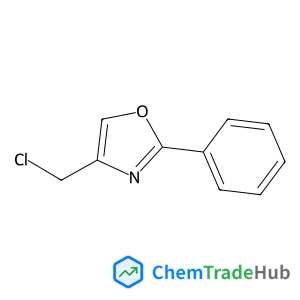
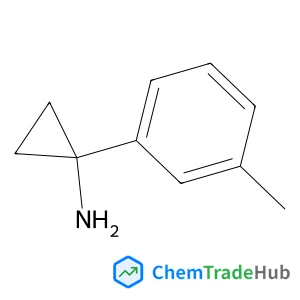
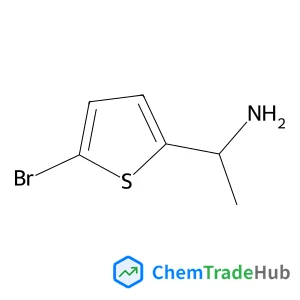
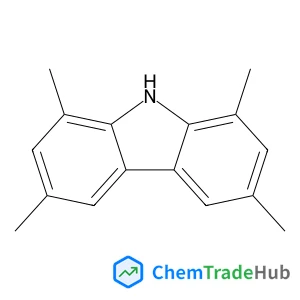
推荐供应商




免责声明
本页面提供的学术期刊信息仅供参考和研究使用。我们与任何期刊出版商均无关联,也不处理投稿事宜。如有投稿相关咨询,请直接联系相关期刊出版商。
如发现页面信息有误,请发送邮件至 support@chemtradehub.com 联系我们。我们将及时核实并处理您的问题。