


Looped flow RAFT polymerization for multiblock copolymer synthesis
文献信息
发布日期
2017-05-12
DOI
10.1039/C7PY00630F
影响因子
5.582
作者
Agnès Kuroki, Ivan Martinez-Botella, Christian H. Hornung, Liam Martin, Elizabeth G. L. Williams, Katherine E. S. Locock, Matthias Hartlieb
查看原文
摘要
A looped flow process was designed for the synthesis of well-defined multiblock copolymers using reversible addition–fragmentation chain transfer (RAFT) polymerization. The reaction conditions were optimized to reach high conversions whilst maintaining a high end-group fidelity. The loop set-up proved to be a flexible, robust and time-efficient process for scaling-up multiblock copolymers.
期刊推荐
Nature
Journal of Physics and Chemistry of Solids
Fibre Chemistry

Journal of Organometallic Chemistry
Russian Chemical Reviews

Science Progress
Pure and Applied Chemistry

Journal of Catalysis

Organic Preparations and Procedures International

Proceedings of the National Academy of Sciences of the United States of America
相关文献
Benchmark thermochemistry of chloramines, bromamines, and bromochloramines: halogen oxidants stabilized by electron correlation
Daniela Trogolo, J. Samuel Arey
2015-01-02
Paper
DOI: 10.1039/C4CP03987D
Oxygen reduction reaction on neighboring Fe–N4 and quaternary-N sites of pyrolized Fe/N/C catalyst
Adhitya G. Saputro
2014-12-03
Paper
DOI: 10.1039/C4CP04811C
How is the AIE mechanism profoundly changed in an ESIPT family: the novel introduction of a tetraphenylethene group onto (Z)-3-(quinolin-2-ylmethylene)-3,4-dihydroquinoxalin-2(1H)-one
Ding-Er Wu, Qi-Chao Yao, Min Xia
2014-12-19
Paper
DOI: 10.1039/C4CP03963G
An equation to calculate internuclear distances of covalent, ionic and metallic lattices
Peter F. Lang, Barry C. Smith
2014-12-16
Paper
DOI: 10.1039/C4CP05135A
Exploring the binding mechanisms of MIF to CXCR2 using theoretical approaches
Lei Xu, Youyong Li, Dan Li, Peng Xu, Sheng Tian, Huiyong Sun, Hui Liu, Tingjun Hou
2014-12-11
Paper
DOI: 10.1039/C4CP05095A
Probing a chemical compass: novel variants of low-frequency reaction yield detected magnetic resonance
Kiminori Maeda, Jonathan G. Storey, Paul A. Liddell, Devens Gust, P. J. Hore, C. J. Wedge, Christiane R. Timmel
2014-12-24
Paper
DOI: 10.1039/C4CP04095C
Unraveling the degradation of artificial amide bonds in nylon oligomer hydrolase: from induced-fit to acylation processes
Takeshi Baba, Mauro Boero, Katsumasa Kamiya, Hiroyuki Ando, Seiji Negoro, Masayoshi Nakano
2014-12-18
Paper
DOI: 10.1039/C4CP04419C
Nanometer-sized dynamic entities in an aqueous system
E. Mamontov, P. Zolnierczuk, M. Ohl
2015-01-05
Paper
DOI: 10.1039/C4CP05081A
Reporter-encapsulated liposomes on graphene field effect transistors for signal enhanced detection of physiological enzymes
Mark Platt
2014-12-11
Paper
DOI: 10.1039/C4CP04644G
Topological states modulation of Bi and Sb thin films by atomic adsorption
Hongmei Liu, Xiaoli Wang, Guangliang Cui, Pinhua Zhang, Dapeng Zhao, Shuaihua Ji
2014-12-10
Paper
DOI: 10.1039/C4CP04502E
您可能还喜欢
化合物问答
6-氯-2H-1,4-苯并噁嗪-3(4H)-酮(CAS号:7652-29-1)应用于哪些行业?
6-氯-2H-1,4-苯并噁嗪-3(4H)-酮主要应用于医药、农药和聚合物等领域。在医药领域,该化合物可用于合成抗菌药物;在农药领域,可用作杀虫剂的中间体;在聚...
7652-29-16-Chloro-2H-1,4-benz...
化合物问答
活性氧化铝(CAS号:1302-74-5)应用于哪些行业?
活性氧化铝广泛应用于医药、聚合物、传感器、半导体和催化等领域。在医药行业,活性氧化铝用作吸附剂和干燥剂,有助于去除杂质和水分。在聚合物行业,它用作增白剂和抗结块...
1302-74-5aluminum;trihydrate
化合物问答
什么是硅胶(CAS号:112926-00-8)?
硅胶(Silica gel, pptd.,cryst.-free)是一种无定形、多孔的硅酸盐材料,主要成分为二氧化硅(SiO₂)。其结构由硅氧四面体构成,通过酸...
112926-00-8Silica gel, pptd.,cr...
化合物问答
二乙基甲基一氢硅烷(CAS号:760-32-7)的主要用途是什么?
二乙基甲基一氢硅烷主要用于有机合成、表面处理以及作为溶剂。它还被用作合成其他硅烷化合物的原料,以及在涂料、粘合剂和密封剂中的应用。
760-32-7Diethyl(methyl)silan...
化合物问答
在合成中是否有N-花生四烯酰基甘氨酸(CAS号:179113-91-8)的替代品?
在合成过程中,可以考虑使用类似结构的化合物作为替代品,例如N-亚油酰基甘氨酸或N-花生二烯酰基甘氨酸。这些替代品在结构上有类似的双键位置,但可能具有不同的物理化...
179113-91-8Glycine, N-[(5Z,8Z,1...
化合物问答
在合成中是否有1-(4-甲氧基苯基)丙烷-1,2-二酮(CAS号:10557-27-4)的替代品?
在合成过程中,可以考虑使用类似结构的化合物作为替代品,例如1-(3-甲氧基苯基)丙烷-1,2-二酮或1-(4-羟基苯基)丙烷-1,2-二酮。这些替代品具有相似的...
10557-27-41-(4-Methoxyphenyl)p...
化合物问答
N-(4-氨基-1-苄基-3-羟基-5-苯基戊基)-3-甲基-2-(2-氧代四氢嘧啶-1-基)-丁酰胺 5-氧代吡咯烷-2-甲酸(CAS号:192726-06-0)通常如何合成?
该化合物通常通过一系列复杂的有机合成步骤获得。首先,通过芳香族化合物的羟基化反应获得羟基化产物,然后通过酰化反应形成酰胺中间体,最后通过环化反应得到目标产物。常...
192726-06-05-Oxo-L-proline - (2...
化合物问答
(S)-2-氨基-3-喹啉-2-丙酸(CAS号:161513-46-8)的市场或研究趋势如何?
该化合物作为生物活性化合物,尤其是在药物化学领域表现出色。近年来,随着对新型抗炎、抗病毒和抗癌药物的研究增加,其市场和研究趋势持续增长。此外,其在神经科学领域的...
161513-46-8(S)-2-Amino-3-quinol...
化合物问答
核黄素磷酸钠(CAS号:130-40-5)安全吗?
核黄素磷酸钠在常规使用条件下安全,但高剂量可能引起刺激性反应。操作时需佩戴防护手套和护目镜,避免吸入粉尘。若接触皮肤或眼睛,应立即用大量清水冲洗。急救时需根据接...
130-40-5Sodium 1-deoxy-1-(7,...
化合物问答
盐酸丙胺卡因杂质A(EP) 标准品(CAS号:19281-31-3)通常如何合成?
盐酸丙胺卡因杂质A(EP) 标准品可通过重氮化反应和随后的酰胺化反应合成。首先,利用氯化反应将苯环上的氢原子转化为氯原子,然后通过芳香族重氮化反应引入氨基,最后...
19281-31-32-Chloro-N-(2-methyl...
来源期刊
Polymer Chemistry

CiteScore:
8.6
自引率:
7.3%
年发文量:
457
Polymer Chemistry welcomes submissions in all areas of polymer science that have a strong focus on macromolecular chemistry. Manuscripts may cover a broad range of fields, yet no direct application focus is required.
推荐化合物
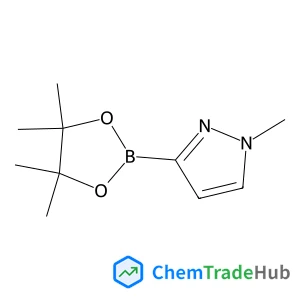
1-Methyl-3-(4,4,5,5-tetramethyl-1,3,2-dioxaborolan-2-yl)-1H-pyrazole
CAS号:
1020174-04-2
分子式:
C10H17BN2O2
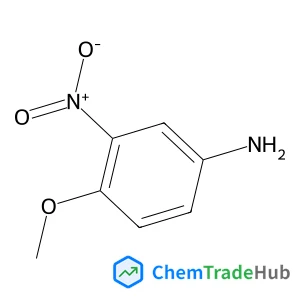
推荐供应商



免责声明
本页面提供的学术期刊信息仅供参考和研究使用。我们与任何期刊出版商均无关联,也不处理投稿事宜。如有投稿相关咨询,请直接联系相关期刊出版商。
如发现页面信息有误,请发送邮件至 support@chemtradehub.com 联系我们。我们将及时核实并处理您的问题。