


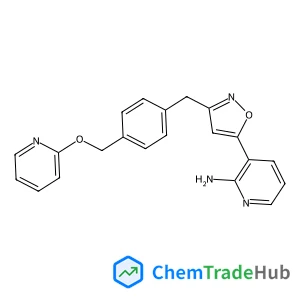
3-(3-(4-((Pyridin-2-yloxy)methyl)benzyl)isoxazol-5-yl)pyridin-2-amine
CAS号:
936339-60-5
分子式:
C21H18N4O2
Marie A. F. Delgove, Juandré Luchies, Iris Wauters, Geert G. P. Deroover, Stefaan M. A. De Wildeman, Katrien V. Bernaerts
The solubility range of ω-pentadecalactone (ω-PDL) based polymers is increased by copolymerization with a smaller branched lactone, δ-undecalactone (δ-UDL). The copolyester microstructure was assessed by 13C NMR/MALDI-ToF MS and indicates a block-like or random-like structure depending on the feed ratio. DSC analysis reveals a considerable decrease in the crystallinity of the copolyesters which can be attributed to the lack of stereoselectivity of the alkyl substituent of δ-UDL hampering chain packing. Consequently, the ω-PDL-based copolyesters present a broader solubility range towards polar aprotic solvents as demonstrated by the Hansen solubility parameter analysis. Finally, the effect of the ring size and position of the substituents of the comonomer lactone on the solubility range of ω-PDL-based copolyesters was investigated by copolymerization with a β,δ-substituted-ε-caprolactone. This broadening of the solubility range of ω-PDL-based copolyesters should enable the use of this biobased macrolactone in applications such as additives in coatings.
Atomization and Sprays
Biocatalysis and Biotransformation
Cellulose
Main Group Chemistry
Acta Metallurgica Sinica-English Letters
Herald of the Russian Academy of Sciences
Journal of Asian Natural Products Research
Bioorganic & Medicinal Chemistry Letters
Critical Reviews in Solid State and Materials Sciences
Heteroatom Chemistry
Mingjun Zhang, Xin Ding, Aidang Lu, Jin Kang, Yongyue Gao, Ziwen Wang, Hongyan Li, Qingmin Wang
DOI: 10.1039/D0QO01413C
Miguel F. Braña, Mónica Cacho, Ana Ramos, M. Teresa Domínguez, Jose M. Pozuelo, Cristina Abradelo, M. Fernanda Rey-Stolle, Mercedes Yuste, Carolina Carrasco, Christian Bailly
DOI: 10.1039/B209042B
Xiao-De An
DOI: 10.1039/D0QO01502D
Bo Qin, Yuan Wang, Xin Wang, Yanxing Jia
DOI: 10.1039/D0QO01165G
Qingsong Deng, Aimin Yu, Shunguang Zhang, Xiangtai Meng
DOI: 10.1039/D0QO01269F
Jun-Song Zhong, Yi Yu, Zhaojiang Shi, Ke-Yin Ye
DOI: 10.1039/D0QO01227K
Michael R. Crampton, Thomas A. Emokpae, Judith A. K. Howard, Chukwuemeka Isanbor, Raju Mondal
DOI: 10.1039/B211639C
Yan-Kai Huang, Wen-Zhen Zhang, Ke Zhang, Wen-Le Wang, Xiao-Bing Lu
DOI: 10.1039/D0QO01465F
4-[4-三氟甲基苯基]恶唑通常通过将4-三氟甲基苯酚与异硫氰酸苯酯在有机溶剂中进行酯化反应合成。该反应可在无水条件下,使用适当的催化剂,如四丁基氢氧化铵,以提...
RockPhos Pd G3 通常通过钯催化偶联反应合成,使用配体 (2'-Amino-2-biphenylyl)(methanesulfonato-kappa...
1-哌啶甲酰胺作为有机合成中的重要中间体,其市场需求主要受医药、农药、染料等行业推动。近年来,随着新药开发和绿色化学的发展,该化合物的研究趋势集中在开发更高效、...
2-(二苯基膦基)乙胺适用于多种法规指南,包括但不限于《全球化学品统一分类和标签制度》(GHS),欧盟《化学品注册、评估、授权和限制》法规(REACH),以及美...
间苯二甲酸二烯丙酯应储存在阴凉、干燥、通风良好的地方,远离火源和热源。储存容器应密封,避免光照和高温。储存温度应控制在25℃以下,相对湿度应低于80%。避免与其...
间甲苯异硫代异氰酸酯是一种有机化合物,分子式为C7H7NO2S,具有刺激性气味。它是一种重要的有机合成中间体,在合成其他化合物时广泛应用。
在合成中,可以考虑使用N-Cbz-D-苯丙氨醇或N-Fmoc-D-苯丙氨醇作为替代品。这些化合物同样具有保护氨基的功能,且在合成过程中表现出良好的反应性能。
3-羟甲基-2-氧异丙基吡啶主要用于有机合成领域,可以作为合成其他药物、农药或精细化学品的中间体。此外,它还可能在实验室研究中作为特定反应的前体或溶剂。
6-氨基-9-甲基嘌呤目前主要应用于医药行业,作为某些药物的中间体。此外,它还可能用于聚合物、传感器和半导体的某些领域,作为功能性单体或掺杂剂。

Polymer Chemistry welcomes submissions in all areas of polymer science that have a strong focus on macromolecular chemistry. Manuscripts may cover a broad range of fields, yet no direct application focus is required.
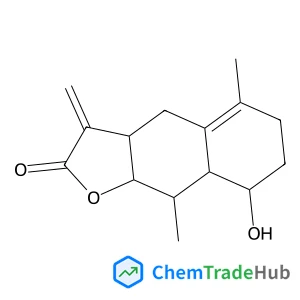
![Sodium 4-{2-[(E)-2-{(3E)-3-{(2E)-2-[3,3-dimethyl-1-(4-sulfonatobutyl)-1,3-dihydro-2H-indol-2-ylidene]ethylidene}-2-[(4-isothiocyanatophenyl)sulfanyl]-1-cyclohexen-1-yl}vinyl]-3,3-dimethyl-3H-indolium-
1-yl}-1-butanesulfonate structure](https://cnstatic.chemtradehub.com/structs/152/152111-91-6-e5df.webp "Sodium 4-{2-[(E)-2-{(3E)-3-{(2E)-2-[3,3-dimethyl-1-(4-sulfonatobutyl)-1,3-dihydro-2H-indol-2-ylidene]ethylidene}-2-[(4-isothiocyanatophenyl)sulfanyl]-1-cyclohexen-1-yl}vinyl]-3,3-dimethyl-3H-indolium-
1-yl}-1-butanesulfonate structure")





