




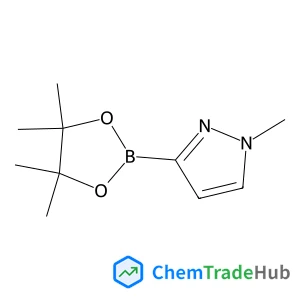
1-Methyl-3-(4,4,5,5-tetramethyl-1,3,2-dioxaborolan-2-yl)-1H-pyrazole
CAS号:
1020174-04-2
分子式:
C10H17BN2O2
G. Vári, J. Kiss, A. Berkó
It is known that the hexagonal boron nitride (h-BN) monolayer has a periodically corrugated structure on Rh(111), termed “nanomesh”, while the h-BN layer is planar on the close packed surfaces of coinage metals (Cu, Ag, Au) due the weak interactions. Our studies are aimed at understanding the metal–h-BN interaction, when both Rh and Au are present. On the one hand, the growth and thermal properties of gold deposited on h-BN nanomesh prepared on Rh(111) were studied. On the other hand, the formation of h-BN was examined on Au/Rh surface alloys prepared by the deposition of Au on Rh(111) and subsequent annealing at 1000 K. In each case, the h-BN was prepared by the decomposition of borazine at about 1000 K. Low energy ion scattering (LEIS), X-ray photoelectron spectroscopy (XPS) and scanning tunneling microscopy (STM) measurements revealed that the growth of Au on h-BN/Rh(111) at room temperature leads to the formation of mainly three dimensional (3D) gold nanoparticles, although at low coverages (<0.2 ML) 2D particles formed as well. Stepwise annealing to higher temperatures induces the intercalation of Au below the nanomesh, which was complete at around 1050 K. Some agglomeration and desorption of Au also took place. Interestingly, the nanomesh structure was observable after intercalation up to relatively large Au coverages. Measurements performed in the reverse order, namely exposing a Au/Rh(111) surface alloy to borazine, revealed that Rh atoms get covered by h-BN (or by its precursors) at significantly smaller borazine exposures than Au atoms. The nanomesh structure was essentially present up to a gold coverage of 0.9 ML, but with a smaller pore diameter, while it gradually disappeared at higher gold amounts. In this way the application of surface alloy supports provides a key for gradual tuning of the mesh morphology. Density functional theory calculations confirmed the decreased pore diameter of the BN layer upon the formation of a surface Rh–Au alloy layer.
Ruming Jiang, Meiying Liu, Qiang Huang, Hongye Huang, Qing Wan, Yuanqing Wen, Jianwen Tian, Qian-yong Cao, Xiaoyong Zhang
DOI: 10.1039/C7PY01563A
Nicolas Zivic, Frédéric Dumur, Bernadette Graff, Jean Pierre Fouassier, Didier Gigmes, Jacques Lalevée
DOI: 10.1039/C8PY00055G
Daniel Schiefer, Ralf Hanselmann
DOI: 10.1039/C7PY00612H
Diana Kalden, Matthias Westerhausen
DOI: 10.1039/C7PY00881C
Ben-Fa Chu, Jia-Hong Chu, Song-Qing Zhao, Na Liu, Zong-Quan Wu
DOI: 10.1039/C8PY00097B
Gabriela Pricope, Elena Laura Ursu, Monica Sardaru, Corneliu Cojocaru, Lilia Clima, Narcisa Marangoci, Ramona Danac, Ionel I. Mangalagiu, Mariana Pinteala, Alexandru Rotaru
DOI: 10.1039/C7PY01668A
Yuan Zhang, Mengjiao Cao, Bing Yuan, Tianying Guo
DOI: 10.1039/C7PY01714F
Adérito J. R. Amaral, Mina Emamzadeh, George Pasparakis
DOI: 10.1039/C7PY01202K
Meng-Di Lin, Jie Wei, Li-Juan Liu, Meng-Yan Yun, Lin Wu, Si-Tai Zheng, Huan-Huan Yin, Li-Chun Kong
DOI: 10.1039/C7PY01612C
6-氯-2H-1,4-苯并噁嗪-3(4H)-酮主要应用于医药、农药和聚合物等领域。在医药领域,该化合物可用于合成抗菌药物;在农药领域,可用作杀虫剂的中间体;在聚...
活性氧化铝广泛应用于医药、聚合物、传感器、半导体和催化等领域。在医药行业,活性氧化铝用作吸附剂和干燥剂,有助于去除杂质和水分。在聚合物行业,它用作增白剂和抗结块...
硅胶(Silica gel, pptd.,cryst.-free)是一种无定形、多孔的硅酸盐材料,主要成分为二氧化硅(SiO₂)。其结构由硅氧四面体构成,通过酸...
二乙基甲基一氢硅烷主要用于有机合成、表面处理以及作为溶剂。它还被用作合成其他硅烷化合物的原料,以及在涂料、粘合剂和密封剂中的应用。
在合成过程中,可以考虑使用类似结构的化合物作为替代品,例如N-亚油酰基甘氨酸或N-花生二烯酰基甘氨酸。这些替代品在结构上有类似的双键位置,但可能具有不同的物理化...
在合成过程中,可以考虑使用类似结构的化合物作为替代品,例如1-(3-甲氧基苯基)丙烷-1,2-二酮或1-(4-羟基苯基)丙烷-1,2-二酮。这些替代品具有相似的...
该化合物通常通过一系列复杂的有机合成步骤获得。首先,通过芳香族化合物的羟基化反应获得羟基化产物,然后通过酰化反应形成酰胺中间体,最后通过环化反应得到目标产物。常...
该化合物作为生物活性化合物,尤其是在药物化学领域表现出色。近年来,随着对新型抗炎、抗病毒和抗癌药物的研究增加,其市场和研究趋势持续增长。此外,其在神经科学领域的...
核黄素磷酸钠在常规使用条件下安全,但高剂量可能引起刺激性反应。操作时需佩戴防护手套和护目镜,避免吸入粉尘。若接触皮肤或眼睛,应立即用大量清水冲洗。急救时需根据接...
盐酸丙胺卡因杂质A(EP) 标准品可通过重氮化反应和随后的酰胺化反应合成。首先,利用氯化反应将苯环上的氢原子转化为氯原子,然后通过芳香族重氮化反应引入氨基,最后...

Physical Chemistry Chemical Physics (PCCP) is an international journal co-owned by 19 physical chemistry and physics societies from around the world. This journal publishes original, cutting-edge research in physical chemistry, chemical physics and biophysical chemistry. To be suitable for publication in PCCP, articles must include significant innovation and/or insight into physical chemistry; this is the most important criterion that reviewers and Editors will judge against when evaluating submissions. The journal has a broad scope and welcomes contributions spanning experiment, theory, computation and data science. Topical coverage includes spectroscopy, dynamics, kinetics, statistical mechanics, thermodynamics, electrochemistry, catalysis, surface science, quantum mechanics, quantum computing and machine learning. Interdisciplinary research areas such as polymers and soft matter, materials, nanoscience, energy, surfaces/interfaces, and biophysical chemistry are welcomed if they demonstrate significant innovation and/or insight into physical chemistry. Joined experimental/theoretical studies are particularly appreciated when complementary and based on up-to-date approaches.

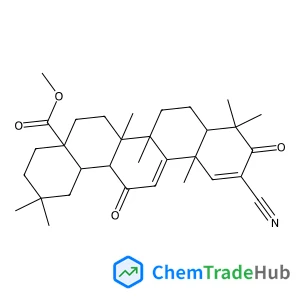
![1-Naphthalenesulfonic acid, 2-[(2-hydroxy-1-naphthalenyl)azo]-, bariumsalt (2:1) structure](https://cnstatic.chemtradehub.com/structs/110/1103-38-4-0b33.webp "1-Naphthalenesulfonic acid, 2-[(2-hydroxy-1-naphthalenyl)azo]-, bariumsalt (2:1) structure")