






Combined static and dynamic intramicellar fluorescence quenching: effects on stationary and time-resolved Stern–Volmer experiments
文献信息
发布日期
2019-04-29
DOI
10.1039/C8CP07486K
影响因子
3.676
作者
Tim Kohlmann, Martin Goez
查看原文
摘要
We have conducted a theoretical and experimental study of Stern–Volmer experiments in micellar systems for the important case that fluorophore and quencher remain confined to their micelle during the luminescence decay (the “immobile probe/immobile quencher” scenario) and exhibit static quenching followed by dynamic quenching. By a comparative mathematical analysis, we have exposed inherent physical and mathematical contradictions of earlier theories. We present a general framework that allows a very simple derivation of consistent solutions. Even with the correct model, strong parameter correlations severely compromise fit uniqueness when the stationary luminescence is the only observable, but these correlations can be removed by parallel absorption measurements and do not occur in time-resolved luminescence experiments. The application of our protocol to pyrene quenching by substituted viologens in SDS micelles revealed a linear dependence of the apparent aggregation number of the surfactant on the equilibrium constant of formation of ground-state complexes, which can be quantitatively explained by a preference of the quencher for micelles containing the fluorophore. The complex formation is entropy controlled, as evidenced by a driving force that decreases linearly with the number of free rotors in the viologen sidechains.
相关文献
Syntheses, crystal structures of a series of novel alkali metal or alkaline earth metal phosphites
Jian-Han Zhang, Jun-Ling Song, Fang Kong, Jiang-Gao Mao
2013-01-14
Paper
DOI: 10.1039/C3CE26885C
Exploring the charge reactions in a Li–O2 system with lithium oxide cathodes and nonaqueous electrolytes
Rachid Amine, Xuanxuan Bi, Yan Qin, Matthew Li, Said Al-Hallaj, Fengwei Huo, Jun Lu, Khalil Amine
2019-06-19
Communication
DOI: 10.1039/C9TA03763B
Analysis of trypsin activity at β-casein layers formed on hydrophobic surfaces using a multiharmonic acoustic method
Sandro Spagnolo, Eric S. Muckley, Ilia N. Ivanov, Tibor Hianik
2021-12-03
Paper
DOI: 10.1039/D1AN01800K
Interconversion between different stoichiometric forms of a three-component crystal via liquid-assisted grinding‡
Leigh Loots, Helene Wahl, Leandi van der Westhuizen, Delia A. Haynes, Tanya le Roex
2012-10-09
Communication
DOI: 10.1039/C2CC36313E
Hybrid gold nanocube@silica@graphene-quantum-dot superstructures: synthesis and specific cell surface protein imaging applications
Liu Deng, Ling Liu, Chengzhou Zhu, Dan Li, Shaojun Dong
2013-02-07
Communication
DOI: 10.1039/C3CC38776C
A homogeneous digital biosensor for circulating tumor DNA by the enumeration of a dual-color quantum dot complex
Xiaojun Liu, Zhangjian Wu, Xinyi Lin, Wei Bu, Lei Qin, Hongwei Gai
2021-03-18
Paper
DOI: 10.1039/D1AN00299F
Dual-emitting quantum dot nanohybrid for imaging of latent fingerprints: simultaneous identification of individuals and traffic light-type visualization of TNT
Chaoying Xu, Xiandeng Hou, Jing-Juan Xu, Hong-Yuan Chen
2015-05-21
Edge Article
DOI: 10.1039/C5SC01497B
In situ real time monitoring of emulsification and homogenization processes for vaccine adjuvants
Nicole M. Ralbovsky, Randal J. Soukup, Justin P. Lomont, Mackenzie L. Lauro, Amanda Gulasarian, Anumita Saha-Shah, Michael A. Winters, Douglas D. Richardson, Sheng-Ching Wang, Ian Mangion, Joseph P. Smith
2021-12-15
Paper
DOI: 10.1039/D1AN01797G
Multilayer structured AgNW/WPU-MXene fiber strain sensors with ultrahigh sensitivity and a wide operating range for wearable monitoring and healthcare
Jun-Hong Pu, Xing Zhao, Xiang-Jun Zha, Lu Bai, Kai Ke, Rui-Ying Bao, Zheng-Ying Liu, Ming-Bo Yang, Wei Yang
2019-06-03
Paper
DOI: 10.1039/C9TA04352G
您可能还喜欢
化合物问答
什么是2-Bromo-1-(pyrimidin-2-yl)ethanone hydrobromide(CAS号:1588441-02-4)?
2-Bromo-1-(pyrimidin-2-yl)ethanone hydrobromide是一种有机化合物,分子式为C6H5Br2N2O2。它是一种溴代化合...
1588441-02-42-Bromo-1-(2-pyrimid...
化合物问答
在合成中是否有1-正-丁基-3-甲基咪唑鎓三氟甲烷磺酸盐(CAS号:174899-66-2)的替代品?
在合成中,可以考虑使用1-正-丁基-3-甲基咪唑鎓溴酸盐或1-正-丁基-3-甲基咪唑鎓氯酸盐作为替代品。这些化合物在性能上与1-正-丁基-3-甲基咪唑鎓三氟甲烷...
174899-66-21-Butyl-3-methyl-1H-...
化合物问答
2-methyl-5-thiophen-2-ylfuran-3-carboxylic acid(CAS号:651005-90-2)的市场或研究趋势如何?
目前,2-methyl-5-thiophen-2-ylfuran-3-carboxylic acid的研究主要集中在药物化学和新型材料领域。随着生物医药和有机合...
651005-90-22-Methyl-5-(thien-2-...
化合物问答
格列吡嗪杂质H(CAS号:13554-93-3)的主要用途是什么?
格列吡嗪杂质H主要作为药物中间体或副产物存在,并无特定的工业应用。在药物生产中,它可能需要被处理掉以保证最终药物的质量。
13554-93-3Ethyl (2-(4-((cycloh...
化合物问答
如何储存(9ci)-4-甲氧基-1H-苯并咪唑-2-乙腈(CAS号:317817-41-7)?
(9ci)-4-甲氧基-1H-苯并咪唑-2-乙腈应储存在阴凉、干燥、通风良好的地方,避免阳光直射。使用密封的玻璃或塑料容器储存,并确保容器的密封性良好,以防止挥...
317817-41-7(4-Methoxy-1H-benzim...
化合物问答
4,5,9,10-四氢苯芘(CAS号:781-17-9)应用于哪些行业?
4,5,9,10-四氢苯芘在医药行业用于作为某些药物的中间体,在聚合物行业用作添加剂提升材料的热稳定性,在传感器领域作为传感器的敏感材料,在半导体行业中用作掺杂...
781-17-94,5,9,10-Tetrahydrop...
化合物问答
处理叶酸-D4(CAS号:171777-72-3)时应注意哪些实验室安全事项?
处理叶酸-D4时应佩戴个人防护装备(PPE),如手套和实验服。操作应在通风橱内进行,以避免吸入蒸汽或粉尘。如果不慎泄露,应立即用大量清水冲洗,并通知安全人员。参...
171777-72-3Folic Acid-d4
化合物问答
如何处理含有6-溴-2-(三氟乙酰基)-1,2,3,4-四氢异喹啉(CAS号:252331-63-8)的废料?
含有该化合物的废料应收集到专用的容器中,并进行密封以防止挥发和泄漏。在处理前,需进行危险性评估,以确定是否需要进行化学处理。最终处置需遵循当地的危险废物管理规定...
252331-63-81-(6-bromo-3,4-dihyd...
化合物问答
4,5-二氟-2-甲氧基苯甲醛(CAS号:145742-34-3)的主要用途是什么?
4,5-二氟-2-甲氧基苯甲醛主要用作有机合成中的中间体,特别是在制药和农药领域。它可以作为合成其他有机化合物的原料。
145742-34-34,5-difluoro-2-metho...
化合物问答
5-溴-6-三氟甲基吲哚(CAS号:1198475-24-9)安全吗?
5-溴-6-三氟甲基吲哚作为一种化学试剂,具有一定的毒性,需要在通风橱中操作,并采取适当的安全措施以避免吸入、皮肤接触和眼睛刺激。应避免与皮肤和眼睛直接接触,并...
1198475-24-95-bromo-6-(trifluoro...
来源期刊
Physical Chemistry Chemical Physics

CiteScore:
5.5
自引率:
10.3%
年发文量:
3036
Physical Chemistry Chemical Physics (PCCP) is an international journal co-owned by 19 physical chemistry and physics societies from around the world. This journal publishes original, cutting-edge research in physical chemistry, chemical physics and biophysical chemistry. To be suitable for publication in PCCP, articles must include significant innovation and/or insight into physical chemistry; this is the most important criterion that reviewers and Editors will judge against when evaluating submissions. The journal has a broad scope and welcomes contributions spanning experiment, theory, computation and data science. Topical coverage includes spectroscopy, dynamics, kinetics, statistical mechanics, thermodynamics, electrochemistry, catalysis, surface science, quantum mechanics, quantum computing and machine learning. Interdisciplinary research areas such as polymers and soft matter, materials, nanoscience, energy, surfaces/interfaces, and biophysical chemistry are welcomed if they demonstrate significant innovation and/or insight into physical chemistry. Joined experimental/theoretical studies are particularly appreciated when complementary and based on up-to-date approaches.
推荐化合物
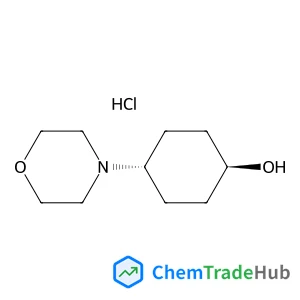
![4-{1-[4-(4,4,5,5-Tetramethyl-1,3,2-dioxaborolan-2-yl)phenyl]cyclopropyl}morpholine structure](https://cnstatic.chemtradehub.com/structs/120/1206594-08-2-7afb.webp "4-{1-[4-(4,4,5,5-Tetramethyl-1,3,2-dioxaborolan-2-yl)phenyl]cyclopropyl}morpholine structure")
推荐供应商



免责声明
本页面提供的学术期刊信息仅供参考和研究使用。我们与任何期刊出版商均无关联,也不处理投稿事宜。如有投稿相关咨询,请直接联系相关期刊出版商。
如发现页面信息有误,请发送邮件至 support@chemtradehub.com 联系我们。我们将及时核实并处理您的问题。