


Simultaneous and controlled release of two different bioactive small molecules from nature inspired single material
文献信息
发布日期
2018-10-22
DOI
10.1039/C8TB02406E
影响因子
6.331
作者
Adil M. Rather, Arpita Shome, Bibhas K. Bhunia, Aparna Panuganti, Biman B. Mandal, Uttam Manna
查看原文
摘要
Extended and controlled release of more than a single bioactive molecule, simultaneously, from the same biocompatible matrix is challenging to achieve. However, this is important for combating various severe challenges (drug resistance, improved efficacy, etc.) related to drug delivery. In the recent past, the meta-stable trapped air (in the lotus leaf inspired artificial interfaces), which attributed to the extreme water repellency in biomimicked heirarchical (consisted of micro/nano features) interfaces, was unprecedentedly exploited for addressing multiple relevant aspects related to drug delivery (e.g., multiple drug release, tunable drug release, dose control through post-loading of drug molecules, etc.). A biocompatible polymeric material that is (a) synthesized using a one-step covalent and featured gelation of a single polymer and (b) capable of tailoring with a wide range of water wettabilities, was exploited for post loading both hydrophilic and hydrophobic small molecules from a wide variety (less polar, more polar, nonpolar) of organic solvents. Such small molecules loaded polymeric materials continued to display durable nature-inspired bulk wettability and provided simultaneous co-release of two different bioactive drug molecules (i.e., doxorubicin (DOX, anticancer drug) and tetracycline (TC, antibacterial drug)), over 6 months. Moreover, the release extent (from hours to months) of these small molecules was successfully tuned by controlling the water wettability of the single porous polymeric material. The released drug molecules remained bioactive and capable of inhibiting the proliferation of cancer cells (MG-63 (human osteosarcoma) and MDA-MB-231 (human breast adenocarcinoma)) and microorganisms (S. aureus and E. coli). These results provide a facile basis for developing a more potent and multifunctional drug release system for prospective biomedical applications.
期刊推荐

Science Progress
Israel Journal of Chemistry
Kinetics and Catalysis
Nature
Organic Preparations and Procedures International
Fibre Chemistry
Proceedings of the National Academy of Sciences of the United States of America
Helvetica Chimica Acta
Journal of Physics and Chemistry of Solids
Journal of Medicinal Chemistry
相关文献
The effects of the heteroatom and position on excited-state intramolecular proton transfer of new hydroxyphenyl benzoxazole derivatives: a time-dependent density functional theory study
Wei Guo, Panwang Zhou, Zhe Tang
2019-04-01
Research Article
DOI: 10.1039/C9QO00295B
Palladium-catalyzed arene C–H activation/ketone C–H functionalization reaction: route to spirodihydroindenones
Bo-Sheng Zhang, Hui-Liang Hua, Lu-Yao Gao, Ce Liu, Yi-Feng Qiu, Ping-Xin Zhou, Zhao-Zhao Zhou, Jia-Hui Zhao, Yong-Min Liang
2017-04-12
Research Article
DOI: 10.1039/C7QO00164A
Transition-metal-free borylation of propargylic alcohols: structurally variable synthesis in ionic liquid medium
Sangepu Bhavanarushi, Yin Xu, Imran Khan, Zhibin Luo, Bin Liu, Jimin Xie
2019-04-16
Research Article
DOI: 10.1039/C9QO00322C
Stereospecific acyloin ring contraction controlled by glucose and concise total synthesis of saffloneoside
Wan Gao, Jian-Shuang Jiang, Zhong Chen, Ya-Nan Yang, Zi-Ming Feng, Xu Zhang, Xiang Yuan, Pei-Cheng Zhang
2019-04-11
Research Article
DOI: 10.1039/C9QO00279K
A biomimetic strategy for the selective recognition of organophosphates in 100% water: synergies of electrostatic interactions, cavity embedment and metal coordination
Solène Collin, Nicolas Giraud, Elise Dumont, Olivia Reinaud
2019-04-01
Research Article
DOI: 10.1039/C9QO00263D
Rh(i)-Catalyzed intramolecular [3 + 2] cycloaddition reactions of yne-vinylidenecyclopropanes
Kang-Hua Rui
2019-04-03
Research Article
DOI: 10.1039/C9QO00343F
Multifunctionalized octamethoxy-[8]cycloparaphenylene: facile synthesis and analysis of novel photophysical and photoinduced electron transfer properties
Shengsheng Cui, Guilin Zhuang, Jinyi Wang, Qiang Huang, Shengda Wang, Pingwu Du
2019-04-15
Research Article
DOI: 10.1039/C9QO00372J
Pd(ii)/Ag(i)-Cocatalyzed ortho direct arylation of O-phenylcarbamates with pinacol aryl boronates
Huijun Ma, Tao Wang, Chenying Gao, Guangshen Li, Minghao Zhang
2019-03-05
Research Article
DOI: 10.1039/C9QO00227H
Correction: Functionalisable acyclic cucurbiturils
Daniel Bauer, Beatrice Andrae, Patrick Gaß, Danjano Trenz, Sabine Becker, Stefan Kubik
2019-03-18
Correction
DOI: 10.1039/C9QO90027F
您可能还喜欢
化合物问答
4,5-二甲基-2-硝基苯甲酸(CAS号:4315-14-4)的市场或研究趋势如何?
4,5-二甲基-2-硝基苯甲酸主要应用于制药、染料和农药等行业。由于其潜在的毒性,其市场趋势可能受到法规限制和环保考量的影响,推动了替代产品的研发。在研究领域,...
4315-14-44,5-Dimethyl-2-nitro...
化合物问答
处理直接黑22(CAS号:6473-13-8)时应注意哪些实验室安全事项?
处理直接黑22时应穿戴适当的个人防护装备(PPE),包括实验服、手套、护目镜和口罩。操作应在通风橱内进行,以避免吸入有害气体。如果发生泄漏,应立即清理,并使用大...
6473-13-82-Naphthalenesulfoni...
化合物问答
处理2,1,3-苯并噻二唑-4-基异氰酸酯(CAS号:342411-14-7)时应注意哪些实验室安全事项?
处理2,1,3-苯并噻二唑-4-基异氰酸酯时应注意以下安全事项:穿戴个人防护装备,如实验室外套、防护眼镜和手套;在通风橱中操作,确保良好的通风;保持实验室环境干...
342411-14-74-Isocyanato-2,1,3-b...
化合物问答
如何处理含有Δ-8,9-脱氢雌酮(CAS号:204077-66-7)的废料?
含有Δ-8,9-脱氢雌酮的废料需要进行适当的处理以确保环境和人体安全。首先,收集废液并存放于密封容器中,避免泄漏。其次,可以考虑将其转化为无害物质或通过专业处理...
204077-66-7Thioquinapiperifil d...
化合物问答
如何储存5-溴戊酸(CAS号:2067-33-6)?
5-溴戊酸应储存在阴凉、干燥、通风良好的环境中,避免阳光直射。建议在室温(约15-25°C)下保存,保持相对湿度低于60%。应使用密封的玻璃或塑料容器,并远离热...
2067-33-65-Bromopentanoic aci...
化合物问答
4-(甲基亚磺酰基)苯胺(CAS号:22865-62-9)应用于哪些行业?
4-(甲基亚磺酰基)苯胺在医药、聚合物和传感器等领域有一定的应用。在医药方面,它可以用作合成药物的中间体;在聚合物领域,可以作为合成特殊性能高分子材料的单体;在...
22865-62-94-Methylsulfinylanil...
化合物问答
什么是1-(2-FLUOROPHENYL)-5-METHYL-1H-PYRAZOLE-4-CARBOHYDRAZIDE(CAS号:618092-58-3)?
1-(2-氟苯基)-5-甲基-1H-吡唑-4-亚甲基肼是一种有机化合物,其分子式为C9H9FN3O。该化合物具有特定的物理化学性质,如熔点、沸点等,但具体值需查...
618092-58-31-(2-Fluorophenyl)-5...
化合物问答
Dauricumine(CAS号:345641-00-1)通常如何合成?
Dauricumine通常通过复杂的合成路线制备,涉及多个步骤,包括环化、氧化、卤化等反应。合成过程中使用了多种催化剂和试剂,例如金属催化剂、氧化剂等。产率通常...
345641-00-1(1R,1'S,5R,6'S,8'S)-...
化合物问答
5-氰基苯酞(CAS号:82104-74-3)安全吗?
5-氰基苯酞在正常使用条件下相对安全,但其具有一定的毒性,需谨慎操作。在实验或工业应用中,应采取适当的防护措施,如佩戴防护手套、护目镜和实验服,确保通风良好。误...
82104-74-31-Oxo-1,3-dihydro-2-...
化合物问答
2-Methyl-1-(phenylsulfonyl)-1H-pyrrolo[2,3-b]pyridin-5-amine(CAS号:1186502-59-9)安全吗?
该化合物在使用时需要谨慎操作。虽然其毒性和健康风险尚未完全明确,但建议在通风良好的环境中操作,并穿戴适当的个人防护装备,如手套和防护眼镜。
1186502-59-92-Methyl-1-(phenylsu...
来源期刊
Journal of Materials Chemistry B
CiteScore:
12
自引率:
4.9%
年发文量:
831
Journal of Materials Chemistry A, B & C cover high quality studies across all fields of materials chemistry. The journals focus on those theoretical or experimental studies that report new understanding, applications, properties and synthesis of materials. The journals have a strong history of publishing quality reports of interest to interdisciplinary communities and providing an efficient and rigorous service through peer review and publication. The journals are led by an international team of Editors-in-Chief and Associate Editors who are all active researchers in their fields. Journal of Materials Chemistry A, B & C are separated by the intended application of the material studied. Broadly, applications in energy and sustainability are of interest to Journal of Materials Chemistry A, applications in biology and medicine are of interest to Journal of Materials Chemistry B, and applications in optical, magnetic and electronic devices are of interest to Journal of Materials Chemistry C. More than one Journal of Materials Chemistry journal may be suitable for certain fields and researchers are encouraged to submit their paper to the journal that they feel best fits for their particular article. Example topic areas within the scope of Journal of Materials Chemistry B are listed below. This list is neither exhaustive nor exclusive. Antifouling coatings Biocompatible materials Bioelectronics Bioimaging Biomimetics Biomineralisation Bionics Biosensors Diagnostics Drug delivery Gene delivery Immunobiology Nanomedicine Regenerative medicine & Tissue engineering Scaffolds Soft robotics Stem cells Therapeutic devices image block All articles published in Journal of Materials Chemistry B from 2019 onwards will be indexed in MEDLINE®. Articles that primarily focus on providing insight into the underlying science and performance of biomaterials within a biological environment are more suited to our companion journal, Biomaterials Science.
推荐化合物
![[4-(Isobutyrylamino)phenyl]boronic acid structure](https://cnstatic.chemtradehub.com/structs/874/874219-50-8-6ab5.webp "[4-(Isobutyrylamino)phenyl]boronic acid structure")
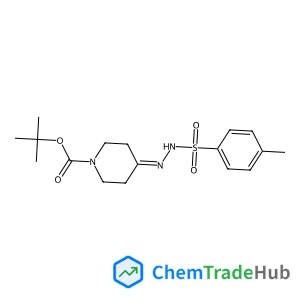
tert-Butyl 4-(2-(p-Tolylsulfonyl)hydrazono)piperidine-1-carboxylate
CAS号:
1046478-89-0
分子式:
C17H25N3O4S
推荐供应商




免责声明
本页面提供的学术期刊信息仅供参考和研究使用。我们与任何期刊出版商均无关联,也不处理投稿事宜。如有投稿相关咨询,请直接联系相关期刊出版商。
如发现页面信息有误,请发送邮件至 support@chemtradehub.com 联系我们。我们将及时核实并处理您的问题。