


Exploring the folding process of human βB2-crystallin using multiscale molecular dynamics and the Markov state model
文献信息
发布日期
2020-11-03
DOI
10.1039/D0CP04136J
影响因子
3.676
作者
José-Luis Velasco-Bolom, Laura Domínguez
查看原文
摘要
Adequate knowledge of protein conformations is crucial for understanding their function and their association properties with other proteins. The cataract disease is correlated with conformational changes in key proteins called crystallins. These changes are due to mutations or post-translational modifications that may lead to protein unfolding, and thus the formation of aggregate states. Human βB2-crystallin (HβB2C) is found in high proportion in the eye lens, and its mutations are related to some cataracts. HβB2C also associates into dimers, tetramers, and other higher-order supramolecular complexes. However, it is the only protein of the βγ-crystallin family that has been found in an extended conformation. Therefore, we hypothesize that the extended conformation is not energetically favourable and that HβB2C may adopt a closed (completely folded) conformation, similar to the other members of the βγ-crystallin family. To corroborate this hypothesis, we performed extensive molecular dynamics simulations of HβB2C in its monomeric and dimeric conformations, using all-atom and coarse-grained scales. We employed Markov state model (MSM) analysis to characterize the conformational and kinetically relevant states in the folding process of monomeric HβB2C. The MSM analysis clearly shows that HβB2C adopts a completely folded structure, and this conformation is the most kinetically and energetically favourable one. In contrast, the extended conformations are kinetically unstable and energetically unfavourable. Our MSM analysis also reveals a key metastable state, which is particularly interesting because it is from this state that the folded state is reached. The folded state is stabilized by the formation of two salt bridges between the residue-pairs E74–R187 and R97–E166 and the two hydrophobic residue-pairs V59–L164 and V72–V151. Furthermore, free energy surface (FES) analysis revealed that the HβB2C dimer with both monomers in a closed conformation (face-en-face dimer) is energetically more stable than the domain-swapped dimer (crystallographic structure). The results presented in this report shed light on the molecular details of the folding mechanism of HβB2C in an aqueous environment and may contribute to interpreting different experimental findings. Finally, a detailed knowledge of HβB2C folding may be key to the rational design of potential molecules to treat cataract disease.
期刊推荐

Current Opinion in Solid State & Materials Science

Drug Discovery Today
Russian Journal of General Chemistry

New Journal of Chemistry
Journal of Saudi Chemical Society

Chemistry Education Research and Practice
Journal of Peptide Science
Russian Chemical Bulletin
Russian Journal of Applied Chemistry
Crystallography Reports
相关文献
Synthesis and characterization of biodegradable polyurethanes with folate side chains conjugated to hard segments
Zhicheng Pan, Lunquan Yu, Nijia Song, Lijuan Zhou, Jiehua Li, Mingming Ding, Hong Tan, Qiang Fu
2013-12-24
Paper
DOI: 10.1039/C3PY01340E
A gene-activating skin substitute comprising PLLA/POSS nanofibers and plasmid DNA encoding ANG and bFGF promotes in vivo revascularization and epidermalization
Dongwei Wu, Jianwang Tan, Zhibin Liu
2018-09-28
Paper
DOI: 10.1039/C8TB02006J
Thiourea modified polyethylenimine for efficient gene delivery mediated by the combination of electrostatic interactions and hydrogen bonds
Huayu Tian, Jianxun Ding, Jie Chen, Xuesi Chen
2014-01-29
Paper
DOI: 10.1039/C3PY01781H
Porous nanoMoC@graphite shell derived from a MOFs-directed strategy: an efficient electrocatalyst for the hydrogen evolution reaction
Zhangping Shi, Yangxia Wang, Huanlei Lin, Hongbin Zhang, Meikun Shen, Songhai Xie, Yahong Zhang, Qingsheng Gao, Yi Tang
2016-03-17
Paper
DOI: 10.1039/C6TA01900E
Interface thickness optimization of lead-free oxide multilayer capacitors for high-performance energy storage
Chunrui Ma, Xiaojie Lou
2017-12-22
Paper
DOI: 10.1039/C7TA10271B
Microwave-assisted simultaneous reduction and titanate treatment of graphene oxide
Jing Li, Zhenzhen Yang, Hanxun Qiu, Yigang Dai, Qingbin Zheng, Guang-Ping Zheng, Junhe Yang
2013-07-25
Paper
DOI: 10.1039/C3TA12228J
Activities comparison of Schiff base zinc and tri-zinc complexes for alternating copolymerization of CO2 and epoxides
Yonghang Xu, Min Xiao, Shuanjin Wang, Mei Pan, Yuezhong Meng
2014-02-12
Paper
DOI: 10.1039/C4PY00008K
Chirality-dependent balance between hydrogen bonding and London dispersion in isolated (±)-1-indanol clusters
Jonas Altnöder, Juhyon J. Lee, Katharina E. Otto, Martin A. Suhm
2013-05-13
Paper
DOI: 10.1039/C3CP50708D
您可能还喜欢
化合物问答
4,5-二甲基-2-硝基苯甲酸(CAS号:4315-14-4)的市场或研究趋势如何?
4,5-二甲基-2-硝基苯甲酸主要应用于制药、染料和农药等行业。由于其潜在的毒性,其市场趋势可能受到法规限制和环保考量的影响,推动了替代产品的研发。在研究领域,...
4315-14-44,5-Dimethyl-2-nitro...
化合物问答
处理直接黑22(CAS号:6473-13-8)时应注意哪些实验室安全事项?
处理直接黑22时应穿戴适当的个人防护装备(PPE),包括实验服、手套、护目镜和口罩。操作应在通风橱内进行,以避免吸入有害气体。如果发生泄漏,应立即清理,并使用大...
6473-13-82-Naphthalenesulfoni...
化合物问答
处理2,1,3-苯并噻二唑-4-基异氰酸酯(CAS号:342411-14-7)时应注意哪些实验室安全事项?
处理2,1,3-苯并噻二唑-4-基异氰酸酯时应注意以下安全事项:穿戴个人防护装备,如实验室外套、防护眼镜和手套;在通风橱中操作,确保良好的通风;保持实验室环境干...
342411-14-74-Isocyanato-2,1,3-b...
化合物问答
如何处理含有Δ-8,9-脱氢雌酮(CAS号:204077-66-7)的废料?
含有Δ-8,9-脱氢雌酮的废料需要进行适当的处理以确保环境和人体安全。首先,收集废液并存放于密封容器中,避免泄漏。其次,可以考虑将其转化为无害物质或通过专业处理...
204077-66-7Thioquinapiperifil d...
化合物问答
如何储存5-溴戊酸(CAS号:2067-33-6)?
5-溴戊酸应储存在阴凉、干燥、通风良好的环境中,避免阳光直射。建议在室温(约15-25°C)下保存,保持相对湿度低于60%。应使用密封的玻璃或塑料容器,并远离热...
2067-33-65-Bromopentanoic aci...
化合物问答
4-(甲基亚磺酰基)苯胺(CAS号:22865-62-9)应用于哪些行业?
4-(甲基亚磺酰基)苯胺在医药、聚合物和传感器等领域有一定的应用。在医药方面,它可以用作合成药物的中间体;在聚合物领域,可以作为合成特殊性能高分子材料的单体;在...
22865-62-94-Methylsulfinylanil...
化合物问答
什么是1-(2-FLUOROPHENYL)-5-METHYL-1H-PYRAZOLE-4-CARBOHYDRAZIDE(CAS号:618092-58-3)?
1-(2-氟苯基)-5-甲基-1H-吡唑-4-亚甲基肼是一种有机化合物,其分子式为C9H9FN3O。该化合物具有特定的物理化学性质,如熔点、沸点等,但具体值需查...
618092-58-31-(2-Fluorophenyl)-5...
化合物问答
Dauricumine(CAS号:345641-00-1)通常如何合成?
Dauricumine通常通过复杂的合成路线制备,涉及多个步骤,包括环化、氧化、卤化等反应。合成过程中使用了多种催化剂和试剂,例如金属催化剂、氧化剂等。产率通常...
345641-00-1(1R,1'S,5R,6'S,8'S)-...
化合物问答
5-氰基苯酞(CAS号:82104-74-3)安全吗?
5-氰基苯酞在正常使用条件下相对安全,但其具有一定的毒性,需谨慎操作。在实验或工业应用中,应采取适当的防护措施,如佩戴防护手套、护目镜和实验服,确保通风良好。误...
82104-74-31-Oxo-1,3-dihydro-2-...
化合物问答
2-Methyl-1-(phenylsulfonyl)-1H-pyrrolo[2,3-b]pyridin-5-amine(CAS号:1186502-59-9)安全吗?
该化合物在使用时需要谨慎操作。虽然其毒性和健康风险尚未完全明确,但建议在通风良好的环境中操作,并穿戴适当的个人防护装备,如手套和防护眼镜。
1186502-59-92-Methyl-1-(phenylsu...
来源期刊
Physical Chemistry Chemical Physics

CiteScore:
5.5
自引率:
10.3%
年发文量:
3036
Physical Chemistry Chemical Physics (PCCP) is an international journal co-owned by 19 physical chemistry and physics societies from around the world. This journal publishes original, cutting-edge research in physical chemistry, chemical physics and biophysical chemistry. To be suitable for publication in PCCP, articles must include significant innovation and/or insight into physical chemistry; this is the most important criterion that reviewers and Editors will judge against when evaluating submissions. The journal has a broad scope and welcomes contributions spanning experiment, theory, computation and data science. Topical coverage includes spectroscopy, dynamics, kinetics, statistical mechanics, thermodynamics, electrochemistry, catalysis, surface science, quantum mechanics, quantum computing and machine learning. Interdisciplinary research areas such as polymers and soft matter, materials, nanoscience, energy, surfaces/interfaces, and biophysical chemistry are welcomed if they demonstrate significant innovation and/or insight into physical chemistry. Joined experimental/theoretical studies are particularly appreciated when complementary and based on up-to-date approaches.
推荐化合物
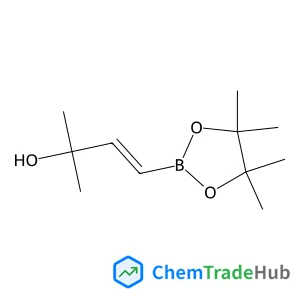
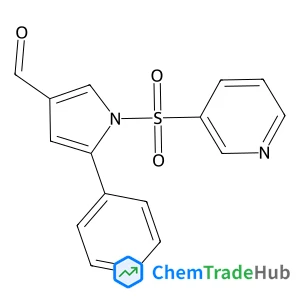
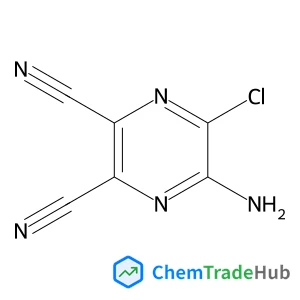
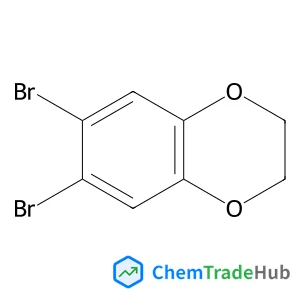
推荐供应商






免责声明
本页面提供的学术期刊信息仅供参考和研究使用。我们与任何期刊出版商均无关联,也不处理投稿事宜。如有投稿相关咨询,请直接联系相关期刊出版商。
如发现页面信息有误,请发送邮件至 support@chemtradehub.com 联系我们。我们将及时核实并处理您的问题。