


![(1R,3S,5R)-2-{[(2-Methyl-2-propanyl)oxy]carbonyl}-2-azabicyclo[3.1.0]hexane-3-carboxylic acid structure](https://cnstatic.chemtradehub.com/structs/197/197142-34-0-6a44.webp "(1R,3S,5R)-2-{[(2-Methyl-2-propanyl)oxy]carbonyl}-2-azabicyclo[3.1.0]hexane-3-carboxylic acid structure")
Antibacterial properties of synthesized cyclic and linear cationic copolymers
文献信息
发布日期
2020-09-21
DOI
10.1039/D0PY00755B
影响因子
5.582
作者
Lu Pu, Jielin Ma, Sagar Kundan Kumar, Hongwei Duan
查看原文
摘要
Cationic polymers are one of the main classes of materials investigated against bacteria through the membrane-lysis mechanism. The cationic–hydrophobic balance, molecular structure and distribution of cationic and hydrophobic moieties of these polymers are known to have a major effect on the antimicrobial activity. We have synthesized cyclic poly(2-(dimethylamino)ethyl methacrylate) (PDMAEMA) based copolymers with various components by the intra-chain click cyclization of α-alkyne-ω-azido hetero-difunctional linear precursors prepared via atom transfer radical polymerization (ATRP). Copolymers were characterized by GPC, FT-IR and NMR to confirm efficient cyclization. Cyclic cationic copolymers with smaller hydrodynamic volumes and compact structures attracted by negatively charged bacterial cell membranes cause membrane disruption much more easily compared to their linear analogues, showing better antibacterial performance than their linear counterparts. In addition, the cytotoxicities of the cyclic cationic copolymers were also a little lower than those of their linear copolymers.
期刊推荐

Chinese Journal of Chemistry

Herald of the Russian Academy of Sciences

Atomization and Sprays

Topics in Catalysis

Polycyclic Aromatic Compounds

Critical Reviews in Solid State and Materials Sciences
Bioorganic & Medicinal Chemistry Letters
Journal of Chemical Sciences
NDT & E International
Bioorganic & Medicinal Chemistry
相关文献
Assessment of DFT approaches in noble gas clathrate-like clusters: stability and thermodynamics
Rita Prosmiti
2021-12-17
Paper
DOI: 10.1039/D1CP04935F
An anisotropic dressed pairwise potential model for the adsorption of noble gases on boron nitride sheets
Chris John, Rotti Srinivasamurthy Swathi
2022-01-06
Paper
DOI: 10.1039/D1CP04815E
From fluorogens to fluorophores by elucidation and suppression of ultrafast excited state processes of a Schiff base
Souradip Dasgupta, Shrobona Banerjee, Sharmistha Das, Anindya Datta
2021-08-11
Paper
DOI: 10.1039/D1CP02540F
Ultra-low thermal conductivity and high thermoelectric performance of monolayer BiP3: a first principles study
Hengyu Yang
2021-08-20
Paper
DOI: 10.1039/D1CP01383A
Microelectrode-based transient amperometry of O2 adsorption and desorption on a SrTiO3 photocatalyst excited under water
Takumu Kosaka, Tomohiro Ando, Hiroshi Nishiyama, Yuanshu Zhou
2021-09-02
Paper
DOI: 10.1039/D1CP03264J
Structural stability and evolution of half-metallicity in Ba2CaMoO6: interplay of hole- and electron-doping
S. Faiza-Rubab, Shahnila Naseem, M. Zulfiqar, Y. Zhao, S. Nazir
2021-08-10
Paper
DOI: 10.1039/D1CP03247J
Photoelectrical properties of integrated photodetectors based on bilayer graphene quantum dots with asymmetric metal contacts: a NEGF-DFT study
Majid Ghandchi, Ghafar Darvish, Mohammad Kazem Moravvej-Farshi
2021-12-13
Paper
DOI: 10.1039/D1CP04957G
Magnetically induced ring currents in metallocenothiaporphyrins
Theo Kurten, Lenara I. Valiulina, Sergey Yu. Ketkov, Viktor N. Cherepanov, Maria Dimitrova, Dage Sundholm
2021-12-20
Paper
DOI: 10.1039/D1CP04779E
Photo-induced hydrophilicity at the ZnO(110) surface: an evolutionary algorithm-aided density functional theory study
Shen-Yuan Bao, Dong-Zhi Li, Xue-Qing Gong
2021-08-14
Paper
DOI: 10.1039/D1CP02542B
您可能还喜欢
化合物问答
2-(甲基磺酰基)嘧啶-5-胺(CAS号:56621-92-2)适用哪些法规指南?
该化合物适用的法规指南包括GHS(全球化学品统一分类和标签制度)分类为特定目标器官毒性-单次接触类别3;根据欧盟REACH法规,该化合物需要进行注册和评估;在美...
56621-92-22-(Methylsulfonyl)py...
化合物问答
在合成中是否有4-(4-氯苯基)-1H-咪唑(CAS号:35512-29-9)的替代品?
在合成中,可以考虑使用一些类似的化合物作为4-(4-氯苯基)-1H-咪唑的替代品,如4-(4-溴苯基)-1H-咪唑或4-(4-甲氧基苯基)-1H-咪唑。这些化合...
35512-29-94-(4-Chlorophenyl)-1...
化合物问答
什么是N~2~-甲基丙氨酸酰胺(CAS号:32012-16-1)?
N~2~-甲基丙氨酸酰胺是一种有机化合物,其化学名为2-(Methylamino)propanamide。它是一种酰胺类化合物,分子式为C4H10N2O,相对分...
32012-16-12-(Methylamino)propa...
化合物问答
如何处理含有N-苄基-3-氨基氧杂环丁烷草酸盐(CAS号:1956341-96-0)的废料?
处理含有N-苄基-3-氨基氧杂环丁烷草酸盐(CAS号:1956341-96-0)的废料时,应首先确保遵循相关法规要求,如GHS和REACH等。通常,废液应先进行...
1956341-96-0N-Benzyloxetan-3-ami...
化合物问答
4-bromo-2-chloro-6-methylbenzoic acid(CAS号:877149-07-0)的物理化学性质是什么?
4-溴-2-氯-6-甲基苯甲酸是一种固体化合物,具有较高的熔点和较低的沸点。它的分子量为261.03 g/mol。该化合物在水中几乎不溶,在有机溶剂中溶解度适中...
877149-07-04-Bromo-2-chloro-6-m...
化合物问答
2-[(2,5-二氯-4-嘧啶)氨基]-N-甲基苯甲酰胺(CAS号:761440-08-8)通常如何合成?
该化合物通常通过缩合反应合成,典型的方法是将2,5-二氯嘧啶与N-甲基苯甲酰胺在碱性条件下进行偶联反应。常用的碱包括NaH、LDA等强碱。该合成路线具有较高的选...
761440-08-82-[(2,5-dichloropyri...
4752-10-71,4-Dichlorophthalaz...
化合物问答
在合成中是否有3,5-二溴-4-甲基苯胺(CAS号:13194-73-5)的替代品?
3,5-二溴-4-甲基苯胺在某些合成路线中可能没有直接替代品。然而,在某些应用场景下,可以考虑使用其他类似结构的化合物如3,5-二溴-4-硝基苯胺或3,5-二碘...
13194-73-53,5-Dibromo-4-methyl...
化合物问答
2-氯喹啉-4-羧酸甲酯(CAS号:62482-26-2)的主要用途是什么?
2-氯喹啉-4-羧酸甲酯主要用于有机合成和药物合成领域,作为中间体或原料。它在合成某些药物和染料时具有重要作用。此外,该化合物还可能用于某些特定的化学研究中。
62482-26-2Methyl 2-chloro-4-qu...
化合物问答
i>]吡啶(CAS号:474708-88-8)安全吗?
6-溴-8-氯咪唑[1,2-a]吡啶在操作过程中需要谨慎以确保安全。该化合物具有一定的毒性,吸入其蒸气或粉尘可能导致呼吸道刺激。处理时应佩戴适当的防护装备,如手...
474708-88-86-Bromo-8-chloroimid...
来源期刊
Polymer Chemistry

CiteScore:
8.6
自引率:
7.3%
年发文量:
457
Polymer Chemistry welcomes submissions in all areas of polymer science that have a strong focus on macromolecular chemistry. Manuscripts may cover a broad range of fields, yet no direct application focus is required.
推荐化合物
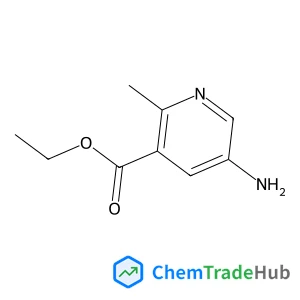
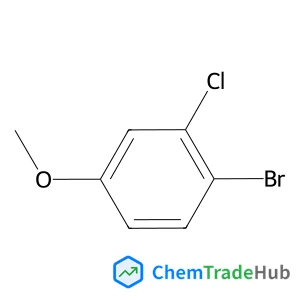
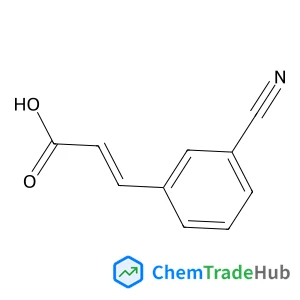
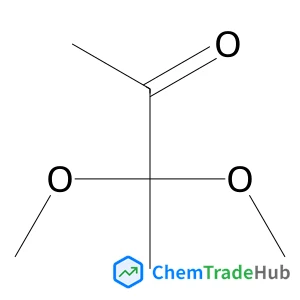
推荐供应商


免责声明
本页面提供的学术期刊信息仅供参考和研究使用。我们与任何期刊出版商均无关联,也不处理投稿事宜。如有投稿相关咨询,请直接联系相关期刊出版商。
如发现页面信息有误,请发送邮件至 support@chemtradehub.com 联系我们。我们将及时核实并处理您的问题。