











![2-(7,7-Difluorobicyclo[4.1.0]hept-1-yl)ethanamine structure](https://cnstatic.chemtradehub.com/structs/209/2098065-08-6-ff24.webp "2-(7,7-Difluorobicyclo[4.1.0]hept-1-yl)ethanamine structure")
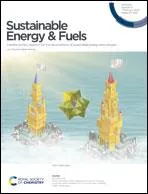
How sustainable is CO2 conversion to ethanol? – A life cycle assessment of a new electrocatalytic carbon utilisation process
文献信息
发布日期
2021-10-05
DOI
10.1039/D1SE01462E
影响因子
6.367
作者
Daniel Rojas Sánchez, Kaveh Khalilpour, Andrew F. A. Hoadley
查看原文
摘要
Although bioethanol production is considered to be sustainable from a global warming perspective, its dependence on agricultural systems, land management, and geographical limitations has sparked concern. The electrocatalytic CO2 reduction reaction (CO2RR) is a promising alternative pathway to produce fuels, such as ethanol, through captured CO2 and electricity. The CO2RR has been studied exhaustively in the literature, but the potential environmental impacts of producing ethanol in a practical process on a large scale are unknown. In this paper, we perform a life cycle assessment to quantify the potential environmental benefits of ethanol production via a proposed electrocatalytic captured CO2 reduction (ECCR) system coupled with an innovative product separation design at a commercially relevant scale. The production of bioethanol via grain fermentation was used as the reference in the comparison of nine environmental impact categories. Results indicate that ethanol via ECCR has a lower or comparable associated impact in all examined environmental categories, depending on the nature of the energy supplied to the system. Specifically for global warming, the ECCR becomes competitive against the reference when the electricity supplied has a carbon intensity lower than 63 gCO2eq per kW h. Overall, the proposed ECCR system is a modular and versatile alternative that presents a clear advantage on land use and water consumption. This early-stage technology has the capability of producing ethanol sustainably whilst offering the associated benefits of a carbon capture and utilisation pathway.
相关文献
Kinetics of O(1D) + H2O and O(1D) + H2: absolute rate coefficients and O(3P) yields between 227 and 453 K
2010-06-24
Paper
DOI: 10.1039/B923959F
Activation of transport and local dynamics in polysiloxane-based salt-in-polymer electrolytes: a multinuclear NMR study
Miriam Kunze, Yunus Karatas, Hans-Dieter Wiemhöfer, Hellmut Eckert, Monika Schönhoff
2010-04-30
Paper
DOI: 10.1039/B925840J
New organic–inorganic hybrid microporous organosilica having high metal ion adsorption capacity
Manidipa Paul, Nabanita Pal, P. R. Rajamohanan, Bharat S. Rana, Anil K. Sinha, Asim Bhaumik
2010-07-07
Paper
DOI: 10.1039/B925619A
Identification of excited-state energy transfer and relaxation pathways in the peridinin–chlorophyll complex: an ultrafast mid-infrared study
Cosimo Bonetti, Maxime T. A. Alexandre, Ivo H. M. van Stokkum, Roger G. Hiller, Marie Louise Groot, Rienk van Grondelle, John T. M. Kennis
2010-06-29
Paper
DOI: 10.1039/B923695C
Experimental and theoretical determination of adsorption heats of CO2 over alkali metal exchanged ferrierites with different Si/Al ratio
Arnošt Zukal, Angeles Pulido, Barbara Gil, Petr Nachtigall, Ota Bludský, Miroslav Rubeš, Jiří Čejka
2010-03-30
Paper
DOI: 10.1039/C001950J
Ordering fluctuations in a shear-banding wormlike micellar system
R. Angelico, C. Oliviero Rossi, L. Ambrosone, K. Mortensen, U. Olsson
2010-06-08
Paper
DOI: 10.1039/B926152D
Ionic liquids and solids with paramagnetic anions‡
James F. Wishart
2010-06-18
Paper
DOI: 10.1039/B920652N
Hierarchical anatase TiO2 porous nanopillars with high crystallinity and controlled length: an effective candidate for dye-sensitized solar-cells
Yang Qu, Wei Zhou, Kai Pan, Chungui Tian, Zhiyu Ren, Youzhen Dong, Honggang Fu
2010-07-09
Paper
DOI: 10.1039/B922658C
Six-dimensional dynamics study of reactive and non reactive scattering of H2 from Cu(111) using a chemically accurate potential energy surface
C. Díaz, R. A. Olsen, D. J. Auerbach, G. J. Kroes
2010-05-15
Paper
DOI: 10.1039/C001956A
Large heterogeneity of Brønsted acid sites in ASA and USY zeolites: evidencing a third acidic component
Olivier Cairon
2010-05-14
Communication
DOI: 10.1039/C000991A
您可能还喜欢
化合物问答
4-[[6-(3-苯基苯基)-7H-嘌呤-2-基]氨基]苯磺酰胺(CAS号:2079895-42-2)适用哪些法规指南?
该化合物需遵循REACH法规以确保其安全使用和管理。同时,根据其潜在的生物降解性和毒性,也需要符合GHS分类中的相应要求。此外,若用于医药或食品相关领域,则还需...
2079895-42-24-{[6-(3-Biphenylyl)...
化合物问答
反式-度骨化醇(CAS号:74007-20-8)的物理化学性质是什么?
反式-度骨化醇是一种脂溶性维生素D3的衍生物,呈无色或白色结晶性粉末,不溶于水,溶于乙醇、丙酮、氯仿等有机溶剂。其分子式为C28H44O,分子量为404.65。...
74007-20-8trans-Doxercalcifero...
化合物问答
莲花掌苷(CAS号:59282-56-3)的市场或研究趋势如何?
莲花掌苷作为一种天然产物,近年来在抗炎、抗癌等生物活性研究方面显示出一定的潜力,因此市场需求逐渐增长。市场动态方面,随着天然产物开发的深入,预计该化合物的研究会...
59282-56-3Lindleyin
化合物问答
2-溴-6-(吡咯烷-1-基)吡啶-4-硼酸频那醇酯(CAS号:1150271-64-9)应用于哪些行业?
2-溴-6-(吡咯烷-1-基)吡啶-4-硼酸频那醇酯在医药领域有着广泛的应用,它可以用作药物合成中的中间体。此外,它还可以用于有机合成,特别是在构建复杂杂环化合...
1150271-64-92-Bromo-6-(1-pyrroli...
化合物问答
什么是methyl 2-(4-bromophenyl)-3-methylbutanoate(CAS号:1061284-70-5)?
methyl 2-(4-溴苯基)-3-甲基丁酸甲酯是一种化学物质,分子式为C12H13BrO2。它是一种有机化合物,具有一定的挥发性和易燃性。
1061284-70-52-(4-Bromo-phenyl)-3...
化合物问答
CJC1-295(CAS号:863288-34-0)的物理化学性质是什么?
CJC1-295是一种具有复杂肽链结构的化合物,其分子量约为1875 Da。该化合物在水中具有一定的溶解性,但在有机溶剂中的溶解性不佳。它是一种反应活性化合物,...
863288-34-0L-tyrosyl-D-alanyl-L...
化合物问答
三正丁基锍碘(CAS号:18146-62-8)的市场或研究趋势如何?
三正丁基锍碘作为一种重要的有机硫化合物,主要用于有机合成中作为亲电试剂。近年来,由于其在合成中的广泛应用,市场对其需求持续增长。此外,随着绿色化学的发展,对其替...
18146-62-8Tributylsulfonium io...
化合物问答
雌二醇-[13C3]同位素内标(CAS号:1261254-48-1)通常如何合成?
雌二醇-[13C3]同位素内标通常通过在雌二醇分子中引入[13C3]同位素来合成。常见的方法是通过化学标记反应,如与[13C3]标记的甲基溴化物进行亲核取代反应...
1261254-48-117beta-Estradiol-2,3...
化合物问答
N1-(2-吡啶甲基)-N2-(2-甲基-1-萘基)草酰胺(CAS号:2611225-93-3)的物理化学性质是什么?
N1-(2-吡啶甲基)-N2-(2-甲基-1-萘基)草酰胺为固体化合物,具有良好的结晶形态,分子量为340.34 g/mol。该化合物在水中的溶解度较低,但在有...
2611225-93-3N-(2-Methyl-1-naphth...
化合物问答
如何处理含有十五碳烯酸甲酯(顺-10)(C15:1)标准品(CAS号:90176-52-6)的废料?
含有十五碳烯酸甲酯(顺-10)(C15:1)标准品的废料应首先进行适当收集和储存,避免与其他化学品混合。然后,可采用焚烧或交由专业废物处理公司进行处理。处理过程...
90176-52-6(Z)-10-Pentadecenoic...
来源期刊
推荐化合物

推荐供应商






免责声明
本页面提供的学术期刊信息仅供参考和研究使用。我们与任何期刊出版商均无关联,也不处理投稿事宜。如有投稿相关咨询,请直接联系相关期刊出版商。
如发现页面信息有误,请发送邮件至 support@chemtradehub.com 联系我们。我们将及时核实并处理您的问题。