








Decoration of defective graphene with MoS2 enabling enhanced anchoring and catalytic conversion of polysulfides for lithium–sulfur batteries: a first-principles study
文献信息
发布日期
2022-11-15
DOI
10.1039/D2CP03582K
影响因子
3.676
作者
Yanan Li, Yuanyuan Pan, Yao Cong, Yifan Zhu, Haosong Liu, Yi Wan, Yazhen Yao, Peibin Ding, Mingbo Wu, Han Hu
查看原文
摘要
The potential of carbon materials for electrochemical processes could be largely activated by the delicate regulation of their intrinsic defects, and this prospect could be further enhanced after hybridizing with other functional components. Herein, we, for the first time, systematically combine graphene possessing different intrinsic defects with MoS2 as a host material for sulfur in lithium–sulfur batteries using first-principles calculations. After introducing the intrinsic defects in graphene, the heterostructures provide moderate binding affinity to lithium polysulfides (LiPSs) and facilitate their chemical reactions due to the unsaturated coordination of defective carbon and the charge rearrangement inside the heterostructures. Specifically, graphene with intrinsic defects increases the active sites and improves the conductivity, while MoS2 can not only improve the adsorption for LiPSs, but also provide smooth Li diffusion pathways and catalyze the rapid conversion of LiPSs. Among all the calculated heterostructures, the single vacancy graphene/MoS2 heterostructure is considered to be the most promising sulfur host due to the strongest binding strength to LiPSs (3.10–0.72 eV) and the lowest free energy barrier for the sulfur reduction reaction (1.36 eV), which is attributed to the spin polarization near the carbon defect. This work could afford fruitful insights into the rational design of defect engineering in heterostructures.
相关文献
Diastereo- and enantioselective construction of biologically important pyrrolo[1,2-a]indole scaffolds via catalytic asymmetric [3 + 2] cyclodimerizations of 3-alkyl-2-vinylindoles
Zi-Qi Zhu, Lei Yin, Yang Wang, Yang Shen, Can Li, Guang-Jian Mei, Feng Shi
2016-10-19
Research Article
DOI: 10.1039/C6QO00446F
One-pot synthesis of fluorescent 2,4-dialkenylindoles by rhodium-catalyzed dual C–H functionalization
Hui Chen, Cong Lin, Chunhua Xiong, Zhanxiang Liu, Yuhong Zhang
2016-12-20
Research Article
DOI: 10.1039/C6QO00755D
Using quantum dynamics to study the effect of energy efficiency on the reactivity of the OH + DBr reaction
Yuping Wang, Shuhua Shi, Ruishan Tan, Wei Yan, Delu Gao, Dunyou Wang
2021-10-18
Paper
DOI: 10.1039/D1CP04013H
Prediction of 2D ferromagnetism and monovalent europium ions in EuBr/graphene heterojunctions
Haoyi Tan, Gianfranco Pacchioni
2021-10-21
Paper
DOI: 10.1039/D1CP02218K
The enhanced dissociation and associated surface structure of the anesthetic propofol at the water interface: vibrational sum frequency generation study
Biswajit Biswas, Prashant Chandra Singh
2021-10-14
Paper
DOI: 10.1039/D1CP02838C
Novel derivatives of 1,6,7,12-tetrachloroperylene-3,4,9,10-tetracarboxylic acid: synthesis, electrochemical and optical properties
Nick Westerveld, Ernst J. R. Sudhölter, Ferdinand C. Grozema, Wolter F. Jager
2016-09-06
Research Article
DOI: 10.1039/C6QO00374E
On the size, shape and energetics of the hydration shell around alkanes
Giuseppe Lanza, Maria Assunta Chiacchio
2021-10-11
Paper
DOI: 10.1039/D1CP02888J
Molecular dissociation and proton transfer in aqueous methane solution under an electric field
Giuseppe Cassone, Jiri Sponer, Franz Saija
2021-11-01
Paper
DOI: 10.1039/D1CP04202E
Computational modelling of ammonia addition on partially reduced graphene oxide flakes
Eszter Makkos, Dominika Bodrogi, Dénes Szieberth
2021-10-18
Paper
DOI: 10.1039/D1CP02320A
Exploring the validity of the Stokes–Einstein relation in supercooled water using nanomolecular probes
Sharon Berkowicz, Fivos Perakis
2021-08-31
Paper
DOI: 10.1039/D1CP02866A
您可能还喜欢
化合物问答
甲基双烯双酮(CAS号:5173-46-6)通常如何合成?
甲基双烯双酮可以通过多种途径合成。一种常见的合成方法是通过甲基化和环化反应,先由4-甲基-9-烯-1,3-二酮合成,然后进行环化反应得到目标产物。具体的合成路线...
5173-46-6Estra-4,9-diene-3,17...
化合物问答
如何处理含有tert-butyl 3,5-difluorobenzoate(CAS号:467442-11-1)的废料?
处理含有tert-butyl 3,5-difluorobenzoate(CAS号:467442-11-1)的废液时,应首先收集并密封,避免泄漏。随后,建议通过焚...
467442-11-12-Methyl-2-propanyl ...
化合物问答
4-二甲氧基甲基-2-(三氟甲基)嘧啶(CAS号:878760-47-5)通常如何合成?
4-二甲氧基甲基-2-(三氟甲基)嘧啶通常通过三氟甲基化反应合成。首先,将2-氯嘧啶与三氟甲基锂在惰性溶剂中反应,然后将得到的三氟甲基化中间体与二甲氧基甲基化试...
878760-47-54-(Dimethoxymethyl)-...
化合物问答
WRW4(CAS号:878557-55-2)的主要用途是什么?
WRW4主要应用于科学研究领域,尤其是在合成化学和有机合成方面。由于其特殊的化学性质,它可能被用于特定的化学反应或合成过程。
878557-55-2WRW4
化合物问答
什么是6-O-(三异丙基硅基)-D-葡萄烯糖(CAS号:137915-37-8)?
6-O-(三异丙基硅基)-D-葡萄烯糖是一种有机化合物,化学名为1,5-Anhydro-2-deoxy-6-O-(triisopropylsilyl)-D-ar...
137915-37-81,5-Anhydro-2-deoxy-...
化合物问答
N-Benzyl-N,N-dimethyl-2-phenoxyethanaminium(CAS号:7181-73-9)的主要用途是什么?
N-Benzyl-N,N-dimethyl-2-phenoxyethanaminium在有机合成中被用作保护基团,可以用于保护氨基,提高反应的选择性和产率。此外...
7181-73-9N-Benzyl-N,N-dimethy...
化合物问答
什么是3-(Cyclohex-1-en-1-yl)acrylic acid(CAS号:56453-88-4)?
3-(Cyclohex-1-en-1-yl)acrylic acid,简称3-环己烯-1-烯丙酸,是一种含有环己烯基团的丙烯酸衍生物,用于合成其他化合物或作为有...
56453-88-43-(Cyclohex-1-en-1-y...
化合物问答
如何储存(1R)-7-fluoro-1,2,3,4-tetrahydronaphthalen-1-amine(CAS号:1055949-62-6)?
应将(1R)-7-氟-1,2,3,4-四氢萘胺储存于阴凉、干燥、通风良好的地方,远离火源和热源。避免与氧化剂、酸类接触。使用合适的容器,密封保存。
1055949-62-6(1R)-7-Fluoro-1,2,3,...
化合物问答
3-甲基苯并呋喃-2-羧酸(CAS号:24673-56-1)的主要用途是什么?
3-甲基苯并呋喃-2-羧酸主要用作合成其他化合物的中间体,如药物合成、有机合成等领域。此外,该化合物在某些领域作为化学试剂或分析试剂使用。
24673-56-13-Methyl-1-benzofura...
化合物问答
孕烷醇酮(CAS号:128-20-1)适用哪些法规指南?
孕烷醇酮(CAS号:128-20-1)需遵守GHS(全球化学品统一分类和标签制度)的相关分类和标签要求,主要涉及健康危害、环境危害和物理化学危害。此外,还需要遵...
128-20-1(3alpha,5beta)-3-Hyd...
来源期刊
Physical Chemistry Chemical Physics

CiteScore:
5.5
自引率:
10.3%
年发文量:
3036
Physical Chemistry Chemical Physics (PCCP) is an international journal co-owned by 19 physical chemistry and physics societies from around the world. This journal publishes original, cutting-edge research in physical chemistry, chemical physics and biophysical chemistry. To be suitable for publication in PCCP, articles must include significant innovation and/or insight into physical chemistry; this is the most important criterion that reviewers and Editors will judge against when evaluating submissions. The journal has a broad scope and welcomes contributions spanning experiment, theory, computation and data science. Topical coverage includes spectroscopy, dynamics, kinetics, statistical mechanics, thermodynamics, electrochemistry, catalysis, surface science, quantum mechanics, quantum computing and machine learning. Interdisciplinary research areas such as polymers and soft matter, materials, nanoscience, energy, surfaces/interfaces, and biophysical chemistry are welcomed if they demonstrate significant innovation and/or insight into physical chemistry. Joined experimental/theoretical studies are particularly appreciated when complementary and based on up-to-date approaches.
推荐化合物
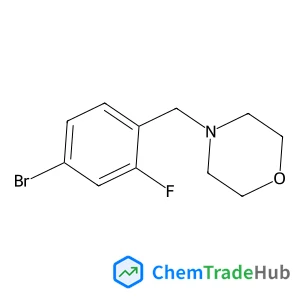
![1-{2-[(4-Chlorobenzyl)sulfanyl]-2-(2,4-dichlorophenyl)ethyl}-1H-imidazole structure](https://cnstatic.chemtradehub.com/structs/613/61318-90-9-6785.webp "1-{2-[(4-Chlorobenzyl)sulfanyl]-2-(2,4-dichlorophenyl)ethyl}-1H-imidazole structure")
1-{2-[(4-Chlorobenzyl)sulfanyl]-2-(2,4-dichlorophenyl)ethyl}-1H-imidazole
CAS号:
61318-90-9
分子式:
C18H15Cl3N2S
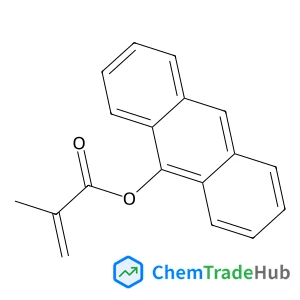
![3-({2-[(2R,4S)-4-Fluoro-2-methyl-1-pyrrolidinyl]-2-oxoethyl}amino)-3-methyl-1-(1-pyrrolidinyl)-1-butanone structure](https://cnstatic.chemtradehub.com/structs/118/1186426-66-3-b2e9.webp "3-({2-[(2R,4S)-4-Fluoro-2-methyl-1-pyrrolidinyl]-2-oxoethyl}amino)-3-methyl-1-(1-pyrrolidinyl)-1-butanone structure")
推荐供应商





免责声明
本页面提供的学术期刊信息仅供参考和研究使用。我们与任何期刊出版商均无关联,也不处理投稿事宜。如有投稿相关咨询,请直接联系相关期刊出版商。
如发现页面信息有误,请发送邮件至 support@chemtradehub.com 联系我们。我们将及时核实并处理您的问题。