



![2-Hydroxy-4-[({[(4-methylphenyl)sulfonyl]oxy}acetyl)amino]benzoic acid structure](https://cnstatic.chemtradehub.com/structs/501/501919-59-1-579f.webp "2-Hydroxy-4-[({[(4-methylphenyl)sulfonyl]oxy}acetyl)amino]benzoic acid structure")
2-Hydroxy-4-[({[(4-methylphenyl)sulfonyl]oxy}acetyl)amino]benzoic acid
CAS号:
501919-59-1
分子式:
C16H15NO7S
Yun Wang, Haiyuan Zhang, Jie Zhang, Yijie Fu, Yuyin Wang, Yang Bai, Xin Feng, Jiahua Zhu, Xiaohua Lu, Liwen Mu, Wei Li
Methane (CH4) is the world's second most potent greenhouse gas after carbon dioxide (CO2). Removal of low concentrations of CH4 from the environment by an advanced oxidation process (i.e., total oxidation to CO2) powered by solar energy is attractive. However, studies of solar-driven methane oxidation have focused on the selective conversion of CH4 to high-value chemicals, where methane usually occurs in high concentrations. In this paper, the related work of selective conversion of high-concentration CH4 is introduced first, and the mechanism of selective conversion of CH4 is discussed. The “bad” reaction (i.e., total oxidation to CO2) reported in selective conversion of high concentration CH4 is pointed out, hoping to guide the related work of removal of low concentration CH4.
Daniel Löffler, Seyithan Ulas, Stefan-Sven Jester, Patrick Weis, Artur Böttcher
DOI: 10.1039/C0CP00137F
Ulrich Sternberg, Stephan L. Grage, Raiker Witter
DOI: 10.1039/B908236K
Ana Rodríguez, Diana Rodríguez, Andrés Garzón, Amparo Soto, Alfonso Aranda, Alberto Notario
DOI: 10.1039/C0CP00625D
Amgalanbaatar Baldansuren, Rüdiger-A. Eichel, Emil Roduner
DOI: 10.1039/B903870A
Bin Geng, Jun Cai, Sangzi Liang, Shao Xiong Liu, Ming Fang Li, Yan-Xia Chen
DOI: 10.1039/C002665D
Dmitrij Rappoport, Filipp Furche
DOI: 10.1039/B902098E
Renata Costa, Carlos M. Pereira, Fernando Silva
DOI: 10.1039/C003920A
Jasper Van Noyen, Bert F. Sels, Pierre A. Jacobs, Thierry Verbiest, Dirk E. De Vos
DOI: 10.1039/C0CP00257G
David N. Mueller, Roger A. De Souza, Daniel Roehrens, Joachim Mayer, Manfred Martin
DOI: 10.1039/C0CP00004C
Sean Garrett-Roe, Peter Hamm
DOI: 10.1039/C004579A
十二烷基磺酸钠主要用作表面活性剂,广泛应用于洗涤剂、肥皂、化妆品和工业清洁产品中。它能有效去除油脂和污垢,常用于制造洗发水、沐浴露、洗衣粉和金属清洗剂。此外,它...
5-羟基异喹啉作为化学品,主要适用的法规包括GHS全球化学品统一分类和标签制度,REACH法规等。GHS将5-羟基异喹啉分类为皮肤腐蚀/刺激类别2,严重眼损伤/...
合成中可以考虑使用类似结构的化合物,如4-[(E)-2-(2-氯-6-氟苯基)乙烯基]-N-甲基苯胺的类似物或衍生物作为替代品。这类化合物可能具有相似的生物活性...
该化合物通常通过如下步骤合成:首先,将4-溴-1H-咪唑与对甲苯磺酸在乙酸乙酯中反应,得到中间体5-溴-1H-咪唑-2-甲酸乙酯。然后,该中间体与2-甲基-2-...
处理4-(吡咯烷-1-基)环己酮时,应佩戴手套、护目镜和实验室外套,以防止直接接触或吸入。在通风橱中操作,确保良好的通风条件。一旦发生泄漏,应立即清理并使用适当...
含有异麦芽糖醇的废液应首先进行分类收集,避免与其他化学品混合。对于小规模的废液,可以通过焚烧或加入特定的化学试剂进行无害化处理。对于大规模的废液,建议联系专业的...
7-甲基壬酸主要用于有机合成领域,作为合成其他化合物的原料。此外,它还可能作为一种中间体用于药品制造和香料合成,但具体用途需要根据其具体的化学结构和反应特性来确...
N-甲氧基-N-甲基甲基吡啶羧酰胺在医药领域有一定的应用,作为一种潜在的药物前体或中间体。此外,该化合物也可能应用于聚合物改性剂、传感器材料等。由于其独特的化学...
惕各酸香叶酯是一种化合物,化学名称为(2E)-3,7-二甲基-2,6-辛二烯-1-基(2E)-2-甲基-2-丁烯酸酯。它是一种具有香叶香气的化合物,分子式为C1...
1-环丁基哌嗪在适当的操作条件下是相对安全的,但如遇明火或高热会释放有毒气体。操作时应佩戴防护眼镜和手套,避免吸入或接触皮肤、眼睛。

Catalysis Science & Technology is committed to publishing research reporting high-quality, cutting-edge developments across the catalysis community at large. The journal places equal focus on publications from the heterogeneous, homogeneous, thermo-, electro-, photo-, organo- and biocatalysis communities. Works published in the journal feature a balanced mix of fundamental, technology-oriented, experimental, computational, digital and data-driven original research, thus appealing to catalysis practitioners in both academic and industrial environments. Original research articles published in the journal must demonstrate new catalytic discoveries and/or methodological advances that represent a significant advance on previously published work, from the molecular to the process scales. We welcome rigorous research in a wide range of timely or emerging applications related to the environment, health, energy and materials. Catalysis Science & Technology publishes Communications, Articles, Reviews and Perspectives. More details regarding manuscript types may be found in the Information for Authors section.
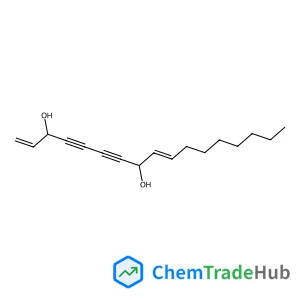
![4-[2-(Trichlorosilyl)ethyl]benzenesulfonyl chloride structure](https://cnstatic.chemtradehub.com/structs/797/79793-00-3-de16.webp "4-[2-(Trichlorosilyl)ethyl]benzenesulfonyl chloride structure")