


Kinetics and optimization studies of modified VPO/γ-Al2O3 catalyst prepared in situ for cross-aldol condensation
文献信息
发布日期
2023-09-22
DOI
10.1039/D3CY00844D
影响因子
6.119
作者
Xinpeng Guo
查看原文
摘要
Organic solvent method was used to prepare the active component VPO, which was loaded on ball-milled γ-Al2O3 support. VPO/γ-Al2O3 catalysts were synthesized by in situ generation for the synthesis of acrylic acid (AA) by the aldol condensation of acetic acid (HAc) and formaldehyde (HCHO). The effects of the calcination temperature and the loading of the active component VPO on catalytic activity were systematically investigated. XRD, BET, SEM, CO2/NH3-TPD, FT-IR spectroscopy, and TG techniques were used to characterize the VPO/γ-Al2O3 catalysts. The results showed that the catalyst had the best crystal structure and acid–base activity center at a calcination temperature of 350 °C. The catalytic performance was evaluated using a fixed bed reactor. 60% VPO/γ-Al2O3 exhibited the highest reactivity, and the yield of AA was up to 51.5%. Response surface methodology (RAM) was used to optimize the reaction conditions for aldol condensation. The kinetic equation and reaction order of the aldol condensation reaction were determined using the VPO/γ-Al2O3 catalyst. It provides guidance for the in-depth study of aldol condensation reactions in the future.
期刊推荐
Atomization and Sprays
Bioorganic & Medicinal Chemistry Letters

Topics in Catalysis
Main Group Chemistry
Acta Metallurgica Sinica-English Letters

Colloid Journal
Journal of Chemical Sciences

Critical Reviews in Solid State and Materials Sciences

Journal of the Indian Institute of Science

Medicinal Chemistry Research
相关文献
Structures and energetics of 98 atom Pd–Pt nanoalloys: potential stability of the Leary tetrahedron for bimetallic nanoparticles
Lauro Oliver Paz-Borbón, Thomas V. Mortimer-Jones, Roy L. Johnston, Alvaro Posada-Amarillas, Giovanni Barcaro, Alessandro Fortunelli
2007-07-17
Paper
DOI: 10.1039/B707136A
Structures, energetics, and infrared spectra of the Cl−–(H2S)n and Br−–(H2S)n anion clusters from ab initio calculations
T. Lenzer
2007-09-13
Paper
DOI: 10.1039/B710111B
Adsorption of sulfur dioxide on hematite and goethite particle surfaces
Jonas Baltrusaitis, Vicki H. Grassian
2007-08-30
Paper
DOI: 10.1039/B709167B
The effect of surface active solutes on bubbles in an acoustic field
Muthupandian Ashokkumar, Franz Grieser
2007-07-06
Perspective
DOI: 10.1039/B707306M
Investigations on the gas-phase photolysis and OH radical kinetics of methyl-2-nitrophenols
Ian Barnes, Romeo Olariu, Shouming Zhou, Peter Wiesen, Thorsten Benter
2007-09-07
Paper
DOI: 10.1039/B709464G
Energy level promotion in the correlation from the tunnelling-doubled harmonic oscillator to the bi-rotor: application to internal rotation in molecules
2007-09-20
Paper
DOI: 10.1039/B710691B
Fully state-selected VMI study of the near-threshold photodissociation of NO2: variation of the angular anisotropy parameter
S. J. Matthews, S. Willitsch, T. P. Softley
2007-09-06
Paper
DOI: 10.1039/B706428D
Global exploration of the energy landscape of solids on the ab initio level
K. Doll, J. C. Schön, M. Jansen
2007-10-16
Paper
DOI: 10.1039/B709943F
您可能还喜欢
化合物问答
4-[4-三氟甲基苯基]恶唑(CAS号:1126636-40-5)通常如何合成?
4-[4-三氟甲基苯基]恶唑通常通过将4-三氟甲基苯酚与异硫氰酸苯酯在有机溶剂中进行酯化反应合成。该反应可在无水条件下,使用适当的催化剂,如四丁基氢氧化铵,以提...
1126636-40-54-(4-(Trifluoromethy...
59729-32-71-[3-(Dimethylamino)...
化合物问答
RockPhos Pd G3(CAS号:2009020-38-4)通常如何合成?
RockPhos Pd G3 通常通过钯催化偶联反应合成,使用配体 (2'-Amino-2-biphenylyl)(methanesulfonato-kappa...
2009020-38-4(2'-Amino-2-biphenyl...
化合物问答
1-哌啶甲酰胺(CAS号:2158-03-4)的市场或研究趋势如何?
1-哌啶甲酰胺作为有机合成中的重要中间体,其市场需求主要受医药、农药、染料等行业推动。近年来,随着新药开发和绿色化学的发展,该化合物的研究趋势集中在开发更高效、...
2158-03-41-Piperidinecarboxam...
化合物问答
2-(二苯基膦基)乙胺(CAS号:4848-43-5)适用哪些法规指南?
2-(二苯基膦基)乙胺适用于多种法规指南,包括但不限于《全球化学品统一分类和标签制度》(GHS),欧盟《化学品注册、评估、授权和限制》法规(REACH),以及美...
4848-43-52-(Diphenylphosphino...
化合物问答
如何储存间苯二甲酸二烯丙酯(CAS号:1087-21-4)?
间苯二甲酸二烯丙酯应储存在阴凉、干燥、通风良好的地方,远离火源和热源。储存容器应密封,避免光照和高温。储存温度应控制在25℃以下,相对湿度应低于80%。避免与其...
1087-21-4Diallyl isophthalate
化合物问答
什么是间甲苯异硫代异氰酸酯(CAS号:621-30-7)?
间甲苯异硫代异氰酸酯是一种有机化合物,分子式为C7H7NO2S,具有刺激性气味。它是一种重要的有机合成中间体,在合成其他化合物时广泛应用。
621-30-71-Isothiocyanato-3-m...
化合物问答
在合成中是否有N-Boc-D-苯丙氨醇(CAS号:106454-69-7)的替代品?
在合成中,可以考虑使用N-Cbz-D-苯丙氨醇或N-Fmoc-D-苯丙氨醇作为替代品。这些化合物同样具有保护氨基的功能,且在合成过程中表现出良好的反应性能。
106454-69-72-Methyl-2-propanyl ...
化合物问答
3-羟甲基-2-氧异丙基吡啶(CAS号:954240-50-7)的主要用途是什么?
3-羟甲基-2-氧异丙基吡啶主要用于有机合成领域,可以作为合成其他药物、农药或精细化学品的中间体。此外,它还可能在实验室研究中作为特定反应的前体或溶剂。
954240-50-7(2-Isopropoxy-3-pyri...
化合物问答
6-氨基-9-甲基嘌呤(CAS号:700-00-5)应用于哪些行业?
6-氨基-9-甲基嘌呤目前主要应用于医药行业,作为某些药物的中间体。此外,它还可能用于聚合物、传感器和半导体的某些领域,作为功能性单体或掺杂剂。
700-00-59-Methyl-9H-purin-6-...
来源期刊
Catalysis Science & Technology
CiteScore:
5.91
自引率:
4.5%
年发文量:
600
Catalysis Science & Technology is committed to publishing research reporting high-quality, cutting-edge developments across the catalysis community at large. The journal places equal focus on publications from the heterogeneous, homogeneous, thermo-, electro-, photo-, organo- and biocatalysis communities. Works published in the journal feature a balanced mix of fundamental, technology-oriented, experimental, computational, digital and data-driven original research, thus appealing to catalysis practitioners in both academic and industrial environments. Original research articles published in the journal must demonstrate new catalytic discoveries and/or methodological advances that represent a significant advance on previously published work, from the molecular to the process scales. We welcome rigorous research in a wide range of timely or emerging applications related to the environment, health, energy and materials. Catalysis Science & Technology publishes Communications, Articles, Reviews and Perspectives. More details regarding manuscript types may be found in the Information for Authors section.
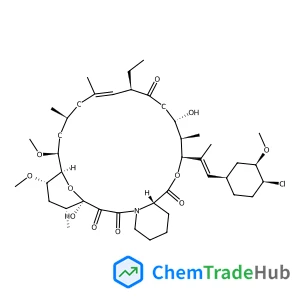
推荐化合物
推荐供应商





免责声明
本页面提供的学术期刊信息仅供参考和研究使用。我们与任何期刊出版商均无关联,也不处理投稿事宜。如有投稿相关咨询,请直接联系相关期刊出版商。
如发现页面信息有误,请发送邮件至 support@chemtradehub.com 联系我们。我们将及时核实并处理您的问题。