


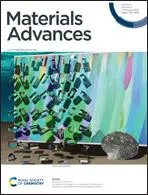

Ab initio study of uniaxial strain-induced thermoelectric property tuning of individual single-wall carbon nanotubes
文献信息
发布日期
2023-10-26
DOI
10.1039/D3MA00713H
影响因子
0
作者
Ahmed Zubair
查看原文
摘要
Carbon nanotubes (CNT) have garnered significant importance as thermoelectric (TE) material due to their high TE performance owing to their inherent fascinating one-dimensional quantum confinement of charge carriers. Among various methods to tune and enhance TE properties, the impact of strain on the properties of CNT-based TE devices is rarely explored, though it is immanently present, specifically on multi-functional CNT fibers. In this study, we present the tunability and enhancement of electronic and TE properties of single-wall carbon nanotubes (SWCNTs) by strain engineering within the framework of density functional theory and Boltzmann transport theory. Semiconducting to metallic transition with a zigzag pattern of band gap (Eg) and Seebeck coefficient (S) variation was observed for uniaxial strain due to shifting of the Dirac points. Within the smaller range of strains, the Eg and S for the (10,0) SWCNT exhibited a positive correlation with tensile strain and demonstrated a negative correlation with compressive strain, while it showed a reverse trend for (11,0) SWCNT. In contrast, for (9,0) SWCNT, the Eg and S increased under both tensile and compressive strains. The SWCNTs exhibited a significant enhancement of thermoelectric transport properties while they underwent tensile and compressive strains. Applying uniaxial stress enhanced the Seebeck coefficient of SWCNTs to 1580 μV K−1. We achieved the enhancement of thermoelectric power factor as follows: 2.2 mW m−1 K−2 (−9%), 1.3 mW m−1 K−2 (−3%), 1.15 mW m−1 K−2 (−3%), and 1.24 mW m−1 K−2 (−9%) for (6,6), (9,0), (10,0), and (11,0) SWCNTs, respectively. The overall performance parameter thermoelectric figure of merit, zT was tuned up to 1.56 when the strain varied from −9% to +9%, a fewfold increment compared to its relaxed state. The optimum range of doping for SWCNTs was found to be within 5 × 1019 cm−3– 1 × 1021 cm−3 to achieve the best thermoelectric power factor and zT. The insights gained from this study will be indispensable for diverse applications in the solid-state and especially in fiber-based wearable nanoelectronic devices such as strain sensors, thermoelectric energy harvesters, and thermoelectric coolers.
期刊推荐
Journal of Medicinal Chemistry
Journal of Physics and Chemistry of Solids
Pharmacological Reviews
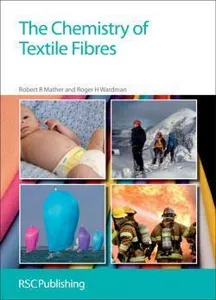
Fibre Chemistry
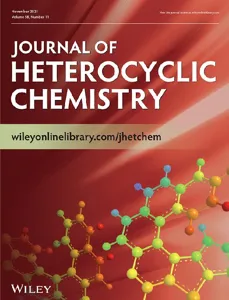
Journal of Heterocyclic Chemistry
Russian Chemical Reviews
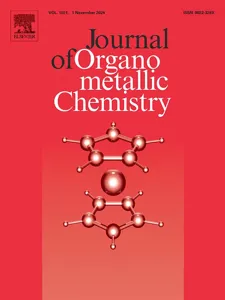
Journal of Organometallic Chemistry
Organic Preparations and Procedures International
Journal of Catalysis
Proceedings of the National Academy of Sciences of the United States of America
相关文献
One-pot surface modification of rubbery polymer films
Hirofumi Tsuruta, Yoshihisa Fujii, Keiji Tanaka
2011-12-01
Communication
DOI: 10.1039/C1PY00488C
Functionalized polycarbonates from dihydroxyacetone: insights into the immortal ring-opening polymerization of 2,2-dimethoxytrimethylene carbonate
Marion Helou, Jean-Michel Brusson, Jean-François Carpentier, Sophie M. Guillaume
2011-10-14
Communication
DOI: 10.1039/C1PY00405K
A facile and fast method for the functionalization of polymersomes by photoinduced cycloaddition chemistry
Hans-Peter M. de Hoog, Bo Liedberg
2011-12-08
Communication
DOI: 10.1039/C1PY00413A
Recognition of polymer side chains by cyclodextrins
Akihito Hashidzume
2011-06-07
Review Article
DOI: 10.1039/C1PY00162K
Lubrication mechanism of concentrated polymer brushes in solvents: effect of solvent viscosity
Akihiro Nomura, Kohji Ohno, Takeshi Fukuda
2011-11-14
Paper
DOI: 10.1039/C1PY00215E
Self-assembled amino acids and dipeptides as noncovalent hydrogels for tissue engineering
Derek M. Ryan, Bradley L. Nilsson
2011-10-07
Review Article
DOI: 10.1039/C1PY00335F
Novel soluble polyazomethines with pendant carbazole and triphenylamine derivatives: preparation, characterization, and optical, electrochemical and electrochromic properties
Jiwei Cai, Cheng Wang, Xuduo Bai, Wen Wang
2011-10-05
Paper
DOI: 10.1039/C1PY00237F
Ladder-type poly(benzopentalene) derivatives with tunable energy levels by “click” reaction
Dong Wang, Yuzhen Zhao, Hong Gao, Yan Xing, Huai Yang
2012-01-30
Paper
DOI: 10.1039/C2PY00593J
您可能还喜欢
化合物问答
4-((4-甲基哌嗪-1-基)甲基)苯硼酸(CAS号:763120-62-3)的市场或研究趋势如何?
随着有机硼化学的发展,该化合物在催化、药物合成、材料科学等领域展现出潜在的应用价值。近年来,其在药物前体合成中的应用越来越受到关注。市场趋势显示,随着科研投入的...
763120-62-3{4-[(4-Methyl-1-pipe...
化合物问答
如何储存2,4,5-三甲基-1-硝基苯(CAS号:610-91-3)?
2,4,5-三甲基-1-硝基苯应储存在阴凉、干燥且通风良好的地方,避免阳光直射。储存在密封的金属容器中,远离火源和热源。储存温度应控制在25°C以下,湿度不宜过...
610-91-31,2,4-Trimethyl-5-ni...
化合物问答
处理2,5-二碘噻吩(CAS号:625-88-7)时应注意哪些实验室安全事项?
在处理2,5-二碘噻吩时,应穿戴适当的个人防护装备(PPE),包括实验室外套、手套和防护眼镜。在通风橱中进行操作以避免吸入蒸气。如果发生泄漏,应立即疏散人员并使...
625-88-72,5-Diiodothiophene
化合物问答
在合成中是否有6-bromo-3-chloro-1H-indole(CAS号:57916-08-2)的替代品?
在合成6-溴-3-氯-1H-吲哚(CAS号:57916-08-2)时,可以考虑使用一些类似的化合物作为替代品,如6-氯-3-氯-1H-吲哚或3-氯-1H-吲哚,...
57916-08-26-bromo-3-chloro-1H-...
化合物问答
在合成中是否有(R)-(-)-1-(1-萘基)乙基异氰酸酯(CAS号:42340-98-7)的替代品?
可以考虑使用类似结构的化合物,如1-[(1R)-1-(2-氨基乙基)萘-1-基]乙基异氰酸酯作为替代品。此外,还可以寻找其他类型的异氰酸酯衍生物,如苯基异氰酸酯...
42340-98-71-[(1R)-1-Isocyanato...
化合物问答
3-氨基苯甲酰苯胺(CAS号:14315-16-3)适用哪些法规指南?
3-氨基苯甲酰苯胺适用于多项法规指南,包括但不限于GHS(全球化学品统一分类和标签制度)分类为皮肤腐蚀/刺激类别2,以及潜在的皮肤过敏性类别1。在欧盟地区,它受...
14315-16-33-Amino-N-phenylbenz...
化合物问答
β-环柠檬醛-D5(CAS号:26309-95-5)通常如何合成?
β-环柠檬醛-D5可通过不对称合成方法获得。常见的合成路线包括以环己酮为原料,经过选择性氧化、还原、保护基引入等步骤,最终得到目标化合物。该合成过程中通常使用多...
26309-95-5[(2,2-Dimethylpropan...
34915-68-9Bunitrolol
化合物问答
如何处理含有BIO-1211(CAS号:187735-94-0)的废料?
对于含有BIO-1211(CAS号:187735-94-0)的废料,首先应进行分类收集,确保符合环保要求。然后,可以考虑通过焚烧或其他专业处理方法进行处置。在处...
187735-94-0BIO-1211
化合物问答
如何处理含有4-氯-2-氟-3-甲基苯酚(CAS号:1351668-24-0)的废料?
含有该化合物的废液应收集至专用容器中,避免与其他化学品混合。可采用焚烧或送交专业废弃物处理公司处理。处理过程中需遵守当地环保法规,确保不产生二次污染。处理前应进...
1351668-24-04-Chloro-2-fluoro-3-...
来源期刊
推荐化合物
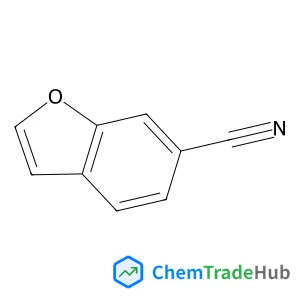
![(3aR,7R,7aR)-2,2-Diethyl-3a,6,7,7a-tetrahydro-7-[(methylsulfonyl)oxy]-1,3-benzodioxole-5-carboxylic Acid Ethyl Ester structure](https://cnstatic.chemtradehub.com/structs/204/204254-90-0-7172.webp "(3aR,7R,7aR)-2,2-Diethyl-3a,6,7,7a-tetrahydro-7-[(methylsulfonyl)oxy]-1,3-benzodioxole-5-carboxylic Acid Ethyl Ester structure")

推荐供应商





免责声明
本页面提供的学术期刊信息仅供参考和研究使用。我们与任何期刊出版商均无关联,也不处理投稿事宜。如有投稿相关咨询,请直接联系相关期刊出版商。
如发现页面信息有误,请发送邮件至 support@chemtradehub.com 联系我们。我们将及时核实并处理您的问题。