












![N-[2-Bromo-4-(trifluoromethoxy)phenyl]formamide structure](https://cnstatic.chemtradehub.com/structs/941/941294-53-7-f783.webp "N-[2-Bromo-4-(trifluoromethoxy)phenyl]formamide structure")
Cycling of potassium–carbonate co-substituted hydroxyapatite compositions for improved carbon dioxide capture at 500 °C
文献信息
发布日期
2023-11-22
DOI
10.1039/D3MA00909B
影响因子
0
作者
Duncan A. Nowicki
查看原文
摘要
There is an immediate need to reduce CO2 emissions if the impacts of climate change are to be mitigated. Whilst carbon capture & storage offers such a route, costs associated with this technology necessitate that more efficient means of capture be developed—including studying materials that may have improved performance and/or end-use application as functional materials post-capture. Stoichiometric hydroxyapatite and potassium–carbonate co-substituted apatites were subjected to carbonation–regeneration cycles at 500 °C to explore their applicability for carbon capture, with chemical characterisation performed after each carbonation/regeneration. The CO2 carrying capacity increased alongside the degree of co-substitution; the material with the highest as-prepared potassium/carbonate content exhibited a carrying capacity of 0.57 mmol g−1 sorbent. This was more than seven times that of stoichiometric hydroxyapatite (0.08 mmol g−1 sorbent) and is the first demonstration showing that the CO2 carrying capacity can be increased via ionic substitution mechanisms. It was hypothesised that this improved performance was due to co-substitution having generated additional structural sites for interchange with CO2. In an extended study, the CO2 carrying capacity of one composition was observed to improve following an initial drop after the first cycle. This is significant when compared to calcium oxide, whose reactivity towards CO2 declined by 42% between the first and second cycles alone. FTIR spectroscopy suggested that the apatite material functioned by way of the simultaneous substitution of carbonate ions onto hydroxyl and phosphate sites during carbonation followed by the subsequent loss of these ions when the material was heated in air. Data from this study supports the concept that these materials could play a role as CO2 sorbents for industrial carbon capture and justifies further studies in more complex systems that could evaluate real-world application.
相关文献
Constructing star polymersvia modular ligation strategies
Ozcan Altintas, Andrew P. Vogt, Christopher Barner-Kowollik, Umit Tunca
2011-08-10
Review Article
DOI: 10.1039/C1PY00249J
Synthesis and micellization of amphiphilic multi-branched poly(p-dioxanone)-block-poly(ethylene glycol)
Si-Chong Chen, Ling-Ling Li, Hao Wang, Gang Wu, Yu-Zhong Wang
2012-03-14
Paper
DOI: 10.1039/C2PY20016C
Ladder-type poly(benzopentalene) derivatives with tunable energy levels by “click” reaction
Dong Wang, Yuzhen Zhao, Hong Gao, Yan Xing, Huai Yang
2012-01-30
Paper
DOI: 10.1039/C2PY00593J
From a benzodiazaborole-based compound to donor–acceptor polymervia electropolymerization
Shotaro Hayashi, Toshio Koizumi
2012-01-16
Communication
DOI: 10.1039/C2PY00563H
Novel optically active helical poly(N-propargylthiourea)s: synthesis, characterization and complexing ability toward Fe(iii) ions
Ci Song, Lei Li, Fangjie Wang, Jianping Deng, Wantai Yang
2011-10-21
Paper
DOI: 10.1039/C1PY00457C
Control of morphology in olefinpolymerization catalyzed by nickel diimine complexes encapsulated into polybutadiene based support
Zdeněk Hošt'álek, Jan Merna, Bertrand Heurtefeu, Henri Cramail
2012-01-12
Paper
DOI: 10.1039/C2PY00482H
High molecular weight acrylonitrile–butadiene architectures via a combination of RAFT polymerization and orthogonal copper mediated azide–alkyne cycloaddition
Christoph J. Dürr, Sebastian G. J. Emmerling, Paul Lederhose, Andreas Kaiser, Sven Brandau, Michael Klimpel, Christopher Barner-Kowollik
2012-02-07
Paper
DOI: 10.1039/C2PY00547F
Modular oxime functionalization of well-defined alkoxyamine-containing polymers
Soma Mukherjee, Philip J. Costanzo
2011-11-07
Paper
DOI: 10.1039/C1PY00451D
Self-assembled amino acids and dipeptides as noncovalent hydrogels for tissue engineering
Derek M. Ryan, Bradley L. Nilsson
2011-10-07
Review Article
DOI: 10.1039/C1PY00335F
您可能还喜欢
化合物问答
4-((4-甲基哌嗪-1-基)甲基)苯硼酸(CAS号:763120-62-3)的市场或研究趋势如何?
随着有机硼化学的发展,该化合物在催化、药物合成、材料科学等领域展现出潜在的应用价值。近年来,其在药物前体合成中的应用越来越受到关注。市场趋势显示,随着科研投入的...
763120-62-3{4-[(4-Methyl-1-pipe...
化合物问答
如何储存2,4,5-三甲基-1-硝基苯(CAS号:610-91-3)?
2,4,5-三甲基-1-硝基苯应储存在阴凉、干燥且通风良好的地方,避免阳光直射。储存在密封的金属容器中,远离火源和热源。储存温度应控制在25°C以下,湿度不宜过...
610-91-31,2,4-Trimethyl-5-ni...
化合物问答
处理2,5-二碘噻吩(CAS号:625-88-7)时应注意哪些实验室安全事项?
在处理2,5-二碘噻吩时,应穿戴适当的个人防护装备(PPE),包括实验室外套、手套和防护眼镜。在通风橱中进行操作以避免吸入蒸气。如果发生泄漏,应立即疏散人员并使...
625-88-72,5-Diiodothiophene
化合物问答
在合成中是否有6-bromo-3-chloro-1H-indole(CAS号:57916-08-2)的替代品?
在合成6-溴-3-氯-1H-吲哚(CAS号:57916-08-2)时,可以考虑使用一些类似的化合物作为替代品,如6-氯-3-氯-1H-吲哚或3-氯-1H-吲哚,...
57916-08-26-bromo-3-chloro-1H-...
化合物问答
在合成中是否有(R)-(-)-1-(1-萘基)乙基异氰酸酯(CAS号:42340-98-7)的替代品?
可以考虑使用类似结构的化合物,如1-[(1R)-1-(2-氨基乙基)萘-1-基]乙基异氰酸酯作为替代品。此外,还可以寻找其他类型的异氰酸酯衍生物,如苯基异氰酸酯...
42340-98-71-[(1R)-1-Isocyanato...
化合物问答
3-氨基苯甲酰苯胺(CAS号:14315-16-3)适用哪些法规指南?
3-氨基苯甲酰苯胺适用于多项法规指南,包括但不限于GHS(全球化学品统一分类和标签制度)分类为皮肤腐蚀/刺激类别2,以及潜在的皮肤过敏性类别1。在欧盟地区,它受...
14315-16-33-Amino-N-phenylbenz...
化合物问答
β-环柠檬醛-D5(CAS号:26309-95-5)通常如何合成?
β-环柠檬醛-D5可通过不对称合成方法获得。常见的合成路线包括以环己酮为原料,经过选择性氧化、还原、保护基引入等步骤,最终得到目标化合物。该合成过程中通常使用多...
26309-95-5[(2,2-Dimethylpropan...
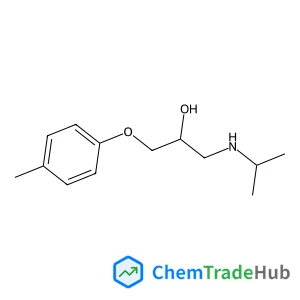
34915-68-9Bunitrolol
化合物问答
如何处理含有BIO-1211(CAS号:187735-94-0)的废料?
对于含有BIO-1211(CAS号:187735-94-0)的废料,首先应进行分类收集,确保符合环保要求。然后,可以考虑通过焚烧或其他专业处理方法进行处置。在处...
187735-94-0BIO-1211
化合物问答
如何处理含有4-氯-2-氟-3-甲基苯酚(CAS号:1351668-24-0)的废料?
含有该化合物的废液应收集至专用容器中,避免与其他化学品混合。可采用焚烧或送交专业废弃物处理公司处理。处理过程中需遵守当地环保法规,确保不产生二次污染。处理前应进...
1351668-24-04-Chloro-2-fluoro-3-...
来源期刊
推荐化合物
![2-Methyl-2-propanyl [1-(3-nitro-2-pyridinyl)-4-piperidinyl]carbamate structure](https://cnstatic.chemtradehub.com/structs/833/833452-36-1-7af5.webp "2-Methyl-2-propanyl [1-(3-nitro-2-pyridinyl)-4-piperidinyl]carbamate structure")
2-Methyl-2-propanyl [1-(3-nitro-2-pyridinyl)-4-piperidinyl]carbamate
CAS号:
833452-36-1
分子式:
C15H22N4O4
推荐供应商




免责声明
本页面提供的学术期刊信息仅供参考和研究使用。我们与任何期刊出版商均无关联,也不处理投稿事宜。如有投稿相关咨询,请直接联系相关期刊出版商。
如发现页面信息有误,请发送邮件至 support@chemtradehub.com 联系我们。我们将及时核实并处理您的问题。