


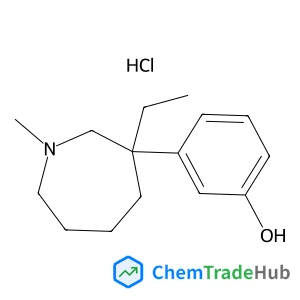
Ciprofloxacin peptide-based nanoparticles confer antimicrobial efficacy against multidrug-resistant bacteria
文献信息
发布日期
2023-11-15
DOI
10.1039/D3NJ04003H
影响因子
3.591
作者
Jian-Bin Zhen, Jia-Jia Yi, Bing-Xiao Liu, Yan-Jun Liu, Xin-Yi Bu, Xiao-Jing Wu, Da Tang
查看原文
摘要
The advent of antibiotics plays a vital role in dealing with the challenges of various bacterial infections, which have saved millions of patients from the brink of death. However, the abuse of antibiotics accelerated the development of bacterial drug-resistance, posing a serious threat to public health. To conquer increasingly severe drug-resistance, the amphiphilic ciprofloxacin peptide-based polymer (PAC) was prepared, which could self-assemble into positively charged nanostructures (PAC-NPs) with a diameter of 300 nm and a zeta potential of +28.6 mV in aqueous solution, confirmed by SEM and DLS. The biological assays displayed that the PAC-NPs possessed broad-spectrum and excellent antibacterial effect against both Gram-positive and Gram-negative bacteria, with an MIC in the range of 1.0–4.0 μg mL−1 and more than 91% sterilization rate. Most importantly, the cationic PAC-NPs did not easily cause antibiotic-resistance and showed low toxicity both in vivo and in vitro. The unique antibacterial mechanism systematically detected by different techniques revealed that the nanoparticles could completely destroy the morphology of bacterial cells, eventually leading to the irreversible apoptosis of bacterial cells, which elucidated why the bacteria were less prone to develop resistance toward PAC-NPs. This study provides a promising strategy by mimicking the structure of AMPs to construct novel bactericidal materials without inducing drug-resistance.
期刊推荐

Science

Organic Preparations and Procedures International

Journal of Organometallic Chemistry
Pure and Applied Chemistry
Journal of Physics and Chemistry of Solids

Journal of Medicinal Chemistry
Science Progress
Planta Medica
Proceedings of the National Academy of Sciences of the United States of America
Russian Chemical Reviews
相关文献
Isomerization barriers and resonance stabilization for the conrotatory and disrotatory isomerizations of nitrogen containing tricyclo moieties
Weiwei Yang, Kimberley N. Poland, Steven R. Davis
2018-10-02
Paper
DOI: 10.1039/C8CP05091K
A facile synthesis of segmented silver nanowires and enhancement of the performance of polymer solar cells
You Wei, Qi-lun Zhang, Hui-jun Wan, Ying-nan Zhang, Shu-wen Zheng, Yong Zhang
2018-06-25
Paper
DOI: 10.1039/C8CP02734J
Effective lead optimization targeting the displacement of bridging receptor–ligand water molecules
Deliang Chen, Yibao Li, Mingming Zhao, Wen Tan, Xun Li, Wei Guo, Xiaolin Fan
2018-08-31
Paper
DOI: 10.1039/C8CP04118K
DFT investigation on the adsorption of munition compounds on α-Fe2O3: similarity and differences with α-Al2O3
Glen R. Jenness, Jennifer Seiter, Manoj K. Shukla
2018-06-27
Paper
DOI: 10.1039/C8CP02590H
Correction: Convective heat transfer in a measurement cell for scanning electrochemical microscopy
Javor K. Novev, Richard G. Compton
2018-09-28
Correction
DOI: 10.1039/C8CP91865A
Correction: Synthesis of barbituric acid containing nucleotides and their implications for the origin of primitive informational polymers
Chaitanya V. Mungi, Sachin Kumar Singh, Sudha Rajamani
2018-07-25
Correction
DOI: 10.1039/C8CP91818J
Pressure dependence of spin canting in ammonium metal formate antiferromagnets
Alexander A. Tsirlin, Maxim Bykov, Elena Bykova, Michael Hanfland, Philipp Gegenwart, Sander van Smaalen, Leonid Dubrovinsky, Natalia Dubrovinskaia
2018-08-23
Paper
DOI: 10.1039/C8CP03761B
Fitting electron density as a physically sound basis for the development of interatomic potentials of complex alloys
Jose M. Ortiz-Roldan, Gustavo Esteban-Manzanares, Sofía Calero, A. Rabdel Ruiz-Salvador, Said Hamad
2018-06-15
Paper
DOI: 10.1039/C8CP02591F
Electrochemical impedance spectroscopy reveals a new mechanism based on competitive binding between Tris and protein on a conductive biomimetic polydopamine surface
Nimisha Singh, Jyotsnamayee Nayak, Khushbu Patel, Suban K. Sahoo, Rajender Kumar
2018-09-14
Paper
DOI: 10.1039/C8CP05391J
Strain-driven carrier-type switching of surface two-dimensional electron and hole gases in a KTaO3 thin film‡
2018-08-30
Paper
DOI: 10.1039/C8CP03650K
您可能还喜欢
化合物问答
6-氯-2H-1,4-苯并噁嗪-3(4H)-酮(CAS号:7652-29-1)应用于哪些行业?
6-氯-2H-1,4-苯并噁嗪-3(4H)-酮主要应用于医药、农药和聚合物等领域。在医药领域,该化合物可用于合成抗菌药物;在农药领域,可用作杀虫剂的中间体;在聚...
7652-29-16-Chloro-2H-1,4-benz...
化合物问答
活性氧化铝(CAS号:1302-74-5)应用于哪些行业?
活性氧化铝广泛应用于医药、聚合物、传感器、半导体和催化等领域。在医药行业,活性氧化铝用作吸附剂和干燥剂,有助于去除杂质和水分。在聚合物行业,它用作增白剂和抗结块...
1302-74-5aluminum;trihydrate
化合物问答
什么是硅胶(CAS号:112926-00-8)?
硅胶(Silica gel, pptd.,cryst.-free)是一种无定形、多孔的硅酸盐材料,主要成分为二氧化硅(SiO₂)。其结构由硅氧四面体构成,通过酸...
112926-00-8Silica gel, pptd.,cr...
化合物问答
二乙基甲基一氢硅烷(CAS号:760-32-7)的主要用途是什么?
二乙基甲基一氢硅烷主要用于有机合成、表面处理以及作为溶剂。它还被用作合成其他硅烷化合物的原料,以及在涂料、粘合剂和密封剂中的应用。
760-32-7Diethyl(methyl)silan...
化合物问答
在合成中是否有N-花生四烯酰基甘氨酸(CAS号:179113-91-8)的替代品?
在合成过程中,可以考虑使用类似结构的化合物作为替代品,例如N-亚油酰基甘氨酸或N-花生二烯酰基甘氨酸。这些替代品在结构上有类似的双键位置,但可能具有不同的物理化...
179113-91-8Glycine, N-[(5Z,8Z,1...
化合物问答
在合成中是否有1-(4-甲氧基苯基)丙烷-1,2-二酮(CAS号:10557-27-4)的替代品?
在合成过程中,可以考虑使用类似结构的化合物作为替代品,例如1-(3-甲氧基苯基)丙烷-1,2-二酮或1-(4-羟基苯基)丙烷-1,2-二酮。这些替代品具有相似的...
10557-27-41-(4-Methoxyphenyl)p...
化合物问答
N-(4-氨基-1-苄基-3-羟基-5-苯基戊基)-3-甲基-2-(2-氧代四氢嘧啶-1-基)-丁酰胺 5-氧代吡咯烷-2-甲酸(CAS号:192726-06-0)通常如何合成?
该化合物通常通过一系列复杂的有机合成步骤获得。首先,通过芳香族化合物的羟基化反应获得羟基化产物,然后通过酰化反应形成酰胺中间体,最后通过环化反应得到目标产物。常...
192726-06-05-Oxo-L-proline - (2...
化合物问答
(S)-2-氨基-3-喹啉-2-丙酸(CAS号:161513-46-8)的市场或研究趋势如何?
该化合物作为生物活性化合物,尤其是在药物化学领域表现出色。近年来,随着对新型抗炎、抗病毒和抗癌药物的研究增加,其市场和研究趋势持续增长。此外,其在神经科学领域的...
161513-46-8(S)-2-Amino-3-quinol...
化合物问答
核黄素磷酸钠(CAS号:130-40-5)安全吗?
核黄素磷酸钠在常规使用条件下安全,但高剂量可能引起刺激性反应。操作时需佩戴防护手套和护目镜,避免吸入粉尘。若接触皮肤或眼睛,应立即用大量清水冲洗。急救时需根据接...
130-40-5Sodium 1-deoxy-1-(7,...
化合物问答
盐酸丙胺卡因杂质A(EP) 标准品(CAS号:19281-31-3)通常如何合成?
盐酸丙胺卡因杂质A(EP) 标准品可通过重氮化反应和随后的酰胺化反应合成。首先,利用氯化反应将苯环上的氢原子转化为氯原子,然后通过芳香族重氮化反应引入氨基,最后...
19281-31-32-Chloro-N-(2-methyl...
来源期刊
New Journal of Chemistry

CiteScore:
5.3
自引率:
3.7%
年发文量:
2153
NJC (New Journal of Chemistry) is a broad-based primary journal encompassing all branches of chemistry and its sub-disciplines. It contains full research articles, communications, perspectives and focus articles. This well-established journal, owned by the Centre National de la Recherche Scientifique (CNRS) of France, has been co-published with the Royal Society of Chemistry since January 1998. NJC is the forum for the publication of high-quality, original and significant work that opens new directions in chemistry or other scientific disciplines. In addition to having a significant chemical component, work published in NJC must demonstrate that it will have an impact on areas of research other than that of the reported work.
推荐化合物
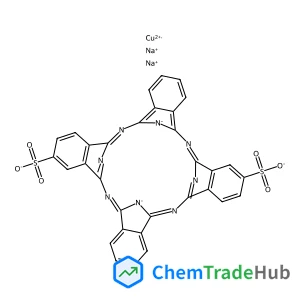
推荐供应商




免责声明
本页面提供的学术期刊信息仅供参考和研究使用。我们与任何期刊出版商均无关联,也不处理投稿事宜。如有投稿相关咨询,请直接联系相关期刊出版商。
如发现页面信息有误,请发送邮件至 support@chemtradehub.com 联系我们。我们将及时核实并处理您的问题。