






![2-Methyl-2-propanyl {3-[4-(4,4,5,5-tetramethyl-1,3,2-dioxaborolan-2-yl)phenyl]-3-oxetanyl}carbamate structure](https://cnstatic.chemtradehub.com/structs/127/1279090-25-3-1b84.webp "2-Methyl-2-propanyl {3-[4-(4,4,5,5-tetramethyl-1,3,2-dioxaborolan-2-yl)phenyl]-3-oxetanyl}carbamate structure")
Crystal structure, magnetic properties and theoretical study of a bithiazolebis(oxamate)-containing [Ni II3] helicate
文献信息
发布日期
2024-01-08
DOI
10.1039/D3NJ04701F
影响因子
3.591
作者
Lucas H. G. Kalinke, Mariany S. Silva, Ana K. Valdo, Felipe T. Martins, Nicolás Moliner, Miguel Julve, Francesc Lloret, Joan Cano, Danielle Cangussu
查看原文
摘要
A new metallosupramolecular compound of formula Na6Ni3(dabtzox)3·10H2O (1) was prepared by the metal-mediated self-assembly of the potentially tris(chelating) N,N′-2,2′-(4,4′-bithiazole)bis(oxamate) (dabtzox) ligand and its structure was determined by single-crystal X-ray diffraction. The structure of 1 comprises linear centrosymmetric helicate-type [NiII3(dabtzox)3]6− complex anions which are interconnected through hydrated NaI cations. The two crystallographically independent nickel(II) ions [Ni(1) and Ni(2)] are six-coordinate in distorted octahedral geometries with Ni(1)N3O3 and Ni(2)N6 chromophores. The value of the intra-helicate Ni(1)⋯Ni(2) separation is 4.082(2) Å. The investigation of the static (dc) magnetic properties of 1 in the temperature range 1.9–300 K reveals the occurrence of weak intramolecular ferro- [J1 = +0.6 cm−1 for Ni(1)⋯Ni(2)] and antiferromagnetic interactions [J2 = −0.9 cm−1 for Ni(1)⋯Ni(1)i] together with a moderate zero-field splitting (|D| = 2.3 cm−1), the Hamiltonian being defined as DFT- and CASSCF/NEVPT-type theoretical calculations were carried out to substantiate these parameters and illustrate the occurrence of the strict orthogonality between the dz2 [Ni(1)] and d(x2−y2) [Ni(2)] magnetic orbitals and the spin polarisation mechanism [Ni(1) and Ni(1)i] accounting for the unusual intramolecular ferro- and antiferromagnetic interactions, respectively. Dynamic (ac) magnetic susceptibility measurements in the temperature range 2.0–10.0 K showed the lack of any out-of-phase signal for 1, unlike what is observed for the previously reported triple helicate of formula K6Co3(dabtzox)3·8H2O·MeOH (2) which exhibits intramolecular antiferromagnetic coupling and field-induced slow magnetic relaxation. A detailed magneto-structural comparison between 1 and 2 is carried out to elucidate their different magnetic behaviours.
相关文献
Solar-driven electrochemical NH3 splitting into H2 and N2 on BiVO4-based photoanodes
Miwako Teranishi, Shin-ichi Naya, Hiroaki Tada
2023-12-13
Paper
DOI: 10.1039/D3SE01513K
Multiscale simulation of fluids: coupling molecular and continuum
Edward R. Smith, Panagiotis E. Theodorakis
2023-11-29
Perspective
DOI: 10.1039/D3CP03579D
Predicting the pair correlation functions of silicate and borosilicate glasses using machine learning
Kumar Ayush, Pooja Sahu, Sk. Musharaf Ali, Tarak K. Patra
2023-12-04
Paper
DOI: 10.1039/D3CP05136F
Growth methods' effect on the physical characteristics of CsPbBr3 single crystal
Mohamed Ben Bechir, Faisal Alresheedi
2023-12-05
Paper
DOI: 10.1039/D3CP04645A
Exploring the potential of cobalt hydroxide and its derivatives as a cost-effective and abundant alternative to noble metal electrocatalysts in oxygen evolution reactions: a review
Umair Shamraiz, Abdul Majeed, Bareera Raza, Noor ul Ain, Amin Badshah
2023-12-07
Review Article
DOI: 10.1039/D3SE00942D
A nanoscale surface engineered magneto-mechano-triboelectric nanogenerator enabled by reliable pattern replication for self-powered IoT devices
Srinivas Pattipaka, Tae Wan Park, Young Min Bae, Yujin Na, Kyeongwoon Chung, Kwi-Il Park, Jungho Ryu, Woon Ik Park, Geon-Tae Hwang
2024-01-04
Paper
DOI: 10.1039/D3SE01206A
Study on a direct hydrazine borane fuel cell based on an anion exchange membrane
Yang Zhang, Wenxing Jiang, Zhenying Chen, Yingying Liu, Chengwei Deng, Xiaodong Zhuang, Junliang Zhang, Changchun Ke
2023-11-30
Paper
DOI: 10.1039/D3SE01401K
Kinetic features of solvent extraction by N,O-donor ligands of f-elements: a comparative study of diamides based on 1,10-phenanthroline and 2,2′-bipyridine
Ekaterina A. Konopkina, Alexander V. Gopin, Anton S. Pozdeev, Maria G. Chernysheva, Paulina Kalle, Elizaveta A. Pavlova, Stepan N. Kalmykov, Vladimir G. Petrov, Nataliya E. Borisova, Alexander A. Guda, Petr I. Matveev
2023-12-18
Paper
DOI: 10.1039/D3CP05081E
您可能还喜欢
化合物问答
4-[[6-(3-苯基苯基)-7H-嘌呤-2-基]氨基]苯磺酰胺(CAS号:2079895-42-2)适用哪些法规指南?
该化合物需遵循REACH法规以确保其安全使用和管理。同时,根据其潜在的生物降解性和毒性,也需要符合GHS分类中的相应要求。此外,若用于医药或食品相关领域,则还需...
2079895-42-24-{[6-(3-Biphenylyl)...
化合物问答
反式-度骨化醇(CAS号:74007-20-8)的物理化学性质是什么?
反式-度骨化醇是一种脂溶性维生素D3的衍生物,呈无色或白色结晶性粉末,不溶于水,溶于乙醇、丙酮、氯仿等有机溶剂。其分子式为C28H44O,分子量为404.65。...
74007-20-8trans-Doxercalcifero...
化合物问答
莲花掌苷(CAS号:59282-56-3)的市场或研究趋势如何?
莲花掌苷作为一种天然产物,近年来在抗炎、抗癌等生物活性研究方面显示出一定的潜力,因此市场需求逐渐增长。市场动态方面,随着天然产物开发的深入,预计该化合物的研究会...
59282-56-3Lindleyin
化合物问答
2-溴-6-(吡咯烷-1-基)吡啶-4-硼酸频那醇酯(CAS号:1150271-64-9)应用于哪些行业?
2-溴-6-(吡咯烷-1-基)吡啶-4-硼酸频那醇酯在医药领域有着广泛的应用,它可以用作药物合成中的中间体。此外,它还可以用于有机合成,特别是在构建复杂杂环化合...
1150271-64-92-Bromo-6-(1-pyrroli...
化合物问答
什么是methyl 2-(4-bromophenyl)-3-methylbutanoate(CAS号:1061284-70-5)?
methyl 2-(4-溴苯基)-3-甲基丁酸甲酯是一种化学物质,分子式为C12H13BrO2。它是一种有机化合物,具有一定的挥发性和易燃性。
1061284-70-52-(4-Bromo-phenyl)-3...
化合物问答
CJC1-295(CAS号:863288-34-0)的物理化学性质是什么?
CJC1-295是一种具有复杂肽链结构的化合物,其分子量约为1875 Da。该化合物在水中具有一定的溶解性,但在有机溶剂中的溶解性不佳。它是一种反应活性化合物,...
863288-34-0L-tyrosyl-D-alanyl-L...
化合物问答
三正丁基锍碘(CAS号:18146-62-8)的市场或研究趋势如何?
三正丁基锍碘作为一种重要的有机硫化合物,主要用于有机合成中作为亲电试剂。近年来,由于其在合成中的广泛应用,市场对其需求持续增长。此外,随着绿色化学的发展,对其替...
18146-62-8Tributylsulfonium io...
化合物问答
雌二醇-[13C3]同位素内标(CAS号:1261254-48-1)通常如何合成?
雌二醇-[13C3]同位素内标通常通过在雌二醇分子中引入[13C3]同位素来合成。常见的方法是通过化学标记反应,如与[13C3]标记的甲基溴化物进行亲核取代反应...
1261254-48-117beta-Estradiol-2,3...
化合物问答
N1-(2-吡啶甲基)-N2-(2-甲基-1-萘基)草酰胺(CAS号:2611225-93-3)的物理化学性质是什么?
N1-(2-吡啶甲基)-N2-(2-甲基-1-萘基)草酰胺为固体化合物,具有良好的结晶形态,分子量为340.34 g/mol。该化合物在水中的溶解度较低,但在有...
2611225-93-3N-(2-Methyl-1-naphth...
化合物问答
如何处理含有十五碳烯酸甲酯(顺-10)(C15:1)标准品(CAS号:90176-52-6)的废料?
含有十五碳烯酸甲酯(顺-10)(C15:1)标准品的废料应首先进行适当收集和储存,避免与其他化学品混合。然后,可采用焚烧或交由专业废物处理公司进行处理。处理过程...
90176-52-6(Z)-10-Pentadecenoic...
来源期刊
New Journal of Chemistry
CiteScore:
5.3
自引率:
3.7%
年发文量:
2153
NJC (New Journal of Chemistry) is a broad-based primary journal encompassing all branches of chemistry and its sub-disciplines. It contains full research articles, communications, perspectives and focus articles. This well-established journal, owned by the Centre National de la Recherche Scientifique (CNRS) of France, has been co-published with the Royal Society of Chemistry since January 1998. NJC is the forum for the publication of high-quality, original and significant work that opens new directions in chemistry or other scientific disciplines. In addition to having a significant chemical component, work published in NJC must demonstrate that it will have an impact on areas of research other than that of the reported work.
推荐化合物
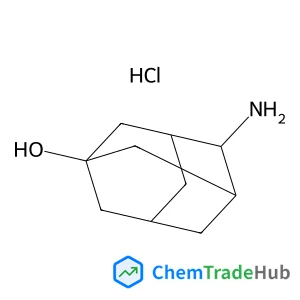

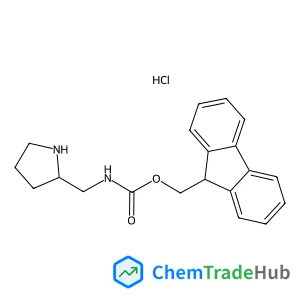
(S)-(9H-Fluoren-9-yl)methyl (pyrrolidin-2-ylmethyl)carbamate hydrochloride
CAS号:
1217813-15-4
分子式:
C20H23ClN2O2
推荐供应商


免责声明
本页面提供的学术期刊信息仅供参考和研究使用。我们与任何期刊出版商均无关联,也不处理投稿事宜。如有投稿相关咨询,请直接联系相关期刊出版商。
如发现页面信息有误,请发送邮件至 support@chemtradehub.com 联系我们。我们将及时核实并处理您的问题。