


Cu-catalysed Chan–Evans–Lam reaction meets deep eutectic solvents: efficient and selective C–N bond formation under aerobic conditions at room temperature‡
文献信息
发布日期
2023-05-30
DOI
10.1039/D3SU00093A
影响因子
0
作者
Luciana Cicco, Paola Vitale, Filippo Maria Perna, Joaquín García-Álvarez
查看原文
摘要
An unprecedented, simple and general protocol for the selective formation of C–N bonds was developed by using cheap and easily available Cu(OAc)2 as catalyst for the Cu(II)-catalysed Chan–Evans–Lam reaction in Deep Eutectic Solvents (DESs) as sustainable reaction media. The meticulous selection of both components of DES for this transformation (1ChOAc/2Urea) allows C–N coupling reactions under bench-type conditions (room temperature/under air), and in the absence of external ligands. The use of DES also permits to: (i) recycle the catalytic system for up to four consecutive runs; (ii) scale-up the C–N coupling reaction (without erosion of the yield); and (iii) apply this methodology to the synthesis of the anti-inflammatory drug Flufenamic acid (E-factor: 10).
期刊推荐

Proceedings of the National Academy of Sciences of the United States of America
Nature
Pure and Applied Chemistry
Journal of Medicinal Chemistry
Fibre Chemistry
Molecular Pharmacology
Journal of Catalysis
Journal of Physics and Chemistry of Solids
Israel Journal of Chemistry
Journal of Heterocyclic Chemistry
相关文献
Femtosecond to microsecond observation of the photochemical reaction of 1,2-di(quinolin-2-yl)disulfide with methyl methacrylate
Daisuke Koyama, Paul M. Donaldson, Andrew J. Orr-Ewing
2017-05-03
Paper
DOI: 10.1039/C7CP01784G
Hydrophobic hydration and anomalous diffusion of elastin in an ethanolic solution
Nisha Pawar, Priyanka Kaushik, H. B. Bohidar
2017-05-03
Paper
DOI: 10.1039/C7CP01384A
Quenching cooperative transitions by destroying Yb3+-clusters
Junjie Guo, Weihua Di, Yangyang Li, Xiaohui Liu, Weiping Qin
2017-04-18
Communication
DOI: 10.1039/C7CP01678F
A new model of the chemistry of ionizing radiation in solids: CIRIS
Christopher N. Shingledecker
2017-04-05
Paper
DOI: 10.1039/C7CP01472D
Operando X-ray spectroscopic observations of modulations of local atomic and electronic structures of color switching smart film
Han-Wei Chang, Jeng-Lung Chen, Chi-Liang Chen, Da-Hau Wei, Jin-Ming Chen, Wu-Ching Chou, Chung-Li Dong
2017-04-19
Paper
DOI: 10.1039/C7CP01116D
Strain effects on phonon transport in antimonene investigated using a first-principles study
Ai-Xia Zhang, Jiang-Tao Liu, San-Dong Guo, Hui-Chao Li
2017-05-08
Paper
DOI: 10.1039/C7CP02486J
Vapour–liquid interfacial properties of square-well chains from density functional theory and Monte Carlo simulation
Francisco José Martínez-Ruiz, Felipe J. Blas, A. Ignacio Moreno-Ventas Bravo, José Manuel Míguez, Luis G. MacDowell
2017-04-19
Paper
DOI: 10.1039/C7CP01182B
Methyl-functionalized MoS2 nanosheets with reduced lattice breathing for enhanced pseudocapacitive sodium storage
Lei Huang, Qiulong Wei, Xiaoming Xu, Changwei Shi, Xue Liu, Liang Zhou
2017-03-21
Paper
DOI: 10.1039/C7CP00990A
Odd–even effect in two dimensions induced by the bicomponent blends of isobutenyl compounds
Yoshihiro Kikkawa, Seiji Tsuzuki, Kazuhiro Taguchi, Ayumi Kashiwada, Kazuhisa Hiratani
2017-05-05
Paper
DOI: 10.1039/C7CP02064C
您可能还喜欢
化合物问答
N-2,2-丙烯基-2-丙烯酰胺(CAS号:2555-13-7)通常如何合成?
N-2,2-丙烯基-2-丙烯酰胺通常通过丙烯酰胺与丙烯基卤化物的缩合反应合成。该反应通常在温和的条件下进行,使用适量的碱如吡啶作为催化剂。反应的选择性良好,产率...
2555-13-7N-Allylacrylamide
化合物问答
什么是1,2-二碘四氟代乙烷(CAS号:354-65-4)?
1,2-二碘四氟代乙烷是一种有机化合物,化学式为C2F4I2,CAS号为354-65-4。它是一种无色透明液体,具有特殊的化学性质和物理性质,包括高沸点、低挥发...
354-65-41,1,2,2-Tetrafluoro-...
化合物问答
3-溴-1H-吡咯[3,2-c]吡啶-4-碳腈(CAS号:1000341-71-8)适用哪些法规指南?
根据GHS(全球化学品统一分类和标签制度),3-溴-1H-吡咯[3,2-c]吡啶-4-碳腈被归类为第2类易燃液体。在欧盟,该化合物需要符合REACH法规的要求,...
1000341-71-83-Bromo-1H-pyrrolo[3...
化合物问答
1-氯甲基萘磺酸(CAS号:87491-79-0)安全吗?
1-氯甲基萘磺酸在使用时需要谨慎,因为它具有一定的刺激性和腐蚀性。操作时应佩戴适当的防护装备,如防化服、手套、护目镜等,避免直接接触皮肤和吸入其蒸汽。
87491-79-01-((Chloromethyl)sul...
化合物问答
二氯(二环戊二烯)铂(CAS号:12083-92-0)的主要用途是什么?
该化合物主要用于催化剂领域,特别是在有机合成中的催化氧化反应以及作为某些药物合成的中间体。此外,它还被研究用于纳米材料的制备。
12083-92-0(1S,7R)-Tricyclo[5.2...
化合物问答
3-溴-7-氯噻吩并[3,2-b]吡啶-6-甲腈(CAS号:798574-82-0)安全吗?
3-溴-7-氯噻吩并[3,2-b]吡啶-6-甲腈在处理时需要谨慎,因其含有溴和氯等强卤素,可能具有一定的刺激性和腐蚀性。使用时应佩戴适当的个人防护装备,避免皮肤...
798574-82-03-Bromo-7-chlorothie...
化合物问答
(R)-1-((R)-2-(2’-二环己基膦苯基)三戊铁基]乙基(双-3,5-三氟甲基苯基)膦(CAS号:494227-32-6)的主要用途是什么?
该化合物主要用于有机合成领域,特别是作为催化剂或配体,在有机合成反应中发挥重要作用。此外,它还可能应用于催化加氢反应、偶联反应等。
494227-32-6Walphos SL-W008-1
化合物问答
3-[6-(Diphenylphosphoryl)-2-naphthyl]-1,10-phenanthroline(CAS号:1480371-38-7)安全吗?
3-[6-(Diphenylphosphoryl)-2-naphthyl]-1,10-phenanthroline在正常使用条件下相对安全,但在操作时应穿戴适当...
1480371-38-73-[6-(Diphenylphosph...
化合物问答
在合成中是否有ETHYL 2-(4-(4,4,5,5-TETRAMETHYL-1,3,2-DIOXABOROLAN-2-YL)CYCLOHEX-3-ENYL)ACETATE(CAS号:1166829-70-4)的替代品?
可以考虑使用类似结构的化合物作为替代品,如2-(4-环戊基环己烯基)乙酸酯,这种化合物在结构上相似,可能在某些合成路径中作为替代品。
1166829-70-4Ethyl [4-(4,4,5,5-te...
化合物问答
如何处理含有3-(3-氨基丙基)丙酮缩甘油(CAS号:131606-42-3)的废料?
处理含有3-(3-氨基丙基)丙酮缩甘油的废料时,首先应确保遵守当地的环保法规。对于危险废物,应进行分类收集,然后送至专业的废物处理设施进行焚烧或安全填埋。在处理...
131606-42-33-[(2,2-Dimethyl-1,3...
来源期刊
推荐化合物
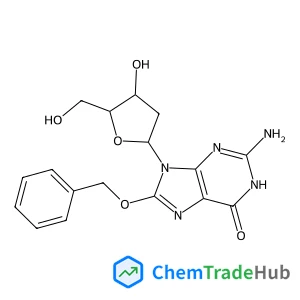
推荐供应商




免责声明
本页面提供的学术期刊信息仅供参考和研究使用。我们与任何期刊出版商均无关联,也不处理投稿事宜。如有投稿相关咨询,请直接联系相关期刊出版商。
如发现页面信息有误,请发送邮件至 support@chemtradehub.com 联系我们。我们将及时核实并处理您的问题。