







A flame-retardant wood-based composite with magnesium–aluminium layered double hydroxides for efficient daytime radiative cooling
文献信息
发布日期
2023-12-18
DOI
10.1039/D3TA06065A
影响因子
12.732
作者
Guowei Li, Jiawei Huang, Jian Zhou, Yucheng Zhang, Chuchu Zhang, Zhenggang Rao, Linfeng Fei
查看原文
摘要
Passive daytime radiative cooling (PDRC) is a zero-energy-consumption cooling technology and is very promising for future energy-efficient buildings. Wood-based composites, as conventional green and sustainable building materials, have shown their prominent PDRC capabilities in recent studies. In this context, it is of practical significance to endow these wood-based materials with the additional characteristic of flame resistance while maintaining or even enhancing their PDRC performance, which, however, remains a grand challenge. Herein, we demonstrate the successful incorporation of magnesium–aluminium layered double hydroxide (MgAl-LDH) nanoflakes into delignified wood sawdust (i.e., lignocellulose fibers) by a freeze-drying assisted lamination process for simultaneous PDRC and flame-retardant applications. Due to the interfacial hydrogen bonding between lignocellulose fibers and MgAl-LDH nanoflakes, the composite material delivers an efficient PDRC performance (a cooling effect up to 14 °C under sunlight) as well as excellent flame-retardant properties (a 52.9% reduction in the heat release rate during combustion as compared to natural wood). Such an effective combination of superior PDRC and flame-retardant performance in a wood-based composite can lead to expanding applications of wood derivatives.
相关文献
In situ infrared (FTIR) study of the mechanism of the borohydride oxidation reaction
B. Molina Concha, M. Chatenet, F. Maillard, E. A. Ticianelli, F. H. B. Lima, R. B. de Lima
2010-08-02
Paper
DOI: 10.1039/C003652H
Structure of the hydrated Ca2+ and Cl−: Combined X-ray absorption measurements and QM/MM MD simulations study
Anan Tongraar
2010-07-29
Paper
DOI: 10.1039/C0CP00136H
Photochemistry of carbon monoxide and methanol in water and nitric acid hydrate ices: A NEXAFS study
C. Laffon, J. Lasne, F. Bournel, K. Schulte, S. Lacombe, Ph. Parent
2010-07-26
Paper
DOI: 10.1039/C0CP00229A
Growth of CdS nanoparticles on the aligned carbon nanotubes
A. V. Okotrub, I. P. Asanov, S. V. Larionov, T. G. Leonova, L. G. Bulusheva
2010-07-07
Paper
DOI: 10.1039/C000189A
Response of CPO-27-Ni towards CO, N2 and C2H4
Sachin Chavan, Francesca Bonino, Jenny G. Vitillo, Elena Groppo, Carlo Lamberti, Pascal D. C. Dietzel, Adriano Zecchina, Silvia Bordiga
2009-09-08
Paper
DOI: 10.1039/B907258F
Radiofrequency polarization effects in low-field electron paramagnetic resonance‡
C. J. Wedge, Christopher T. Rodgers, Stuart A. Norman, Neville Baker, Kiminori Maeda, Kevin B. Henbest, C. R. Timmel, P. J. Hore
2009-07-03
Paper
DOI: 10.1039/B907915G
A new Phenol Red-modified porphyrin as efficient protein photocleaving agent
Wan-Hua Lei, Yuan-Jun Hou, Xue-Song Wang, Bao-Wen Zhang
2010-08-16
Paper
DOI: 10.1039/C0CP00012D
Measurements of relative chemical shift tensor orientations in solid-state NMR: new slow magic angle spinning dipolar recoupling experiments
Andrew P. S. Jurd, Jeremy J. Titman
2009-07-15
Paper
DOI: 10.1039/B906814G
Uracil anion radical in aqueous solution: thermodynamics versusspectroscopy
Giuseppe Brancato, Nadia Rega
2010-07-08
Paper
DOI: 10.1039/C003005H
Mechanosynthesized nanocrystalline BaLiF3: The impact of grain boundaries and structural disorder on ionic transport
Reinhard Uecker, Sebastian Wegner
2010-08-16
Paper
DOI: 10.1039/C004530F
您可能还喜欢
化合物问答
十二烷基磺酸钠(CAS号:2386-53-0)的主要用途是什么?
十二烷基磺酸钠主要用作表面活性剂,广泛应用于洗涤剂、肥皂、化妆品和工业清洁产品中。它能有效去除油脂和污垢,常用于制造洗发水、沐浴露、洗衣粉和金属清洗剂。此外,它...
2386-53-01-Dodecanesulfonic a...
化合物问答
5-羟基异喹啉(CAS号:2439-04-5)适用哪些法规指南?
5-羟基异喹啉作为化学品,主要适用的法规包括GHS全球化学品统一分类和标签制度,REACH法规等。GHS将5-羟基异喹啉分类为皮肤腐蚀/刺激类别2,严重眼损伤/...
2439-04-55-Isoquinolinol
化合物问答
在合成中是否有FIDAS-5 | Wnt(CAS号:1391934-98-7)的替代品?
合成中可以考虑使用类似结构的化合物,如4-[(E)-2-(2-氯-6-氟苯基)乙烯基]-N-甲基苯胺的类似物或衍生物作为替代品。这类化合物可能具有相似的生物活性...
1391934-98-74-[(E)-2-(2-Chloro-6...
化合物问答
(R)-tert-Butyl 2-(5-bromo-1H-imidazol-2-yl)pyrrolidine-1-carboxylate(CAS号:1370600-56-8)通常如何合成?
该化合物通常通过如下步骤合成:首先,将4-溴-1H-咪唑与对甲苯磺酸在乙酸乙酯中反应,得到中间体5-溴-1H-咪唑-2-甲酸乙酯。然后,该中间体与2-甲基-2-...
1370600-56-82-Methyl-2-propanyl ...
化合物问答
处理4-(吡咯烷-1-基)环己酮(CAS号:10421-18-8)时应注意哪些实验室安全事项?
处理4-(吡咯烷-1-基)环己酮时,应佩戴手套、护目镜和实验室外套,以防止直接接触或吸入。在通风橱中操作,确保良好的通风条件。一旦发生泄漏,应立即清理并使用适当...
10421-18-84-(Pyrrolidin-1-yl)c...
化合物问答
如何处理含有异麦芽糖醇(CAS号:534-73-6)的废料?
含有异麦芽糖醇的废液应首先进行分类收集,避免与其他化学品混合。对于小规模的废液,可以通过焚烧或加入特定的化学试剂进行无害化处理。对于大规模的废液,建议联系专业的...
534-73-66-O-alpha-D-Glucopyr...
化合物问答
7-甲基壬酸(CAS号:41653-89-8)的主要用途是什么?
7-甲基壬酸主要用于有机合成领域,作为合成其他化合物的原料。此外,它还可能作为一种中间体用于药品制造和香料合成,但具体用途需要根据其具体的化学结构和反应特性来确...
41653-89-87-Methylnonanoic aci...
化合物问答
N-甲氧基-N-甲基甲基吡啶羧酰胺(CAS号:148493-07-6)应用于哪些行业?
N-甲氧基-N-甲基甲基吡啶羧酰胺在医药领域有一定的应用,作为一种潜在的药物前体或中间体。此外,该化合物也可能应用于聚合物改性剂、传感器材料等。由于其独特的化学...
148493-07-6N-Methoxy-N-methylpi...
化合物问答
什么是惕各酸香叶酯(CAS号:7785-33-3)?
惕各酸香叶酯是一种化合物,化学名称为(2E)-3,7-二甲基-2,6-辛二烯-1-基(2E)-2-甲基-2-丁烯酸酯。它是一种具有香叶香气的化合物,分子式为C1...
7785-33-3(2E)-3,7-Dimethyl-2,...
化合物问答
1-环丁基哌嗪(CAS号:132800-13-6)安全吗?
1-环丁基哌嗪在适当的操作条件下是相对安全的,但如遇明火或高热会释放有毒气体。操作时应佩戴防护眼镜和手套,避免吸入或接触皮肤、眼睛。
132800-13-61-Cyclobutylpiperazi...
来源期刊
Journal of Materials Chemistry A
CiteScore:
19.5
自引率:
4.7%
年发文量:
2211
Journal of Materials Chemistry A, B & C cover high quality studies across all fields of materials chemistry. The journals focus on those theoretical or experimental studies that report new understanding, applications, properties and synthesis of materials. The journals have a strong history of publishing quality reports of interest to interdisciplinary communities and providing an efficient and rigorous service through peer review and publication. The journals are led by an international team of Editors-in-Chief and Associate Editors who are all active researchers in their fields. Journal of Materials Chemistry A, B & C are separated by the intended application of the material studied. Broadly, applications in energy and sustainability are of interest to Journal of Materials Chemistry A, applications in biology and medicine are of interest to Journal of Materials Chemistry B, and applications in optical, magnetic and electronic devices are of interest to Journal of Materials Chemistry C. More than one Journal of Materials Chemistry journal may be suitable for certain fields and researchers are encouraged to submit their paper to the journal that they feel best fits for their particular article. Example topic areas within the scope of Journal of Materials Chemistry A are listed below. This list is neither exhaustive nor exclusive. Artificial photosynthesis Batteries Carbon dioxide conversion Catalysis Fuel cells Gas capture/separation/storage Green/sustainable materials Hydrogen generation Hydrogen storage Photocatalysis Photovoltaics Self-cleaning materials Self-healing materials Sensors Supercapacitors Thermoelectrics Water splitting Water treatment
推荐化合物
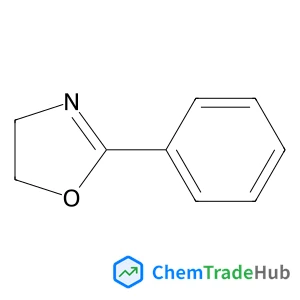
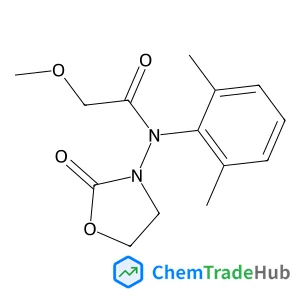
N-(2,6-Dimethylphenyl)-2-methoxy-N-(2-oxo-1,3-oxazolidin-3-yl)acetamide
CAS号:
77732-09-3
分子式:
C14H18N2O4
推荐供应商







免责声明
本页面提供的学术期刊信息仅供参考和研究使用。我们与任何期刊出版商均无关联,也不处理投稿事宜。如有投稿相关咨询,请直接联系相关期刊出版商。
如发现页面信息有误,请发送邮件至 support@chemtradehub.com 联系我们。我们将及时核实并处理您的问题。