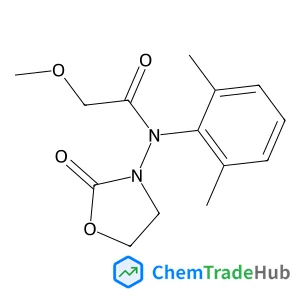
N-(2,6-Dimethylphenyl)-2-methoxy-N-(2-oxo-1,3-oxazolidin-3-yl)acetamide
CAS号:
77732-09-3
分子式:
C14H18N2O4
Jing Zhang, Peng Mao, Yungui Li
Perovskite solar cells (PSCs) are extensively studied due to their low cost and high power-conversion efficiency. However, the scalable fabrication of pinhole-free perovskite films with uniform coverage and large well-crystallized grains still remains a significant challenge to date. Currently, the seed-assisted growth technique is emerging as a useful approach for enhancing the device performance of PSCs by finely tuning the morphology of the perovskite film, affording heterogeneous nucleation sites that improve the quality of crystallization. In this perspective, we provide a concise overview of the seed-assisted crystallization strategy, encompassing the provision of heterogeneous nucleation sites, reduction of energy barriers, control over nucleation processes, and the necessity and benefits of implementing this approach in perovskite modules, all of which collectively lead to notable improvements in perovskite device performance. By highlighting the application of the above templated crystallization in a scalable process, we propose that the deliberate integration of consistently oriented and uniformly-sized seeds during large-area coating holds the potential to yield superior film crystallization uniformity and heightened efficiency in the module. We hope this perspective can screen the detailed information on crystal growth in PSC and shed light on both theoretical framework and experimental approach for future efficient perovskite solar modules.

Journal of the Indian Institute of Science

Topics in Catalysis
Journal of Chemical Sciences
Bioorganic & Medicinal Chemistry

Journal of Asian Natural Products Research

Bioorganic & Medicinal Chemistry Letters

Colloid Journal

Chinese Journal of Chemistry

Cellulose

Critical Reviews in Solid State and Materials Sciences
Damien M. Murphy, Ian A. Fallis, Emma Carter, David J. Willock, James Landon, Sabine Van Doorslaer, Evi Vinck
DOI: 10.1039/B907807J
Liping Li, Guangshe Li, Jiaoxing Xu, Jing Zheng, Wenming Tong, Wanbiao Hu
DOI: 10.1039/C004282J
Ulrich Sternberg, Stephan L. Grage, Raiker Witter
DOI: 10.1039/B908236K
I. Mayer, E. Matito
DOI: 10.1039/C004427J
C. J. Wedge, Christopher T. Rodgers, Stuart A. Norman, Neville Baker, Kiminori Maeda, Kevin B. Henbest, C. R. Timmel, P. J. Hore
DOI: 10.1039/B907915G
Josep Manel Ricart, Gianfranco Pacchioni
DOI: 10.1039/C004110F
Irena Danielewicz-Ferchmin, A. Ryszard Ferchmin
DOI: 10.1039/C002897E
Sergei A. Dikanov, Rimma I. Samoilova, Reinhard Kappl, Antony R. Crofts, Jürgen Hüttermann
DOI: 10.1039/B904597J
Jorge A. Boscoboinik, Florencia C. Calaza, Zeesham Habeeb, Dennis W. Bennett, Dario J. Stacchiola, Martin A. Purino, Wilfred T. Tysoe
DOI: 10.1039/C003239E
Dmitriy Tipikin, Vsevolod Livshits, Jack Freed
DOI: 10.1039/B903490K
十二烷基磺酸钠主要用作表面活性剂,广泛应用于洗涤剂、肥皂、化妆品和工业清洁产品中。它能有效去除油脂和污垢,常用于制造洗发水、沐浴露、洗衣粉和金属清洗剂。此外,它...
5-羟基异喹啉作为化学品,主要适用的法规包括GHS全球化学品统一分类和标签制度,REACH法规等。GHS将5-羟基异喹啉分类为皮肤腐蚀/刺激类别2,严重眼损伤/...
合成中可以考虑使用类似结构的化合物,如4-[(E)-2-(2-氯-6-氟苯基)乙烯基]-N-甲基苯胺的类似物或衍生物作为替代品。这类化合物可能具有相似的生物活性...
该化合物通常通过如下步骤合成:首先,将4-溴-1H-咪唑与对甲苯磺酸在乙酸乙酯中反应,得到中间体5-溴-1H-咪唑-2-甲酸乙酯。然后,该中间体与2-甲基-2-...
处理4-(吡咯烷-1-基)环己酮时,应佩戴手套、护目镜和实验室外套,以防止直接接触或吸入。在通风橱中操作,确保良好的通风条件。一旦发生泄漏,应立即清理并使用适当...
含有异麦芽糖醇的废液应首先进行分类收集,避免与其他化学品混合。对于小规模的废液,可以通过焚烧或加入特定的化学试剂进行无害化处理。对于大规模的废液,建议联系专业的...
7-甲基壬酸主要用于有机合成领域,作为合成其他化合物的原料。此外,它还可能作为一种中间体用于药品制造和香料合成,但具体用途需要根据其具体的化学结构和反应特性来确...
N-甲氧基-N-甲基甲基吡啶羧酰胺在医药领域有一定的应用,作为一种潜在的药物前体或中间体。此外,该化合物也可能应用于聚合物改性剂、传感器材料等。由于其独特的化学...
惕各酸香叶酯是一种化合物,化学名称为(2E)-3,7-二甲基-2,6-辛二烯-1-基(2E)-2-甲基-2-丁烯酸酯。它是一种具有香叶香气的化合物,分子式为C1...
1-环丁基哌嗪在适当的操作条件下是相对安全的,但如遇明火或高热会释放有毒气体。操作时应佩戴防护眼镜和手套,避免吸入或接触皮肤、眼睛。
Journal of Materials Chemistry A, B & C cover high quality studies across all fields of materials chemistry. The journals focus on those theoretical or experimental studies that report new understanding, applications, properties and synthesis of materials. The journals have a strong history of publishing quality reports of interest to interdisciplinary communities and providing an efficient and rigorous service through peer review and publication. The journals are led by an international team of Editors-in-Chief and Associate Editors who are all active researchers in their fields. Journal of Materials Chemistry A, B & C are separated by the intended application of the material studied. Broadly, applications in energy and sustainability are of interest to Journal of Materials Chemistry A, applications in biology and medicine are of interest to Journal of Materials Chemistry B, and applications in optical, magnetic and electronic devices are of interest to Journal of Materials Chemistry C. More than one Journal of Materials Chemistry journal may be suitable for certain fields and researchers are encouraged to submit their paper to the journal that they feel best fits for their particular article. Example topic areas within the scope of Journal of Materials Chemistry A are listed below. This list is neither exhaustive nor exclusive. Artificial photosynthesis Batteries Carbon dioxide conversion Catalysis Fuel cells Gas capture/separation/storage Green/sustainable materials Hydrogen generation Hydrogen storage Photocatalysis Photovoltaics Self-cleaning materials Self-healing materials Sensors Supercapacitors Thermoelectrics Water splitting Water treatment
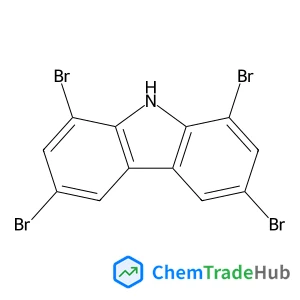
![2-Hydroxy-4-[({[(4-methylphenyl)sulfonyl]oxy}acetyl)amino]benzoic acid structure](https://cnstatic.chemtradehub.com/structs/501/501919-59-1-579f.webp "2-Hydroxy-4-[({[(4-methylphenyl)sulfonyl]oxy}acetyl)amino]benzoic acid structure")