





Self-powered triboelectric wearable biosensor using Scotch tape
文献信息
发布日期
2023-10-18
DOI
10.1039/D3TB01481A
影响因子
6.331
作者
Yu Lei, Ryan T. Conners, Gang Wang
查看原文
摘要
A novel self-powered wearable triboelectric biosensor concept is proposed in this paper, which consists of Scotch tape and a metalized polyester sheet (Al/PET). The Scotch tape is the sensing element by exploring the interaction between the tape polypropylene backing material and the acrylic adhesive layer when pressing and releasing. The polypropylene surface only has partial positive charges because of a nonpolar surface, while the acrylic adhesive has a polar surface with positively and negatively charged and neutral regions. Atomic size gaps are formed because of the attractive and repulsive areas at the interface due to van der Waals forces. These density depleted regions act as ‘geometric’ gaps to produce triboelectric charges via contact and separation on a microscopic scale. This leads to our wearable biosensor design for measuring human body motion. Associated skin contraction and relaxation during body motion will activate the contact and separation between the polypropylene and acrylic adhesive layer when the sensor assembly is adhered to the skin. Various demonstrations were conducted to detect different body motions, including elbow flexion at a low angle, forearm protonation, forearm supination, knee flexion/extension, proximal interphalangeal flexion/extension, temple motion due to eye blinking, and temporomandibular opening. Unique features can be identified which are associated with different body motions. Moreover, the measurements from our triboelectric sensor correlate well with the results from a commercial electromyography (EMG) sensor in an isokinetic leg extension test, which leads to a new method of measuring human muscle activation.
相关文献
Zero-thermal-hysteresis magnetocaloric effect induced by magnetic transition at a morphotropic phase boundary in Heusler Ni50Mn36Sb14−xInx alloys
Yin Zhang, Jieqiong Wang, Xiaoqin Ke, Fanghua Tian, Chao Zhou, Sen Yang, Minxia Fang, Kaiyan Cao, Yu-Sheng Chen, Zhanbo Sun, Wen Guan, Xiaoping Song, Xiaobin Ren
2018-06-14
Paper
DOI: 10.1039/C8CP02720J
Theoretical and experimental investigations of 129Xe NMR chemical shift isotherms in metal–organic frameworks
Sebastian Schwalbe, Jana Schaber, Simon Krause, Irena Senkovska, Stefan Kaskel, Eike Brunner, Jens Kortus, Gotthard Seifert
2018-09-10
Paper
DOI: 10.1039/C8CP04025G
Two-dimensional carbon dioxide with high stability, a negative Poisson's ratio and a huge band gap
Guoling Li, Liben Li, Xingqiang Shi, Bingbing Liu
2018-07-23
Paper
DOI: 10.1039/C8CP02742K
Photoinduced charge transfer by one and two-photon absorptions: physical mechanisms and applications
Huan Zong, Xinxin Wang, Jun Quan, Chunhua Tian, Mengtao Sun
2018-07-09
Perspective
DOI: 10.1039/C8CP03442G
Unveiling CO adsorption on Cu surfaces: new insights from molecular orbital principles
Kareem M. Gameel, Icell M. Sharafeldin, Amr U. Abourayya, Ahmed H. Biby, Nageh K. Allam
2018-09-25
Paper
DOI: 10.1039/C8CP04253E
Anharmonic contribution to the stabilization of Mg(OH)2 from first principles
P. Treviño, S. López-Moreno, A. Bautista-Hernández, E. Bobocioiu, B. Reynard, R. Caracas
2018-06-05
Paper
DOI: 10.1039/C8CP02490A
Molecular structure of octadecylphosphonic acids during their self-assembly on α-Al2O3(0001)
Christian Meltzer, Hui Yu, Wolfgang Peukert, Björn Braunschweig
2018-07-09
Paper
DOI: 10.1039/C8CP02391C
Comparison of quenching mechanisms in Gd3Al5−xGaxO12:Ce3+ (x = 3 and 5) garnet phosphors by photocurrent excitation spectroscopy
Tadeusz Lesniewski, Sebastian Mahlik, Kazuki Asami, Jumpei Ueda, Marek Grinberg, Setsuhisa Tanabe
2018-06-11
Paper
DOI: 10.1039/C8CP03176B
您可能还喜欢
化合物问答
6-氯-2H-1,4-苯并噁嗪-3(4H)-酮(CAS号:7652-29-1)应用于哪些行业?
6-氯-2H-1,4-苯并噁嗪-3(4H)-酮主要应用于医药、农药和聚合物等领域。在医药领域,该化合物可用于合成抗菌药物;在农药领域,可用作杀虫剂的中间体;在聚...
7652-29-16-Chloro-2H-1,4-benz...
化合物问答
活性氧化铝(CAS号:1302-74-5)应用于哪些行业?
活性氧化铝广泛应用于医药、聚合物、传感器、半导体和催化等领域。在医药行业,活性氧化铝用作吸附剂和干燥剂,有助于去除杂质和水分。在聚合物行业,它用作增白剂和抗结块...
1302-74-5aluminum;trihydrate
化合物问答
什么是硅胶(CAS号:112926-00-8)?
硅胶(Silica gel, pptd.,cryst.-free)是一种无定形、多孔的硅酸盐材料,主要成分为二氧化硅(SiO₂)。其结构由硅氧四面体构成,通过酸...
112926-00-8Silica gel, pptd.,cr...
化合物问答
二乙基甲基一氢硅烷(CAS号:760-32-7)的主要用途是什么?
二乙基甲基一氢硅烷主要用于有机合成、表面处理以及作为溶剂。它还被用作合成其他硅烷化合物的原料,以及在涂料、粘合剂和密封剂中的应用。
760-32-7Diethyl(methyl)silan...
化合物问答
在合成中是否有N-花生四烯酰基甘氨酸(CAS号:179113-91-8)的替代品?
在合成过程中,可以考虑使用类似结构的化合物作为替代品,例如N-亚油酰基甘氨酸或N-花生二烯酰基甘氨酸。这些替代品在结构上有类似的双键位置,但可能具有不同的物理化...
179113-91-8Glycine, N-[(5Z,8Z,1...
化合物问答
在合成中是否有1-(4-甲氧基苯基)丙烷-1,2-二酮(CAS号:10557-27-4)的替代品?
在合成过程中,可以考虑使用类似结构的化合物作为替代品,例如1-(3-甲氧基苯基)丙烷-1,2-二酮或1-(4-羟基苯基)丙烷-1,2-二酮。这些替代品具有相似的...
10557-27-41-(4-Methoxyphenyl)p...
化合物问答
N-(4-氨基-1-苄基-3-羟基-5-苯基戊基)-3-甲基-2-(2-氧代四氢嘧啶-1-基)-丁酰胺 5-氧代吡咯烷-2-甲酸(CAS号:192726-06-0)通常如何合成?
该化合物通常通过一系列复杂的有机合成步骤获得。首先,通过芳香族化合物的羟基化反应获得羟基化产物,然后通过酰化反应形成酰胺中间体,最后通过环化反应得到目标产物。常...
192726-06-05-Oxo-L-proline - (2...
化合物问答
(S)-2-氨基-3-喹啉-2-丙酸(CAS号:161513-46-8)的市场或研究趋势如何?
该化合物作为生物活性化合物,尤其是在药物化学领域表现出色。近年来,随着对新型抗炎、抗病毒和抗癌药物的研究增加,其市场和研究趋势持续增长。此外,其在神经科学领域的...
161513-46-8(S)-2-Amino-3-quinol...
化合物问答
核黄素磷酸钠(CAS号:130-40-5)安全吗?
核黄素磷酸钠在常规使用条件下安全,但高剂量可能引起刺激性反应。操作时需佩戴防护手套和护目镜,避免吸入粉尘。若接触皮肤或眼睛,应立即用大量清水冲洗。急救时需根据接...
130-40-5Sodium 1-deoxy-1-(7,...
化合物问答
盐酸丙胺卡因杂质A(EP) 标准品(CAS号:19281-31-3)通常如何合成?
盐酸丙胺卡因杂质A(EP) 标准品可通过重氮化反应和随后的酰胺化反应合成。首先,利用氯化反应将苯环上的氢原子转化为氯原子,然后通过芳香族重氮化反应引入氨基,最后...
19281-31-32-Chloro-N-(2-methyl...
来源期刊
Journal of Materials Chemistry B
CiteScore:
12
自引率:
4.9%
年发文量:
831
Journal of Materials Chemistry A, B & C cover high quality studies across all fields of materials chemistry. The journals focus on those theoretical or experimental studies that report new understanding, applications, properties and synthesis of materials. The journals have a strong history of publishing quality reports of interest to interdisciplinary communities and providing an efficient and rigorous service through peer review and publication. The journals are led by an international team of Editors-in-Chief and Associate Editors who are all active researchers in their fields. Journal of Materials Chemistry A, B & C are separated by the intended application of the material studied. Broadly, applications in energy and sustainability are of interest to Journal of Materials Chemistry A, applications in biology and medicine are of interest to Journal of Materials Chemistry B, and applications in optical, magnetic and electronic devices are of interest to Journal of Materials Chemistry C. More than one Journal of Materials Chemistry journal may be suitable for certain fields and researchers are encouraged to submit their paper to the journal that they feel best fits for their particular article. Example topic areas within the scope of Journal of Materials Chemistry B are listed below. This list is neither exhaustive nor exclusive. Antifouling coatings Biocompatible materials Bioelectronics Bioimaging Biomimetics Biomineralisation Bionics Biosensors Diagnostics Drug delivery Gene delivery Immunobiology Nanomedicine Regenerative medicine & Tissue engineering Scaffolds Soft robotics Stem cells Therapeutic devices image block All articles published in Journal of Materials Chemistry B from 2019 onwards will be indexed in MEDLINE®. Articles that primarily focus on providing insight into the underlying science and performance of biomaterials within a biological environment are more suited to our companion journal, Biomaterials Science.
推荐化合物
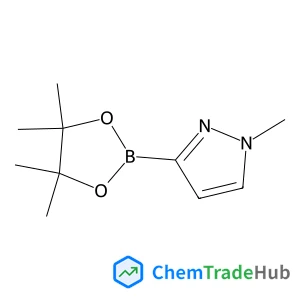
1-Methyl-3-(4,4,5,5-tetramethyl-1,3,2-dioxaborolan-2-yl)-1H-pyrazole
CAS号:
1020174-04-2
分子式:
C10H17BN2O2
![N-[(Benzyloxy)carbonyl]serine structure](https://cnstatic.chemtradehub.com/structs/276/2768-56-1-77f7.webp "N-[(Benzyloxy)carbonyl]serine structure")
![[4-(Heptyloxy)phenyl]boronic acid structure](https://cnstatic.chemtradehub.com/structs/136/136370-19-9-ad33.webp "[4-(Heptyloxy)phenyl]boronic acid structure")
推荐供应商




免责声明
本页面提供的学术期刊信息仅供参考和研究使用。我们与任何期刊出版商均无关联,也不处理投稿事宜。如有投稿相关咨询,请直接联系相关期刊出版商。
如发现页面信息有误,请发送邮件至 support@chemtradehub.com 联系我们。我们将及时核实并处理您的问题。