



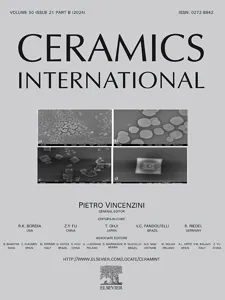

Nano-Micro Letters
基本信息
期刊简写:
NANO
影响因子:
31.6
ISSN:
2311-6706
研究领域:
ENGINEERING TECHNOLOGY
h-index:
34
自引率:
5.1%
年发文量:
235
SCI收录来源:
Science Citation Index Expanded
期刊官网:
https://www.springer.com/40820
期刊介绍:
Nano-Micro Letters is a peer-reviewed, international, interdisciplinary and open-access journal that focus on science, experiments, engineering, technologies and applications of nano- or microscale structure and system in physics, chemistry, biology, material science, pharmacy and their expanding interfaces with at least one dimension ranging from a few sub-nanometers to a few hundreds of micrometers. Especially, emphasize the bottom-up approach in the length scale from nano to micro since the key for nanotechnology to reach industrial applications is to assemble, to modify, and to control nanostructure in micro scale. The aim is to provide a publishing platform crossing the boundaries, from nano to micro, and from science to technologies. Nano-Micro Letters publishes articles that focus on, but are not limited to, the following areas: - Synthesis, characterization, manipulation of nanomaterials - Quantum physics, nanoscale electrical transport - Nanoscale modeling and simulations - Microdevices based on nanomaterials or nanostructures - MEMS, NEMS - Nanosensors, Nanoelectronics, Nanomagnetics - Nano- or microfluids - Nanobiology, biotechnology, bioengineering - Nanomedicine - Solar cell based on nanostructures and nanomaterials - Applications related with nano- and micromaterials, devices and systems Article types Research articles Reports of original research work that has not been published previously; not normally more than 8500 words (10 journal pages). Papers on nano-and microscale theories, technologies, engineering and applications should include some representative results. Claims for originality or novelty of researches should be clearly stated in the abstracts. Reviews These are intended to summarize accepted practice and report on recent progress in selected areas; not normally more than 15000 words (15 journal pages). Reviews must be high quality, authoritative, state-of-the-art accounts of the selected research field, including historical reviews, recent advances and perspectives for future development. Reviews should not contain unpublished original research. All cited figures/tables should have copyrights. Communications Brief, urgent announcements of significant advances or preliminary accounts of new work, not more than 3500 words (4 journal pages). The most important criteria for acceptance of a Rapid communication are novelty and significance. For these articles authors must state briefly, in a covering letter, exactly why their works merit rapid publication. Perspectives Articles are short readable articles covering current areas of interest, including the latest developments, viewpoints on recent progress. Perspectives are personal reviews of a field or area, and they are focused rather than comprehensive. Perspectives should not exceed 4000 words total. They should have a title, an abstract, a few references, and one or two tables and figures. Commentaries Commentaries present a more in-depth analysis or a new insight into a previously published material. They should be of around 1500 - 3000 words total. A title, an abstract, a few references, and one or two tables and figures should be included in a commentary. Highlights Articles are short readable articles that highlight important new developments covering developments made over the past year or so. They should explain the significance of these developments and may also identify where further works will be urgently required or where challenges are still faced.
CiteScore
CiteScore
42.4
SJR
6.484
SNIP
3.349
| 学科 | 排名 | 百分位 |
|---|---|---|
EngineeringElectrical and Electronic Engineering |
5 / 797 | 99% |
期刊统计
期/年
65 days from submission to publication
审稿周期
£1090/$1590/€1290
论文处理费
投稿信息
投稿网址:
https://mc03.manuscriptcentral.com/nmlett相关文献
Measurement and PC-SAFT modelling of three-phase behaviour
Iago Rodríguez-Palmeiro, Oscar Rodríguez, Ana Soto, Christoph Held
2014-11-24
Paper
DOI: 10.1039/C4CP04336G
Exploring the phase space of time of flight mass selected PtxY nanoparticles
Federico Masini, Patricia Hernández-Fernández, Davide Deiana, Christian Ejersbo Strebel, David Norman McCarthy, Anders Bodin, Paolo Malacrida, Ifan Stephens, Ib Chorkendorff
2014-07-17
Paper
DOI: 10.1039/C4CP02144D
Ligand(s)-to-metal charge transfer as a factor controlling the equilibrium constants of late first-row transition metal complexes: revealing the Irving–Williams thermodynamical series
Pradeep R. Varadwaj, Arpita Varadwaj, Bih-Yaw Jin
2014-10-27
Communication
DOI: 10.1039/C4CP03953J
Formation of dibenzofuran, dibenzo-p-dioxin and their hydroxylated derivatives from catechol
Mohammednoor Altarawneh, Bogdan Z. Dlugogorski
2014-11-21
Paper
DOI: 10.1039/C4CP04168B
The importance of inversion disorder in the visible light induced persistent luminescence in Cr3+ doped AB2O4 (A = Zn or Mg and B = Ga or Al)
Neelima Basavaraju, Kaustubh R. Priolkar, Didier Gourier, Suchinder K. Sharma, Aurélie Bessière, Bruno Viana
2014-11-24
Paper
DOI: 10.1039/C4CP03866E
Buffers more than buffering agent: introducing a new class of stabilizers for the protein BSA
Bhupender S. Gupta, Mohamed Taha, Ming-Jer Lee
2014-11-06
Paper
DOI: 10.1039/C4CP04663C
Molecular dynamics simulations of longer n-alkanes in silicalite: state-of-the-art models achieving close agreement with experiment
2014-11-21
Paper
DOI: 10.1039/C4CP04898A
Elucidating the effect of copper as a redox additive and dopant on the performance of a PANI based supercapacitor
Kavita Pandey, Pankaj Yadav, Indrajit Mukhopadhyay
2014-11-07
Paper
DOI: 10.1039/C4CP04321A
The planar electric double layer capacitance for the solvent primitive model electrolyte
Stanisław Lamperski, Monika Płuciennik, Christopher W. Outhwaite
2014-11-12
Paper
DOI: 10.1039/C4CP03513E
Strong temperature-dependent crystallization, phase transition, optical and electrical characteristics of p-type CuAlO2 thin films
2014-11-05
Paper
DOI: 10.1039/C4CP04009K
您可能还喜欢
化合物问答
4-[4-三氟甲基苯基]恶唑(CAS号:1126636-40-5)通常如何合成?
4-[4-三氟甲基苯基]恶唑通常通过将4-三氟甲基苯酚与异硫氰酸苯酯在有机溶剂中进行酯化反应合成。该反应可在无水条件下,使用适当的催化剂,如四丁基氢氧化铵,以提...
1126636-40-54-(4-(Trifluoromethy...
59729-32-71-[3-(Dimethylamino)...
化合物问答
RockPhos Pd G3(CAS号:2009020-38-4)通常如何合成?
RockPhos Pd G3 通常通过钯催化偶联反应合成,使用配体 (2'-Amino-2-biphenylyl)(methanesulfonato-kappa...
2009020-38-4(2'-Amino-2-biphenyl...
化合物问答
1-哌啶甲酰胺(CAS号:2158-03-4)的市场或研究趋势如何?
1-哌啶甲酰胺作为有机合成中的重要中间体,其市场需求主要受医药、农药、染料等行业推动。近年来,随着新药开发和绿色化学的发展,该化合物的研究趋势集中在开发更高效、...
2158-03-41-Piperidinecarboxam...
化合物问答
2-(二苯基膦基)乙胺(CAS号:4848-43-5)适用哪些法规指南?
2-(二苯基膦基)乙胺适用于多种法规指南,包括但不限于《全球化学品统一分类和标签制度》(GHS),欧盟《化学品注册、评估、授权和限制》法规(REACH),以及美...
4848-43-52-(Diphenylphosphino...
化合物问答
如何储存间苯二甲酸二烯丙酯(CAS号:1087-21-4)?
间苯二甲酸二烯丙酯应储存在阴凉、干燥、通风良好的地方,远离火源和热源。储存容器应密封,避免光照和高温。储存温度应控制在25℃以下,相对湿度应低于80%。避免与其...
1087-21-4Diallyl isophthalate
化合物问答
什么是间甲苯异硫代异氰酸酯(CAS号:621-30-7)?
间甲苯异硫代异氰酸酯是一种有机化合物,分子式为C7H7NO2S,具有刺激性气味。它是一种重要的有机合成中间体,在合成其他化合物时广泛应用。
621-30-71-Isothiocyanato-3-m...
化合物问答
在合成中是否有N-Boc-D-苯丙氨醇(CAS号:106454-69-7)的替代品?
在合成中,可以考虑使用N-Cbz-D-苯丙氨醇或N-Fmoc-D-苯丙氨醇作为替代品。这些化合物同样具有保护氨基的功能,且在合成过程中表现出良好的反应性能。
106454-69-72-Methyl-2-propanyl ...
化合物问答
3-羟甲基-2-氧异丙基吡啶(CAS号:954240-50-7)的主要用途是什么?
3-羟甲基-2-氧异丙基吡啶主要用于有机合成领域,可以作为合成其他药物、农药或精细化学品的中间体。此外,它还可能在实验室研究中作为特定反应的前体或溶剂。
954240-50-7(2-Isopropoxy-3-pyri...
化合物问答
6-氨基-9-甲基嘌呤(CAS号:700-00-5)应用于哪些行业?
6-氨基-9-甲基嘌呤目前主要应用于医药行业,作为某些药物的中间体。此外,它还可能用于聚合物、传感器和半导体的某些领域,作为功能性单体或掺杂剂。
700-00-59-Methyl-9H-purin-6-...
推荐化合物



![[2',6'-bis(propan-2-yloxy)-[1,1'-biphenyl]-3-yl]dicyclohexylphosphane structure](https://cnstatic.chemtradehub.com/structs/787/787618-22-8-dda2.webp "[2',6'-bis(propan-2-yloxy)-[1,1'-biphenyl]-3-yl]dicyclohexylphosphane structure")
[2',6'-bis(propan-2-yloxy)-[1,1'-biphenyl]-3-yl]dicyclohexylphosphane
CAS号:
787618-22-8
分子式:
C30H43O2P

推荐供应商





免责声明
本页面提供的学术期刊信息仅供参考和研究使用。我们与任何期刊出版商均无关联,也不处理投稿事宜。如有投稿相关咨询,请直接联系相关期刊出版商。
如发现页面信息有误,请发送邮件至 support@chemtradehub.com 联系我们。我们将及时核实并处理您的问题。