







Chlorine–nickel interactions in gas phase catalytic hydrodechlorination: catalyst deactivation and the nature of reactive hydrogen
文献信息
发布日期
DOI
10.1039/A902345C
影响因子
3.676
作者
查看原文
摘要
The gas phase hydrodechlorination of chlorobenzene and 3-chlorophenol (where 473 K⩽T⩽573 K) has been studied using a 1.5% w/w Ni/SiO2 catalyst which was also employed to promote the hydrogenation of benzene, cyclohexene and phenol. In the former two instances the catalyst was 100% selective in removing the chlorine substituent, leaving the aromatic ring intact. While the dechlorination of chlorobenzene readily attained steady state with no appreciable deactivation, the turnover of 3-chlorophenol to phenol was characterised by both a short and a long term loss of activity. Chlorine coverage of the catalyst surface under reaction conditions was probed indirectly by monitoring, via pH changes in an aqueous NaOH trap, HCl desorption after completion of the catalytic step. Contacting the catalyst with the chlorinated reactants was found to severely limit and, depending on the degree of contact, completely inhibit aromatic ring reduction although a high level of hydrodechlorination activity was maintained. Hydrogen temperature programmed desorption (TPD) reveals the existence of three forms of surface hydrogen which are tentatively assigned as: (i) hydrogen bound to the surface nickel; (ii) hydrogen at the nickel/silica interface; (iii) spillover hydrogen on the silica support. The effect of chlorine–nickel interactions on the resultant TPD profiles is presented and discussed. The (assigned) spillover hydrogen appears to be hydrogenolytic in nature and is responsible for promoting hydrodechlorination while the hydrogen that is taken to be chemisorbed on, and remains associated with, the surface nickel metal participates in aromatic hydrogenation. Hydrodechlorination proceeds via an electrophilic mechanism, possibly involving spillover hydronium ions. The experimental catalytic data are adequately represented by a kinetic model involving non-competitive adsorption between hydrogen and the chloroaromatic, where incoming chloroaromatic must displace the HCl that remains on the surface after the dechlorination step. Kinetic parameters extracted from the model reveal that chlorophenol has a higher affinity than chlorobenzene for the catalyst surface but the stronger interaction leads to a greater displacement of electron density at the metal site and this ultimately leads to catalyst deactivation. IntroductionThe reductive dehalogenation of organic halides is not only important as a synthetic rout but is now gaining increasing significance as a potential methodology for treating toxic halogenated waste In the latter application, the organic halide is converted to the corresponding hydrocarbon and the HCl that is produced can be readily separated while the hydrocarbon is recycled as a means of waste minimisation. Thermal hydrodechlorination processes only proceed to an appreciable degree at temperatures in excess of 973 K5 but the presence of a catalyst lowers the operating temperature significantly The catalytic hydrodechlorination of chlorobenzene and chlorophenol(s), known environmental hazards promoted using a solid silica supported nickel catalyst is considered in this paper. The catalytic hydrodechlorination of chlorobenzene(s) has been reported in both the ga–11 and liqui–14 phases using palladium–16 platinum rhodiu and nicke based catalysts. The treatment of chlorophenols has, by comparison, received less attention but catalytic data are available for the liquid phase reaction over carbon supported palladiu and gas phase transformations over nickel system as well as the electrochemical dechlorination on palladized electrodes Liquid phase hydrodehalogenations can proceed in the presence of both molecular hydrogen (at pressures up to 50 atm) and hydrogen donors such as metal hydrides, formic acid and its salts and alcohols The mechanism of C–Cl bond hydrogenolysis in heterogeneous systems is still far from understood and a number of kinetic models have been propose–11,13,15 to account for the observed catalytic trends. Moreover, the reaction has been viewed in terms of both electrophili and nucleophili substitution and attempts have been made to identify the possible reactant–catalyst interactions A marked drop in dechlorination activity with reaction time has been reported for supported palladium rhodiu and bulk nickel catalyst while time invariant reaction profiles have been generated for Ni/Al2O3 (ref. 8) and a Pt/zeolite The drop in dechlorination activity has been linked in one instance to a loss of the supported active phas and also to a surface poisoning due to the formation of stable surface chloride species The study of catalytic dechlorination is still in a formative stage and the published studies are, in essence, a compilation of rate data which characterise individual systems while such issues as the nature of the reactive adsorbed species, the catalytically active site(s) and the source of catalyst deactivation (when it occurs) are still not established. In this paper we provide kinetic data for the gas phase (molecular) hydrogen treatment of chlorobenzene and 3-chlorophenol and, where feasible, compare our results with the above cited reports. The effect of prolonged exposure of the nickel/silica catalyst to concentrated chlorinated aromatic gas streams is examined, particularly in terms of the changes to the nature of the surface reactive hydrogen.
相关文献
A miniature biofuel cell operating at 0.78 V
Nicolas Mano, Fei Mao, Ting Chen, Adam Heller
2003-01-21
Communication
DOI: 10.1039/B211796G
Self-organized formation of a hierarchical self-similar structure with calcium carbonate
Hiroaki Imai, Tomohiro Terada, Satoshi Yamabi
2003-01-24
Communication
DOI: 10.1039/B211240J
Kumada–Corriu coupling of Grignard reagents, probed with a chiral Grignard reagent
Bettina Hölzer, Reinhard W. Hoffmann
2003-02-19
Communication
DOI: 10.1039/B300033H
Opal gel templated synthesis of oblate titania opal materials
Lijun Ji, Jianhua Rong, Zhenzhong Yang
2003-04-02
Communication
DOI: 10.1039/B300825H
Cooperative effects in the complexation of anions and Lewis bases by a heteronuclear bifunctional Lewis acid
James D. Hoefelmeyer, François P. Gabbaï
2003-02-14
Communication
DOI: 10.1039/B212127A
Enhancement of facilitated olefin transport by amino acid in silver–polymer complex membranes
Sang Wook Kang, Jong Hak Kim, Jongok Won, Kookheon Char, Yong Soo Kang
2003-02-25
Communication
DOI: 10.1039/B211933A
Porphyrin hetero-dimer as charge separating system for photocurrent generation
Akihiro Nomoto, Hiroaki Mitsuoka, Hidekane Ozeki, Yoshiaki Kobuke
2003-04-02
Communication
DOI: 10.1039/B300456B
Novel and efficient chiral sulfideoxathiane ligands for palladium-catalyzed asymmetric allylic alkylation
Yuko Okuyama, Hiroto Nakano, Kouichi Takahashi, Hiroshi Hongo, Chizuko Kabuto
2003-01-17
Communication
DOI: 10.1039/B211031H
Self-assembly of a ferrocene-substituted porphyrin capable of electrochemically sensing neutral molecules via a “tail on–tail off” process
Christophe Bucher, Charles H. Devillers, Jean-Claude Moutet, Guy Royal, Eric Saint-Aman
2003-03-05
Communication
DOI: 10.1039/B301177A
A highly active K-Co-Mo/C catalyst for mixed alcohol synthesis from CO + H2
Jun Bao, YiLu Fu, ZhongHai Sun, Chen Gao
2003-02-25
Communication
DOI: 10.1039/B212504H
您可能还喜欢
化合物问答
6-氯-2H-1,4-苯并噁嗪-3(4H)-酮(CAS号:7652-29-1)应用于哪些行业?
6-氯-2H-1,4-苯并噁嗪-3(4H)-酮主要应用于医药、农药和聚合物等领域。在医药领域,该化合物可用于合成抗菌药物;在农药领域,可用作杀虫剂的中间体;在聚...
7652-29-16-Chloro-2H-1,4-benz...
化合物问答
活性氧化铝(CAS号:1302-74-5)应用于哪些行业?
活性氧化铝广泛应用于医药、聚合物、传感器、半导体和催化等领域。在医药行业,活性氧化铝用作吸附剂和干燥剂,有助于去除杂质和水分。在聚合物行业,它用作增白剂和抗结块...
1302-74-5aluminum;trihydrate
化合物问答
什么是硅胶(CAS号:112926-00-8)?
硅胶(Silica gel, pptd.,cryst.-free)是一种无定形、多孔的硅酸盐材料,主要成分为二氧化硅(SiO₂)。其结构由硅氧四面体构成,通过酸...
112926-00-8Silica gel, pptd.,cr...
化合物问答
二乙基甲基一氢硅烷(CAS号:760-32-7)的主要用途是什么?
二乙基甲基一氢硅烷主要用于有机合成、表面处理以及作为溶剂。它还被用作合成其他硅烷化合物的原料,以及在涂料、粘合剂和密封剂中的应用。
760-32-7Diethyl(methyl)silan...
化合物问答
在合成中是否有N-花生四烯酰基甘氨酸(CAS号:179113-91-8)的替代品?
在合成过程中,可以考虑使用类似结构的化合物作为替代品,例如N-亚油酰基甘氨酸或N-花生二烯酰基甘氨酸。这些替代品在结构上有类似的双键位置,但可能具有不同的物理化...
179113-91-8Glycine, N-[(5Z,8Z,1...
化合物问答
在合成中是否有1-(4-甲氧基苯基)丙烷-1,2-二酮(CAS号:10557-27-4)的替代品?
在合成过程中,可以考虑使用类似结构的化合物作为替代品,例如1-(3-甲氧基苯基)丙烷-1,2-二酮或1-(4-羟基苯基)丙烷-1,2-二酮。这些替代品具有相似的...
10557-27-41-(4-Methoxyphenyl)p...
化合物问答
N-(4-氨基-1-苄基-3-羟基-5-苯基戊基)-3-甲基-2-(2-氧代四氢嘧啶-1-基)-丁酰胺 5-氧代吡咯烷-2-甲酸(CAS号:192726-06-0)通常如何合成?
该化合物通常通过一系列复杂的有机合成步骤获得。首先,通过芳香族化合物的羟基化反应获得羟基化产物,然后通过酰化反应形成酰胺中间体,最后通过环化反应得到目标产物。常...
192726-06-05-Oxo-L-proline - (2...
化合物问答
(S)-2-氨基-3-喹啉-2-丙酸(CAS号:161513-46-8)的市场或研究趋势如何?
该化合物作为生物活性化合物,尤其是在药物化学领域表现出色。近年来,随着对新型抗炎、抗病毒和抗癌药物的研究增加,其市场和研究趋势持续增长。此外,其在神经科学领域的...
161513-46-8(S)-2-Amino-3-quinol...
化合物问答
核黄素磷酸钠(CAS号:130-40-5)安全吗?
核黄素磷酸钠在常规使用条件下安全,但高剂量可能引起刺激性反应。操作时需佩戴防护手套和护目镜,避免吸入粉尘。若接触皮肤或眼睛,应立即用大量清水冲洗。急救时需根据接...
130-40-5Sodium 1-deoxy-1-(7,...
化合物问答
盐酸丙胺卡因杂质A(EP) 标准品(CAS号:19281-31-3)通常如何合成?
盐酸丙胺卡因杂质A(EP) 标准品可通过重氮化反应和随后的酰胺化反应合成。首先,利用氯化反应将苯环上的氢原子转化为氯原子,然后通过芳香族重氮化反应引入氨基,最后...
19281-31-32-Chloro-N-(2-methyl...
来源期刊
Physical Chemistry Chemical Physics

CiteScore:
5.5
自引率:
10.3%
年发文量:
3036
Physical Chemistry Chemical Physics (PCCP) is an international journal co-owned by 19 physical chemistry and physics societies from around the world. This journal publishes original, cutting-edge research in physical chemistry, chemical physics and biophysical chemistry. To be suitable for publication in PCCP, articles must include significant innovation and/or insight into physical chemistry; this is the most important criterion that reviewers and Editors will judge against when evaluating submissions. The journal has a broad scope and welcomes contributions spanning experiment, theory, computation and data science. Topical coverage includes spectroscopy, dynamics, kinetics, statistical mechanics, thermodynamics, electrochemistry, catalysis, surface science, quantum mechanics, quantum computing and machine learning. Interdisciplinary research areas such as polymers and soft matter, materials, nanoscience, energy, surfaces/interfaces, and biophysical chemistry are welcomed if they demonstrate significant innovation and/or insight into physical chemistry. Joined experimental/theoretical studies are particularly appreciated when complementary and based on up-to-date approaches.
推荐化合物
![N-[(Benzyloxy)carbonyl]serine structure](https://cnstatic.chemtradehub.com/structs/276/2768-56-1-77f7.webp "N-[(Benzyloxy)carbonyl]serine structure")
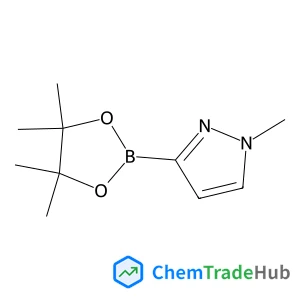
1-Methyl-3-(4,4,5,5-tetramethyl-1,3,2-dioxaborolan-2-yl)-1H-pyrazole
CAS号:
1020174-04-2
分子式:
C10H17BN2O2
![[4-(Heptyloxy)phenyl]boronic acid structure](https://cnstatic.chemtradehub.com/structs/136/136370-19-9-ad33.webp "[4-(Heptyloxy)phenyl]boronic acid structure")
推荐供应商


免责声明
本页面提供的学术期刊信息仅供参考和研究使用。我们与任何期刊出版商均无关联,也不处理投稿事宜。如有投稿相关咨询,请直接联系相关期刊出版商。
如发现页面信息有误,请发送邮件至 support@chemtradehub.com 联系我们。我们将及时核实并处理您的问题。