





Critical factors governing vertical phase separation in polymer–PCBM blend films for organic solar cells
文献信息
发布日期
2016-09-16
DOI
10.1039/C6TA06508B
影响因子
12.732
作者
Min Kim, Jaewon Lee, Sae Byeok Jo, Dong Hun Sin, Hyomin Ko, Hansol Lee, Seung Goo Lee, Kilwon Cho
查看原文
摘要
In organic bulk-heterojunction solar cells, the vertical distribution of the composition of the active layers as well as the lateral morphology is one of the critical issues that can significantly affect charge transport and recombination characteristics. Here we studied the critical parameters that can affect the formation of vertically stratified bulk heterojunction organic solar cells based on various polymers with different side chains, and investigated the effect of the miscibility of the polymer–fullerene blend and the crystallinity of the polymer on vertical morphology. The major factor that affected the vertical phase separation was the interaction parameter χ between the polymer and phenyl-C61-butyric acid methyl ester (PCBM). Polymer–PCBM blends with high values of χ tended to trigger surface-directed vertical phase separation during rapid solvent evaporation. However, strong aggregation of polymers with low solubility counteracted this surface-directed vertical stratification. Moreover, solvent additives strongly affected the vertical phase separation processes, and caused the composition of the active layer to fluctuate dramatically. We also found the photovoltaic characteristics, including charge recombination time, to be strongly affected by the vertical distribution of the composition. The modulation of the composition in the vertical direction should therefore be optimized to increase the efficiency of charge collection and hence achieve high-efficiency organic solar cells.
相关文献
2-Methoxyphenyl isocyanate: a chemoselective multitasking reagent for an amine protection/deprotection sequence
Anand Babu Velappan, Subhashini Kogatam, Dhrubajyoti Datta, Rakshantha Srithar, Gunasekaran Nanjappan, Joy Debnath
2019-04-17
Research Article
DOI: 10.1039/C9QO00293F
Catalytic enantioselective bromohydroxylation of aryl olefins with flexible functionalities
2017-02-22
Research Article
DOI: 10.1039/C6QO00636A
Rhodium-catalyzed alkenyl C–H functionalization with amides
Yao Huang, Wen-Jing Pan
2019-05-10
Research Article
DOI: 10.1039/C9QO00489K
Rh(i)-Catalyzed intramolecular [3 + 2] cycloaddition reactions of yne-vinylidenecyclopropanes
Kang-Hua Rui
2019-04-03
Research Article
DOI: 10.1039/C9QO00343F
A modular approach to highly functionalized 3-sulfonylfurans via conjugate addition of 3-cyclopropylideneprop-2-en-1-ones with sodium sulfinates and sequential 5-endo-trig iodocyclization
Maozhong Miao, Huaping Xu, Yi Luo, Mengchao Jin, Zhengkai Chen, Jianfeng Xu, Hongjun Ren
2017-06-14
Research Article
DOI: 10.1039/C7QO00362E
Chemoselective N-arylation of aminobenzene sulfonamides via copper catalysed Chan–Evans–Lam reactions
Weisai Zu, Shuai Liu, Xin Jia, Liang Xu
2019-01-17
Research Article
DOI: 10.1039/C8QO01313F
Rh(i)-Catalyzed intramolecular [2 + 2 + 1] cycloaddition of diynes with the N-terminal of the diazo group
Bo Wang, Yuankai Wang, Zixuan Wang
2019-05-08
Research Article
DOI: 10.1039/C9QO00403C
Asymmetric synthesis of highly functionalized furanones via direct Michael reactions mediated by a bulky primary amine
Huicai Huang, Xue Lu, Yukang Mao, Jinxing Ye
2018-11-22
Research Article
DOI: 10.1039/C8QO01132J
Formates plus triazabicyclodecene (TBD): an efficient platform for non-gaseous carbonylation and unexpected hydrogenation
Jinzhong Yao, Linlin Chen, Linfeng Hu, Xiaofang Li, Hongwei Zhou
2019-03-08
Research Article
DOI: 10.1039/C9QO00028C
您可能还喜欢
化合物问答
4,5-二甲基-2-硝基苯甲酸(CAS号:4315-14-4)的市场或研究趋势如何?
4,5-二甲基-2-硝基苯甲酸主要应用于制药、染料和农药等行业。由于其潜在的毒性,其市场趋势可能受到法规限制和环保考量的影响,推动了替代产品的研发。在研究领域,...
4315-14-44,5-Dimethyl-2-nitro...
化合物问答
处理直接黑22(CAS号:6473-13-8)时应注意哪些实验室安全事项?
处理直接黑22时应穿戴适当的个人防护装备(PPE),包括实验服、手套、护目镜和口罩。操作应在通风橱内进行,以避免吸入有害气体。如果发生泄漏,应立即清理,并使用大...
6473-13-82-Naphthalenesulfoni...
化合物问答
处理2,1,3-苯并噻二唑-4-基异氰酸酯(CAS号:342411-14-7)时应注意哪些实验室安全事项?
处理2,1,3-苯并噻二唑-4-基异氰酸酯时应注意以下安全事项:穿戴个人防护装备,如实验室外套、防护眼镜和手套;在通风橱中操作,确保良好的通风;保持实验室环境干...
342411-14-74-Isocyanato-2,1,3-b...
化合物问答
如何处理含有Δ-8,9-脱氢雌酮(CAS号:204077-66-7)的废料?
含有Δ-8,9-脱氢雌酮的废料需要进行适当的处理以确保环境和人体安全。首先,收集废液并存放于密封容器中,避免泄漏。其次,可以考虑将其转化为无害物质或通过专业处理...
204077-66-7Thioquinapiperifil d...
化合物问答
如何储存5-溴戊酸(CAS号:2067-33-6)?
5-溴戊酸应储存在阴凉、干燥、通风良好的环境中,避免阳光直射。建议在室温(约15-25°C)下保存,保持相对湿度低于60%。应使用密封的玻璃或塑料容器,并远离热...
2067-33-65-Bromopentanoic aci...
化合物问答
4-(甲基亚磺酰基)苯胺(CAS号:22865-62-9)应用于哪些行业?
4-(甲基亚磺酰基)苯胺在医药、聚合物和传感器等领域有一定的应用。在医药方面,它可以用作合成药物的中间体;在聚合物领域,可以作为合成特殊性能高分子材料的单体;在...
22865-62-94-Methylsulfinylanil...
化合物问答
什么是1-(2-FLUOROPHENYL)-5-METHYL-1H-PYRAZOLE-4-CARBOHYDRAZIDE(CAS号:618092-58-3)?
1-(2-氟苯基)-5-甲基-1H-吡唑-4-亚甲基肼是一种有机化合物,其分子式为C9H9FN3O。该化合物具有特定的物理化学性质,如熔点、沸点等,但具体值需查...
618092-58-31-(2-Fluorophenyl)-5...
化合物问答
Dauricumine(CAS号:345641-00-1)通常如何合成?
Dauricumine通常通过复杂的合成路线制备,涉及多个步骤,包括环化、氧化、卤化等反应。合成过程中使用了多种催化剂和试剂,例如金属催化剂、氧化剂等。产率通常...
345641-00-1(1R,1'S,5R,6'S,8'S)-...
化合物问答
5-氰基苯酞(CAS号:82104-74-3)安全吗?
5-氰基苯酞在正常使用条件下相对安全,但其具有一定的毒性,需谨慎操作。在实验或工业应用中,应采取适当的防护措施,如佩戴防护手套、护目镜和实验服,确保通风良好。误...
82104-74-31-Oxo-1,3-dihydro-2-...
化合物问答
2-Methyl-1-(phenylsulfonyl)-1H-pyrrolo[2,3-b]pyridin-5-amine(CAS号:1186502-59-9)安全吗?
该化合物在使用时需要谨慎操作。虽然其毒性和健康风险尚未完全明确,但建议在通风良好的环境中操作,并穿戴适当的个人防护装备,如手套和防护眼镜。
1186502-59-92-Methyl-1-(phenylsu...
来源期刊
Journal of Materials Chemistry A
CiteScore:
19.5
自引率:
4.7%
年发文量:
2211
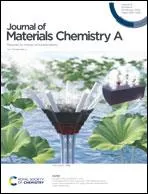
Journal of Materials Chemistry A, B & C cover high quality studies across all fields of materials chemistry. The journals focus on those theoretical or experimental studies that report new understanding, applications, properties and synthesis of materials. The journals have a strong history of publishing quality reports of interest to interdisciplinary communities and providing an efficient and rigorous service through peer review and publication. The journals are led by an international team of Editors-in-Chief and Associate Editors who are all active researchers in their fields. Journal of Materials Chemistry A, B & C are separated by the intended application of the material studied. Broadly, applications in energy and sustainability are of interest to Journal of Materials Chemistry A, applications in biology and medicine are of interest to Journal of Materials Chemistry B, and applications in optical, magnetic and electronic devices are of interest to Journal of Materials Chemistry C. More than one Journal of Materials Chemistry journal may be suitable for certain fields and researchers are encouraged to submit their paper to the journal that they feel best fits for their particular article. Example topic areas within the scope of Journal of Materials Chemistry A are listed below. This list is neither exhaustive nor exclusive. Artificial photosynthesis Batteries Carbon dioxide conversion Catalysis Fuel cells Gas capture/separation/storage Green/sustainable materials Hydrogen generation Hydrogen storage Photocatalysis Photovoltaics Self-cleaning materials Self-healing materials Sensors Supercapacitors Thermoelectrics Water splitting Water treatment
推荐化合物
推荐供应商



免责声明
本页面提供的学术期刊信息仅供参考和研究使用。我们与任何期刊出版商均无关联,也不处理投稿事宜。如有投稿相关咨询,请直接联系相关期刊出版商。
如发现页面信息有误,请发送邮件至 support@chemtradehub.com 联系我们。我们将及时核实并处理您的问题。