


Phase separation dynamics of polydisperse colloids: a mean-field lattice-gas theory
文献信息
发布日期
2017-08-02
DOI
10.1039/C7CP04062H
影响因子
3.676
作者
Pablo de Castro, Peter Sollich
查看原文
摘要
New insights into phase separation in colloidal suspensions are provided via a dynamical theory based on the polydisperse lattice-gas model. The model gives a simplified description of polydisperse colloids, incorporating a hard-core repulsion combined with polydispersity in the strength of the attraction between neighbouring particles. Our mean-field equations describe the local concentration evolution for each of an arbitrary number of species, and for an arbitrary overall composition of the system. We focus on the predictions for the dynamics of colloidal gas–liquid phase separation after a quench into the coexistence region. The critical point and the relevant spinodal curves are determined analytically, with the latter depending only on three moments of the overall composition. The results for the early-time spinodal dynamics show qualitative changes as one crosses a ‘quenched’ spinodal that excludes fractionation and so allows only density fluctuations at fixed composition. This effect occurs for dense systems, in agreement with a conjecture by Warren that, at high density, fractionation should be generically slow because it requires inter-diffusion of particles. We verify this conclusion by showing that the observed qualitative changes disappear when direct particle–particle swaps are allowed in the dynamics. Finally, the rich behaviour beyond the spinodal regime is examined, where we find that the evaporation of gas bubbles with strongly fractionated interfaces causes long-lived composition heterogeneities in the liquid phase; we introduce a two-dimensional density histogram method that allows such effects to be easily visualized for an arbitrary number of particle species.
期刊推荐
Helvetica Chimica Acta

Science
Molecular Pharmacology

Organic Preparations and Procedures International

Proceedings of the National Academy of Sciences of the United States of America

Fibre Chemistry
Israel Journal of Chemistry
Pharmacological Reviews

Journal of Physics and Chemistry of Solids
Journal of Organometallic Chemistry
相关文献
Shape induced sorting via rim-to-rim complementarity in the formation of pillar[5, 6]arene-based supramolecular organogels
Dana Kaizerman-Kane, Maya Hadar, Eran Granot, Fernando Patolsky, Yoram Cohen
2019-08-08
Research Article
DOI: 10.1039/C9QO00717B
Synthesis of photolabile protecting group (PPG) protected uronic acid building blocks: applications in carbohydrate synthesis with the assistance of a continuous flow photoreactor
Varsha Tiwari, Adesh Kumar Singh, Priyanka Chaudhary, Peter H. Seeberger, Jeyakumar Kandasamy
2019-10-14
Research Article
DOI: 10.1039/C9QO01010F
A practical and effective method for the N–N bond cleavage of N-amino-heterocycles
Giacomo Mari, Gianfranco Favi, Stefania Santeusanio, Fabio Mantellini, Lucia De Crescentini
2019-08-27
Research Article
DOI: 10.1039/C9QO00895K
Guest-length driven high fidelity self-sorting in supramolecular capsule formation of calix[5]arenes in water
Ilenia Pisagatti, Lucia Barbera, Giuseppe Gattuso, Melchiorre F. Parisi, Silvano Geremia, Neal Hickey, Anna Notti
2019-10-14
Research Article
DOI: 10.1039/C9QO01188A
C(sp3)–H hydroxylation of fluorenes, oxindoles and benzofuranones with a Mg(NO3)2–HP(O)Ph2 oxidation system
Chen Hu, Gang Hong, Pradip D. Nahide, Yuchen He, Chen Zhou, Marisa C. Kozlowski, Limin Wang
2019-07-19
Research Article
DOI: 10.1039/C9QO00778D
1,3-Dipolar cycloaddition of nitrones to oxa(aza)bicyclic alkenes
Yongqi Yao, Wen Yang, Qifu Lin, Weitao Yang, Huanyong Li, Lin Wang, Fenglong Gu, Dingqiao Yang
2019-08-15
Research Article
DOI: 10.1039/C9QO00660E
Visible-light-induced radical hydrodifluoromethylation of alkenes
Jiao Yu, Jin-Hong Lin, Yu-Cai Cao, Ji-Chang Xiao
2019-09-05
Research Article
DOI: 10.1039/C9QO00919A
The inverted solvatochromism of protonated ferrocenylethenyl-pyrimidines: the first example of the solvatochromic reversal of a hybrid organic/inorganic dye
Matías Vidal, Marcos Caroli Rezende, Moisés Domínguez
2019-09-30
Research Article
DOI: 10.1039/C9QO01043B
Caerulomycins from Actinoalloteichus cyanogriseus WH1-2216-6: isolation, identification and cytotoxicity
Mengmeng Lan, Guodong Cui, Hongwei Zhang
2019-09-05
Research Article
DOI: 10.1039/C9QO00685K
您可能还喜欢
化合物问答
(3-氨苯基)环丙基甲酮(CAS号:162174-75-6)的主要用途是什么?
(3-氨苯基)环丙基甲酮主要用于合成化学中间体,特别是在药物化学领域作为原料。它还可以用于有机合成反应中,作为催化剂或反应物。
162174-75-6(3-Aminophenyl)(cycl...
化合物问答
如何储存亚胺菌(CAS号:136470-79-6)?
亚胺菌应储存在干燥、阴凉处,避免直接暴露于光线下。建议使用密封容器储存,防止吸潮和污染。具体的储存条件应参考产品的安全数据表(MSDS)或药品说明书。
136470-79-6Abacavir EP Impurity...
化合物问答
2-氯-2,2-二氟乙酰胺(CAS号:354-28-9)应用于哪些行业?
2-氯-2,2-二氟乙酰胺在医药、聚合物、传感器、半导体等领域有广泛应用。在医药领域,它作为中间体用于合成其他药物;在聚合物领域,用作聚合引发剂或稳定剂;在传感...
354-28-92-Chloro-2,2-difluor...
化合物问答
处理4-甲基-3-硝基-1,1-联苯(CAS号:53812-68-3)时应注意哪些实验室安全事项?
在处理4-甲基-3-硝基-1,1-联苯时,应佩戴手套、护目镜和实验室外套等个人防护装备(PPE),确保在通风橱中操作以减少吸入风险。若发生泄露,应立即使用沙子或...
53812-68-34'-Methyl-3-nitro-1,...
化合物问答
(2S)-羟基(苯基)乙酸 (2R)-N-苄基-1-(4-甲氧基苯基)丙-2-胺盐(CAS号:188690-84-8)应用于哪些行业?
该化合物广泛应用于医药、聚合物和半导体行业。在医药领域,它是某些药物中间体的重要组成部分;在聚合物领域,可用作增塑剂;在半导体行业,可用于制造光刻胶。
188690-84-8Benzeneacetic acid, ...
化合物问答
在合成中是否有芬苯哒唑砜-D3标准品(CAS号:1228182-49-7)的替代品?
芬苯哒唑砜-D3标准品的替代品可能包括类似的苯并咪唑类化合物,如芬苯哒唑本身或其非同位素标记版本。这些替代品在结构上与芬苯哒唑砜-D3相似,但在具体应用中需进行...
1228182-49-7(~2~H_3_)Methyl [5-(...
化合物问答
2-氟-4-硝基苯乙酸(CAS号:315228-19-4)通常如何合成?
2-氟-4-硝基苯乙酸可以通过一系列化学反应合成,通常是从4-氟苯胺开始,首先进行硝化反应生成4-氟-2-硝基苯胺,然后进行乙酰化反应得到目标产物。具体的合成步...
315228-19-42-(2-fluoro-4-nitrop...
化合物问答
2-氟-4-甲氧基苯乙酸(CAS号:883531-28-0)通常如何合成?
2-氟-4-甲氧基苯乙酸通常通过将4-甲氧基苯乙酸与氟化试剂(如氟化氰)反应来合成。反应通常在无水条件下进行,使用催化剂如六氟磷酸锂或四氟硼酸锂以提高选择性和产...
883531-28-02-Fluoro-4-methoxyph...
化合物问答
什么是4SC 202;4SC202(CAS号:1186222-89-8)?
4SC 202;4SC202是一种化学化合物,其化学名称为(2E)-N-(2-氨基苯基)-3-(1-{[4-(1-甲基-1H-吡唑-4-基)苯基]磺酰基}-1H...
1186222-89-8(2E)-N-(2-Aminopheny...
132980-99-53,5-Difluorobenzamid...
来源期刊
Physical Chemistry Chemical Physics

CiteScore:
5.5
自引率:
10.3%
年发文量:
3036
Physical Chemistry Chemical Physics (PCCP) is an international journal co-owned by 19 physical chemistry and physics societies from around the world. This journal publishes original, cutting-edge research in physical chemistry, chemical physics and biophysical chemistry. To be suitable for publication in PCCP, articles must include significant innovation and/or insight into physical chemistry; this is the most important criterion that reviewers and Editors will judge against when evaluating submissions. The journal has a broad scope and welcomes contributions spanning experiment, theory, computation and data science. Topical coverage includes spectroscopy, dynamics, kinetics, statistical mechanics, thermodynamics, electrochemistry, catalysis, surface science, quantum mechanics, quantum computing and machine learning. Interdisciplinary research areas such as polymers and soft matter, materials, nanoscience, energy, surfaces/interfaces, and biophysical chemistry are welcomed if they demonstrate significant innovation and/or insight into physical chemistry. Joined experimental/theoretical studies are particularly appreciated when complementary and based on up-to-date approaches.
推荐化合物
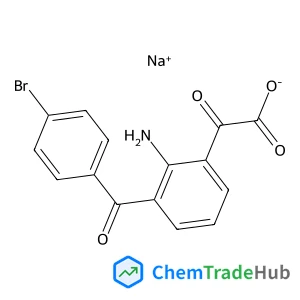
![5-Bromo-3-isopropyl-1H-pyrrolo[2,3-b]pyridine structure](https://cnstatic.chemtradehub.com/structs/125/1256819-54-1-8620.webp "5-Bromo-3-isopropyl-1H-pyrrolo[2,3-b]pyridine structure")
推荐供应商





免责声明
本页面提供的学术期刊信息仅供参考和研究使用。我们与任何期刊出版商均无关联,也不处理投稿事宜。如有投稿相关咨询,请直接联系相关期刊出版商。
如发现页面信息有误,请发送邮件至 support@chemtradehub.com 联系我们。我们将及时核实并处理您的问题。