










![1-Naphthalenesulfonic acid, 2-[(2-hydroxy-1-naphthalenyl)azo]-, bariumsalt (2:1) structure](https://cnstatic.chemtradehub.com/structs/110/1103-38-4-0b33.webp "1-Naphthalenesulfonic acid, 2-[(2-hydroxy-1-naphthalenyl)azo]-, bariumsalt (2:1) structure")
1-Naphthalenesulfonic acid, 2-[(2-hydroxy-1-naphthalenyl)azo]-, bariumsalt (2:1)
CAS号:
1103-38-4
分子式:
C20H14BaN2O4S
Nathan R. B. Boase, Kathryn E. Fairfull-Smith
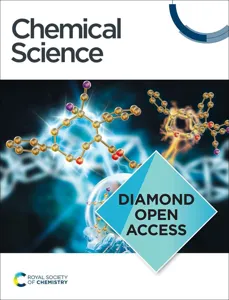
Biofilms are highly organised colonies of microorganisms, at a surface or an interface, which are extremely resistant to treatment with biocides or antimicrobials. Consequently, biofilms are the primary cause of fouling and persistent infections in both industrial and clinical settings. Thus, there is a clear need to develop coatings that are able to prevent the growth of biofilms on surfaces. Herein, we report the development of polynitroxides for use as anti-biofilm coatings. We demonstrate that we can tune the composition of the nitroxide 2,2,6,6-tetramethyl-4-piperidyl methacrylate in a copolymer with methyl methacrylate in order to control the surface concentration of nitroxides in the resulting thin films. The prepared films are able to reduce biofilm fouling by Pseudomonas aeruginosa (PAO1) at nitroxide monomer concentrations as low as 30 wt%. The nitroxide containing materials show no difference in toxicity to mammalian cells, compared to poly(methyl methacrylate), in a proliferation assay with 3T3 fibroblast cells. This is the first demonstration of surface tethered nitroxides with activity against biofilms and provides new opportunities for developing antifouling surface coatings.
Ofer Setter
DOI: 10.1039/C4CP03686G
Li Zheng, Xinhong Cheng, Yuehui Yu, Yahong Xie, Xiaolong Li, Zhongjian Wang
DOI: 10.1039/C4CP04957H
Kurt Kugler, Mareike Luhn, Jean André Schramm, Khosrow Rahimi
DOI: 10.1039/C4CP05501B
Torsten Bruhn, Christian Brückner
DOI: 10.1039/C4CP04675G
Zhongzhu Wang, Hong Bi, Peihong Wang, Min Wang, Zhiwei Liu, Lei shen, Xiansong Liu
DOI: 10.1039/C4CP04985C
Peter F. Lang, Barry C. Smith
DOI: 10.1039/C4CP05135A
DOI: 10.1039/C4CP04022H
Tamara Husch, Nusret Duygu Yilmazer, Andrea Balducci, Martin Korth
DOI: 10.1039/C4CP04338C
F. M. Hoffmann, J. Hrbek, I. Waluyo, J. A. Boscoboinik, D. J. Stacchiola
DOI: 10.1039/C4CP05088F
Zhen-Ji Han, Kiyofumi Yamagiwa, Naoaki Yabuuchi, Jin-Young Son, Yi-Tao Cui, Hiroshi Oji, Akinori Kogure, Takahiro Harada, Sumihisa Ishikawa, Yasuhito Aoki, Shinichi Komaba
DOI: 10.1039/C4CP04939J
6-氯-2H-1,4-苯并噁嗪-3(4H)-酮主要应用于医药、农药和聚合物等领域。在医药领域,该化合物可用于合成抗菌药物;在农药领域,可用作杀虫剂的中间体;在聚...
活性氧化铝广泛应用于医药、聚合物、传感器、半导体和催化等领域。在医药行业,活性氧化铝用作吸附剂和干燥剂,有助于去除杂质和水分。在聚合物行业,它用作增白剂和抗结块...
硅胶(Silica gel, pptd.,cryst.-free)是一种无定形、多孔的硅酸盐材料,主要成分为二氧化硅(SiO₂)。其结构由硅氧四面体构成,通过酸...
二乙基甲基一氢硅烷主要用于有机合成、表面处理以及作为溶剂。它还被用作合成其他硅烷化合物的原料,以及在涂料、粘合剂和密封剂中的应用。
在合成过程中,可以考虑使用类似结构的化合物作为替代品,例如N-亚油酰基甘氨酸或N-花生二烯酰基甘氨酸。这些替代品在结构上有类似的双键位置,但可能具有不同的物理化...
在合成过程中,可以考虑使用类似结构的化合物作为替代品,例如1-(3-甲氧基苯基)丙烷-1,2-二酮或1-(4-羟基苯基)丙烷-1,2-二酮。这些替代品具有相似的...
该化合物通常通过一系列复杂的有机合成步骤获得。首先,通过芳香族化合物的羟基化反应获得羟基化产物,然后通过酰化反应形成酰胺中间体,最后通过环化反应得到目标产物。常...
该化合物作为生物活性化合物,尤其是在药物化学领域表现出色。近年来,随着对新型抗炎、抗病毒和抗癌药物的研究增加,其市场和研究趋势持续增长。此外,其在神经科学领域的...
核黄素磷酸钠在常规使用条件下安全,但高剂量可能引起刺激性反应。操作时需佩戴防护手套和护目镜,避免吸入粉尘。若接触皮肤或眼睛,应立即用大量清水冲洗。急救时需根据接...
盐酸丙胺卡因杂质A(EP) 标准品可通过重氮化反应和随后的酰胺化反应合成。首先,利用氯化反应将苯环上的氢原子转化为氯原子,然后通过芳香族重氮化反应引入氨基,最后...

Polymer Chemistry welcomes submissions in all areas of polymer science that have a strong focus on macromolecular chemistry. Manuscripts may cover a broad range of fields, yet no direct application focus is required.
![[4-(Heptyloxy)phenyl]boronic acid structure](https://cnstatic.chemtradehub.com/structs/136/136370-19-9-ad33.webp "[4-(Heptyloxy)phenyl]boronic acid structure")


