


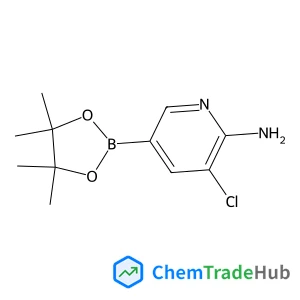
3-Chloro-5-(4,4,5,5-tetramethyl-1,3,2-dioxaborolan-2-yl)-2-pyridinamine
CAS号:
1032758-99-8
分子式:
C11H16BClN2O2
Ranajit Barman, Debes Ray, V. K. Aswal, Suhrit Ghosh
Despite the rapid growth in cationic host defence peptide (CHDP)-mimicking synthetic antibacterial polymers, the importance of the well-defined secondary structure of synthetic polymers, similar to CHDP, has not been studied in the context of bacterial membrane perturbation, which is the key focus of this article. Amongst the seven tested amphiphilic cationic alternating copolymers, five (F-PUs) contain flexible (F) linear hydrocarbons (C4, C6, C8) and two (R-PUs) contain rigid (R) cyclic hydrocarbons (C6, C13) in the segmented biodegradable polyurethane (PU) backbone. F-PUs adopt an intra-chain H-bonding driven pleated structure, followed by hierarchical assembly, producing cationic polymersomes in water. In sharp contrast, R-PUs, deprived of such chain-folding possibility due to rigid linkers, exhibit immiscibility driven aggregation, producing spherical particles. F-PUs exhibit antibacterial activity with a rather low minimum inhibitory concentration (MIC), while R-PUs do not show even moderate activity. F-PUs with the C6 linker represent the most optimal balance between the hydrophobicity and the charge density and consequently exhibit the most lethal activity. F-PU-C6a with a pendant primary amine group shows exemplary activity selectively against Gram negative E. coli over Gram positive bacteria [MICS. aureus/MICE. coli = 64]. On the other hand, F-PU-C6b or F-PU-C6c with a pendant quaternary amine or guanidium group exhibits broad-spectrum activity with very low MIC values of ∼2.0 μg mL−1 in some cases, which is rarely reported in the literature. While these polymers are lethal against bacteria, they exhibit negligible toxicity against mammalian cells as evident from the lack of hemolysis (HC10 > 200 μg mL−1) of red blood cells and MTT assay results. Mechanistic investigation establishes the cell-killing via a non-specific membrane disruption pathway, similar to CHDPs present in the innate immunity. Beyond planktonic bacteria, F-PUs also exhibit extraordinary biofilm eradication efficiency as ∼100% eradication of a 3-day aged biofilm is noticed with ∼30 μg mL−1 F-PU-C6 in just 3 h. Antibacterial activity and biofilm eradication ability of selected polymers in the present series are comparable to the benchmark of polymyxin-B or levofloxacin, the well-known commercially available antibiotics.
Journal of Catalysis
Helvetica Chimica Acta

Science Progress

Proceedings of the National Academy of Sciences of the United States of America
Journal of Physics and Chemistry of Solids

Science

Israel Journal of Chemistry
European Journal of Wood and Wood Products
Journal of Organometallic Chemistry
Kinetics and Catalysis
Anmin Zheng, Shing-Jong Huang, Feng Deng
DOI: 10.1039/C1CP20417C
Kelei Zhuo, Yujuan Chen, Jing Chen, Guangyue Bai, Jianji Wang
DOI: 10.1039/C1CP20948E
Troels Markussen, Robert Stadler, Kristian S. Thygesen
DOI: 10.1039/C1CP20924H
Jonas Fransson, Michael Galperin
DOI: 10.1039/C1CP20720B
I. A. K. Young, C. Murray, C. M. Blaum, R. A. Cox, R. L. Jones, F. D. Pope
DOI: 10.1039/C1CP21337G
L. Olivi, C. Dominici, F. Ziarelli
DOI: 10.1039/C1CP20346K
Florian Colléaux, James M. Ball, Paul H. Wöbkenberg, Peter J. Hotchkiss, Seth R. Marder, Thomas D. Anthopoulos
DOI: 10.1039/C1CP20769E
Alexander V. Popov, Elizabeth-Ann Gould, Michael A. Salvitti, Rigoberto Hernandez, Kyril M. Solntsev
DOI: 10.1039/C1CP20952C
Josip Požar, Klemen Bohinc, Vojko Vlachy, Davor Kovačević
DOI: 10.1039/C1CP21291E
Cunku Dong, Jingyao Qi
DOI: 10.1039/C1CP21030K
3 - (二氟甲基)-1 -氟苯需遵循联合国全球化学品统一分类和标签制度(GHS),包括急性毒性、皮肤腐蚀/刺激、严重眼损伤/眼刺激等分类。同时,该化合物还需符...
3,5-二甲基苯胺通常通过乙苯的氨解反应合成。反应中使用硫酸作为催化剂,反应温度为120-130°C。乙苯在硫酸存在下与氨反应,生成3,5-二甲基苯胺和苯胺副产...
3-甲基异噻唑-5-胺在适当使用和储存条件下是相对安全的,但在操作时应注意防护措施。应避免吸入粉尘,避免与皮肤和眼睛直接接触。在操作过程中,应穿戴适当的防护装备...
3-(1,3-噻唑-2-基)-1H-吲哚通常通过多步合成方法制备。首先,由噻唑-2-基溴化物和吲哚进行偶联反应,得到中间体。然后,通过还原反应将中间体转化为所需...
4-溴-2-氟苯甲基氯主要用于有机合成中间体,特别是在医药、农药和染料等领域。作为一种具有特定结构的化合物,它在合成复杂有机分子时扮演重要角色。
处理Fmoc-β-(3-噻吩基)-D-Ala-OH时,应佩戴防护手套、护目镜和实验服。操作应在通风橱内进行。如发生泄露,应立即用大量水冲洗,并通知实验室管理人员...
氮化硅通常通过氮化硅的直接反应合成,即在高温下将四氯化硅与氨气反应。具体步骤是将四氯化硅和氨气混合并加热至1300-1700℃,在该条件下,四氯化硅与氨气反应生...
Cetirizine EP Impurity B DiHCl通常通过一锅法合成,首先将4-氯苯基-苯甲基氯甲酸酯与1-哌嗪乙酸反应,生成相应的酸,然后与盐酸反应...
1-哌啶-4-基丁-1-酮应储存在阴凉、干燥的地方,避免阳光直射。存储容器应密封,并确保通风良好。建议储存温度不超过25℃,湿度保持在相对较低的水平。
含有VORUCICLIB的废料应进行专业的收集和处理,包括使用适当的容器进行隔离,避免与其他化学品接触。处理方法通常包括化学中和、沉淀反应或吸附过程,随后进行焚...

Polymer Chemistry welcomes submissions in all areas of polymer science that have a strong focus on macromolecular chemistry. Manuscripts may cover a broad range of fields, yet no direct application focus is required.
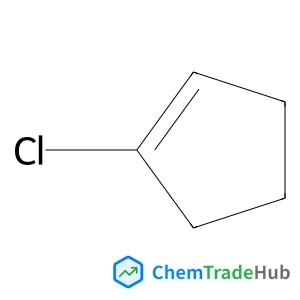
![5-Methyl-4,5,6,7-tetrahydropyrazolo[1,5-a]pyrazin-2-amine structure](https://cnstatic.chemtradehub.com/structs/122/1227210-33-4-8d64.webp "5-Methyl-4,5,6,7-tetrahydropyrazolo[1,5-a]pyrazin-2-amine structure")
![1-[3-(4-Morpholinylsulfonyl)phenyl]methanamine structure](https://cnstatic.chemtradehub.com/structs/933/933989-32-3-51af.webp "1-[3-(4-Morpholinylsulfonyl)phenyl]methanamine structure")
![6-Benzyl-4,5,6,7-tetrahydro-1H-pyrazolo[3,4-c]pyridin-3(2H)-one structure](https://cnstatic.chemtradehub.com/structs/909/909187-64-0-f54f.webp "6-Benzyl-4,5,6,7-tetrahydro-1H-pyrazolo[3,4-c]pyridin-3(2H)-one structure")


