





Interactions of 1-butyl-3-methylimidazolium carboxylate ionic liquids with glucose in water: a study of volumetric properties, viscosity, conductivity and NMR
文献信息
发布日期
2011-07-12
DOI
10.1039/C1CP20948E
影响因子
3.676
作者
Kelei Zhuo, Yujuan Chen, Jing Chen, Guangyue Bai, Jianji Wang
查看原文
摘要
Extensive applications of ionic liquids (ILs) may result in their accumulation in the ecological environment and organisms. Although ILs are popularly called “green solvents”, their toxicity, in fact, has been exhibited. Therefore the interaction of ILs with biomolecules is a cutting-edge research subject. Herein, the interactions of 1-butyl-3-methylimidazolium carboxylate ionic liquids ([C4mim][HCOO], [C4mim][CH3COO] and [C4mim][CH3CH2COO]) with glucose in water were studied for their volumetric properties, viscosity, conductivity and NMR spectra. Limiting apparent molar volumes (V0Φ,IL), viscosity B-coefficients, limiting molar conductivities (Λ0) and Walden products (Λ0η0) were evaluated for the ILs in glucose + water solutions. Volumetric interaction parameters were also obtained from the transfer volumes of the ionic liquids. The contributions of the solvent properties (B1) and the ionic liquid–solvent interactions (B2) to the B-coefficient were extracted, together with molar activation energies (Δμ0≠IL) of the ionic liquids for viscous flow of the aqueous glucose + IL solution. In addition, the 13C and 1H NMR spectra of methyl β-D-glucopyranoside and ILs in β-D-glucopyranoside + IL + D2O were studied. The NMR results show that no special and strong interactions were observed between glucopyranoside and the ILs. However, it was confirmed that the H2 on the imidazolium ring has more activity (acidity) than atoms H4 and H5. The macro-properties and their changes were also discussed in terms of the size, structure and solvation of the ILs and glucose.
相关文献
Identification of molecular glues of the SLP76/14-3-3 protein–protein interaction
Martin Redhead, Marta Westwood, Seppe Leysen, Jeremy Davis, Christian Ottmann
2021-08-02
Research Article
DOI: 10.1039/D1MD00172H
Identification of a Zika NS2B epitope as a biomarker for severe clinical phenotypes
Felix F. Loeffler, Isabelle F. T. Viana, Nico Fischer, Carolina S. Silva, Antônio F. Purificação, Jr., Catarina M. C. S. Araújo, Bruno H. S. Leite, Ricardo Durães-Carvalho, Tereza Magalhães, Clarice N. L. Morais, Marli T. Cordeiro, Roberto D. Lins
2021-07-05
Research Article
DOI: 10.1039/D1MD00124H
Synthetic hyperacetylation of nucleosomal histones
Hidetoshi Kajino, Tomomi Nagatani, Miku Oi, Atsuya Nishiyama, Makoto Nakanishi, Kenzo Yamatsugu, Shigehiro A. Kawashima, Motomu Kanai
2020-05-19
Communication
DOI: 10.1039/D0CB00029A
Microwave-assisted green synthesis of bile acid derivatives and evaluation of glucocorticoid receptor binding
Bojana R. Vasiljević, Edward T. Petri, Sofija S. Bekić, Andjelka S. Ćelić, Ljubica M. Grbović, Ksenija J. Pavlović
2020-11-19
Research Article
DOI: 10.1039/D0MD00311E
Normal breast epithelial MCF-10A cells to evaluate the safety of carbon dots
Diana M. A. Crista
2020-12-10
Research Article
DOI: 10.1039/D0MD00317D
Dual acting oximes designed for therapeutic decontamination of reactive organophosphates via catalytic inactivation and acetylcholinesterase reactivation
Kelly Yang, Racquel Harrison
2021-08-04
Research Article
DOI: 10.1039/D1MD00194A
Glycosylated cyclophellitol-derived activity-based probes and inhibitors for cellulases
Casper de Boer, Nicholas G. S. McGregor, Evert Peterse, Sybrin P. Schröder, Bogdan I. Florea, Jianbing Jiang, Jos Reijngoud, Arthur F. J. Ram, Gilles P. van Wezel, Gijsbert A. van der Marel, Jeroen D. C. Codée, Herman S. Overkleeft, Gideon J. Davies
2020-07-28
Paper
DOI: 10.1039/D0CB00045K
2-Difluoromethylpyridine as a bioisosteric replacement of pyridine-N-oxide: the case of quorum sensing inhibitors
Thang Nguyen Quoc
2021-09-08
Research Article
DOI: 10.1039/D1MD00245G
Antibacterial activity of a dual peptide targeting the Escherichia coli sliding clamp and the ribosome
Christophe André, Florian Veillard, Philippe Wolff, Anne-Marie Lobstein, Guillaume Compain, Clément Monsarrat, Jean-Marc Reichhart, Camille Noûs, Dominique Y. Burnouf, Gilles Guichard, Jérôme E. Wagner
2020-07-16
Paper
DOI: 10.1039/D0CB00060D
Progress in mechanistically novel treatments for schizophrenia
James Neef, Daniel S. Palacios
2021-06-29
Review Article
DOI: 10.1039/D1MD00096A
您可能还喜欢
化合物问答
3 - (二氟甲基)-1 -氟苯(CAS号:26029-52-7)适用哪些法规指南?
3 - (二氟甲基)-1 -氟苯需遵循联合国全球化学品统一分类和标签制度(GHS),包括急性毒性、皮肤腐蚀/刺激、严重眼损伤/眼刺激等分类。同时,该化合物还需符...
26029-52-71-(Difluoromethyl)-3...
化合物问答
3,5-二甲基苯胺(CAS号:108-69-0)通常如何合成?
3,5-二甲基苯胺通常通过乙苯的氨解反应合成。反应中使用硫酸作为催化剂,反应温度为120-130°C。乙苯在硫酸存在下与氨反应,生成3,5-二甲基苯胺和苯胺副产...
108-69-03,5-Dimethylaniline
化合物问答
3-甲基异噻唑-5-胺(CAS号:24340-76-9)安全吗?
3-甲基异噻唑-5-胺在适当使用和储存条件下是相对安全的,但在操作时应注意防护措施。应避免吸入粉尘,避免与皮肤和眼睛直接接触。在操作过程中,应穿戴适当的防护装备...
24340-76-93-Methyl-1,2-thiazol...
化合物问答
3-(1,3-Thiazol-2-yl)-1H-indole(CAS号:135531-86-1)通常如何合成?
3-(1,3-噻唑-2-基)-1H-吲哚通常通过多步合成方法制备。首先,由噻唑-2-基溴化物和吲哚进行偶联反应,得到中间体。然后,通过还原反应将中间体转化为所需...
135531-86-13-(1,3-Thiazol-2-yl)...
化合物问答
4-溴-2-氟苯甲基氯(CAS号:85510-82-3)的主要用途是什么?
4-溴-2-氟苯甲基氯主要用于有机合成中间体,特别是在医药、农药和染料等领域。作为一种具有特定结构的化合物,它在合成复杂有机分子时扮演重要角色。
85510-82-34-Bromo-1-(chloromet...
化合物问答
处理Fmoc-β-(3-噻吩基)-D-Ala-OH(CAS号:220497-90-5)时应注意哪些实验室安全事项?
处理Fmoc-β-(3-噻吩基)-D-Ala-OH时,应佩戴防护手套、护目镜和实验服。操作应在通风橱内进行。如发生泄露,应立即用大量水冲洗,并通知实验室管理人员...
220497-90-5N-[(9H-Fluoren-9-ylm...
化合物问答
氮化硅(CAS号:12033-89-5)通常如何合成?
氮化硅通常通过氮化硅的直接反应合成,即在高温下将四氯化硅与氨气反应。具体步骤是将四氯化硅和氨气混合并加热至1300-1700℃,在该条件下,四氯化硅与氨气反应生...
12033-89-5Trisilicon tetranitr...
化合物问答
Cetirizine EP Impurity B DiHCl(CAS号:1000690-91-4)通常如何合成?
Cetirizine EP Impurity B DiHCl通常通过一锅法合成,首先将4-氯苯基-苯甲基氯甲酸酯与1-哌嗪乙酸反应,生成相应的酸,然后与盐酸反应...
1000690-91-4{4-[(4-Chlorophenyl)...
化合物问答
如何储存1-哌啶-4-基丁-1-酮(CAS号:3509-15-7)?
1-哌啶-4-基丁-1-酮应储存在阴凉、干燥的地方,避免阳光直射。存储容器应密封,并确保通风良好。建议储存温度不超过25℃,湿度保持在相对较低的水平。
3509-15-71-Piperidin-4-ylbuta...
化合物问答
如何处理含有VORUCICLIB(CAS号:1000023-04-0)的废料?
含有VORUCICLIB的废料应进行专业的收集和处理,包括使用适当的容器进行隔离,避免与其他化学品接触。处理方法通常包括化学中和、沉淀反应或吸附过程,随后进行焚...
1000023-04-02-[2-Chloro-4-(trifl...
来源期刊
Physical Chemistry Chemical Physics

CiteScore:
5.5
自引率:
10.3%
年发文量:
3036
Physical Chemistry Chemical Physics (PCCP) is an international journal co-owned by 19 physical chemistry and physics societies from around the world. This journal publishes original, cutting-edge research in physical chemistry, chemical physics and biophysical chemistry. To be suitable for publication in PCCP, articles must include significant innovation and/or insight into physical chemistry; this is the most important criterion that reviewers and Editors will judge against when evaluating submissions. The journal has a broad scope and welcomes contributions spanning experiment, theory, computation and data science. Topical coverage includes spectroscopy, dynamics, kinetics, statistical mechanics, thermodynamics, electrochemistry, catalysis, surface science, quantum mechanics, quantum computing and machine learning. Interdisciplinary research areas such as polymers and soft matter, materials, nanoscience, energy, surfaces/interfaces, and biophysical chemistry are welcomed if they demonstrate significant innovation and/or insight into physical chemistry. Joined experimental/theoretical studies are particularly appreciated when complementary and based on up-to-date approaches.
推荐化合物
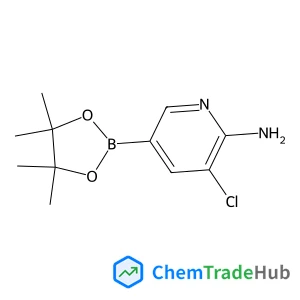
3-Chloro-5-(4,4,5,5-tetramethyl-1,3,2-dioxaborolan-2-yl)-2-pyridinamine
CAS号:
1032758-99-8
分子式:
C11H16BClN2O2
推荐供应商





免责声明
本页面提供的学术期刊信息仅供参考和研究使用。我们与任何期刊出版商均无关联,也不处理投稿事宜。如有投稿相关咨询,请直接联系相关期刊出版商。
如发现页面信息有误,请发送邮件至 support@chemtradehub.com 联系我们。我们将及时核实并处理您的问题。