









Green synthesis of heterolayered 2D nanohybrid catalytic hydrogel cell for environmentally-friendly water splitting
文献信息
发布日期
2023-12-17
DOI
10.1039/D3TA06580D
影响因子
12.732
作者
Seonmyeong Noh, Thanh-Hai Le, Changjun Kim, Minseong Ju, Haney Lee
查看原文
摘要
In this study, a straightforward, eco-friendly strategy for the phase modulation of MoS2 in 2D materials was developed for green-solvent-phase co-exfoliation and subsequent solvent-free drying/annealing processes, yielding binary-metal oxide nanoparticulate-decorated heterolayered 2D nanohybrids. As a green solvent, ethanol with poly(N-vinyl-2-pyrrolidone) provided an effective surface tension for liquid-phase exfoliation of the 2D materials (MoS2 and graphene). Electron injection of binary metal oxides (NiFe2O4) and graphene functional groups to the Mo 4d orbital played an important role in the modulating phase conversion of semiconductive MoS2 to metallic MoS2 in the nanohybrids. Moreover, the introduction of MoS2 and graphene tuned the diameter (∼6 nm) and effective crystalline domains of the NiFe2O4 nanoparticles in the resulting nanohybrid. The electrocatalytic activity of the nanohybrids exhibited outstanding performance in the hydrogen and oxygen evolution reactions due to the synergetic effects of the modified MoS2/graphene/NiFe2O4 components. Density functional theory calculations and the Tafel slope indicated that the combination of 1T-MoS2/graphene/NiFe2O4 nanohybrids achieved a lower activation barrier at the first hydrogen absorption step and the RDS for the interaction of adsorbed oxygen atoms with hydroxide in the hydrogen and oxygen evolution reactions. The nanohybrids were prepared as symmetric electrodes to assemble an environmentally-benign hydrogel cell for water-splitting systems, exhibiting excellent stability in deswelling–swelling cycles. We believe that the proposed process allows for phase-modulating 2D materials while alleviating the negative impact on the environment, creating desirable functionality for various catalytic applications.
相关文献
Caging and solvent effects on the tautomeric equilibrium of 3-pyridone/3-hydroxypyridine in the ground state: a study in cyclodextrins and binary solvents
Osama K. Abou-Zied, Othman I. K. Al-Shihi
2009-04-20
Paper
DOI: 10.1039/B823405A
Comparison of the non-radiative decay mechanisms of 4-pyrimidinone and uracil: an ab initio study
Vassil B. Delchev, Andrzej L. Sobolewski, Wolfgang Domcke
2010-04-20
Paper
DOI: 10.1039/B922505F
Tailoring the synthesis of supported Pdcatalysts towards desired structure and size of metal particles
Gatla Suresh, Jörg Radnik, Venkata Narayana Kalevaru, Marga-Martina Pohl, Matthias Schneider, Bernhard Lücke, Andreas Martin, Neetika Madaan, Angelika Brückner
2010-03-23
Paper
DOI: 10.1039/B920464D
Excited-state lifetime of propadienylidene, l-C3H2
Bastian Noller, Markus Margraf, Christian Schröter, Thomas Schultz, Ingo Fischer
2009-04-16
Paper
DOI: 10.1039/B901765H
Multireference perturbation theory can predict a false ground state
Cristopher Camacho, Renzo Cimiraglia, Henryk A. Witek
2010-03-26
Communication
DOI: 10.1039/C000196A
Thermodynamic investigation of the binding of dissymmetric pyrenyl-gemini surfactants to DNA
Shawn D. Wettig, Rubena Deubry, Javed Akbar, Tranum Kaur, Haitang Wang, Tatiana Sheinin, Jamie W. Joseph, Roderick A. Slavcev
2010-03-25
Paper
DOI: 10.1039/B923817D
Solubilization of flurbiprofen within non-ionic Tween 20 surfactant micelles: a 19F and 1H NMR study
Pieter Saveyn, Ellen Cocquyt, Wuxin Zhu, Davy Sinnaeve, Katrien Haustraete, José C. Martins, Paul Van der Meeren
2009-04-16
Paper
DOI: 10.1039/B822327K
A fast redox-induced switching mechanism in a conformationally controllable molecular thread in solution‡
Costantino Zazza, Andrea Amadei, Nico Sanna, Massimiliano Aschi
2010-03-05
Communication
DOI: 10.1039/B926627E
Frequency of negative differential resistance electrochemical oscillators: theory and experiments
István Z. Kiss, Lindsey N. Pelster, Mahesh Wickramasinghe
2009-05-08
Paper
DOI: 10.1039/B904650J
Supersonic jet UV spectrum and nonradiative processes of the thymine analogue 5-methyl-2-hydroxypyrimidine
Simon Lobsiger, Hans-Martin Frey, Samuel Leutwyler
2010-03-06
Paper
DOI: 10.1039/B924395J
您可能还喜欢
化合物问答
十二烷基磺酸钠(CAS号:2386-53-0)的主要用途是什么?
十二烷基磺酸钠主要用作表面活性剂,广泛应用于洗涤剂、肥皂、化妆品和工业清洁产品中。它能有效去除油脂和污垢,常用于制造洗发水、沐浴露、洗衣粉和金属清洗剂。此外,它...
2386-53-01-Dodecanesulfonic a...
化合物问答
5-羟基异喹啉(CAS号:2439-04-5)适用哪些法规指南?
5-羟基异喹啉作为化学品,主要适用的法规包括GHS全球化学品统一分类和标签制度,REACH法规等。GHS将5-羟基异喹啉分类为皮肤腐蚀/刺激类别2,严重眼损伤/...
2439-04-55-Isoquinolinol
化合物问答
在合成中是否有FIDAS-5 | Wnt(CAS号:1391934-98-7)的替代品?
合成中可以考虑使用类似结构的化合物,如4-[(E)-2-(2-氯-6-氟苯基)乙烯基]-N-甲基苯胺的类似物或衍生物作为替代品。这类化合物可能具有相似的生物活性...
1391934-98-74-[(E)-2-(2-Chloro-6...
化合物问答
(R)-tert-Butyl 2-(5-bromo-1H-imidazol-2-yl)pyrrolidine-1-carboxylate(CAS号:1370600-56-8)通常如何合成?
该化合物通常通过如下步骤合成:首先,将4-溴-1H-咪唑与对甲苯磺酸在乙酸乙酯中反应,得到中间体5-溴-1H-咪唑-2-甲酸乙酯。然后,该中间体与2-甲基-2-...
1370600-56-82-Methyl-2-propanyl ...
化合物问答
处理4-(吡咯烷-1-基)环己酮(CAS号:10421-18-8)时应注意哪些实验室安全事项?
处理4-(吡咯烷-1-基)环己酮时,应佩戴手套、护目镜和实验室外套,以防止直接接触或吸入。在通风橱中操作,确保良好的通风条件。一旦发生泄漏,应立即清理并使用适当...
10421-18-84-(Pyrrolidin-1-yl)c...
化合物问答
如何处理含有异麦芽糖醇(CAS号:534-73-6)的废料?
含有异麦芽糖醇的废液应首先进行分类收集,避免与其他化学品混合。对于小规模的废液,可以通过焚烧或加入特定的化学试剂进行无害化处理。对于大规模的废液,建议联系专业的...
534-73-66-O-alpha-D-Glucopyr...
化合物问答
7-甲基壬酸(CAS号:41653-89-8)的主要用途是什么?
7-甲基壬酸主要用于有机合成领域,作为合成其他化合物的原料。此外,它还可能作为一种中间体用于药品制造和香料合成,但具体用途需要根据其具体的化学结构和反应特性来确...
41653-89-87-Methylnonanoic aci...
化合物问答
N-甲氧基-N-甲基甲基吡啶羧酰胺(CAS号:148493-07-6)应用于哪些行业?
N-甲氧基-N-甲基甲基吡啶羧酰胺在医药领域有一定的应用,作为一种潜在的药物前体或中间体。此外,该化合物也可能应用于聚合物改性剂、传感器材料等。由于其独特的化学...
148493-07-6N-Methoxy-N-methylpi...
化合物问答
什么是惕各酸香叶酯(CAS号:7785-33-3)?
惕各酸香叶酯是一种化合物,化学名称为(2E)-3,7-二甲基-2,6-辛二烯-1-基(2E)-2-甲基-2-丁烯酸酯。它是一种具有香叶香气的化合物,分子式为C1...
7785-33-3(2E)-3,7-Dimethyl-2,...
化合物问答
1-环丁基哌嗪(CAS号:132800-13-6)安全吗?
1-环丁基哌嗪在适当的操作条件下是相对安全的,但如遇明火或高热会释放有毒气体。操作时应佩戴防护眼镜和手套,避免吸入或接触皮肤、眼睛。
132800-13-61-Cyclobutylpiperazi...
来源期刊
Journal of Materials Chemistry A

CiteScore:
19.5
自引率:
4.7%
年发文量:
2211
Journal of Materials Chemistry A, B & C cover high quality studies across all fields of materials chemistry. The journals focus on those theoretical or experimental studies that report new understanding, applications, properties and synthesis of materials. The journals have a strong history of publishing quality reports of interest to interdisciplinary communities and providing an efficient and rigorous service through peer review and publication. The journals are led by an international team of Editors-in-Chief and Associate Editors who are all active researchers in their fields. Journal of Materials Chemistry A, B & C are separated by the intended application of the material studied. Broadly, applications in energy and sustainability are of interest to Journal of Materials Chemistry A, applications in biology and medicine are of interest to Journal of Materials Chemistry B, and applications in optical, magnetic and electronic devices are of interest to Journal of Materials Chemistry C. More than one Journal of Materials Chemistry journal may be suitable for certain fields and researchers are encouraged to submit their paper to the journal that they feel best fits for their particular article. Example topic areas within the scope of Journal of Materials Chemistry A are listed below. This list is neither exhaustive nor exclusive. Artificial photosynthesis Batteries Carbon dioxide conversion Catalysis Fuel cells Gas capture/separation/storage Green/sustainable materials Hydrogen generation Hydrogen storage Photocatalysis Photovoltaics Self-cleaning materials Self-healing materials Sensors Supercapacitors Thermoelectrics Water splitting Water treatment
推荐化合物
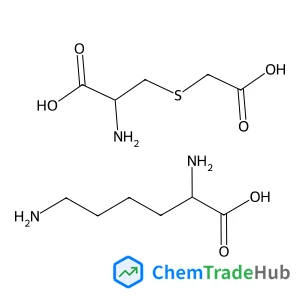
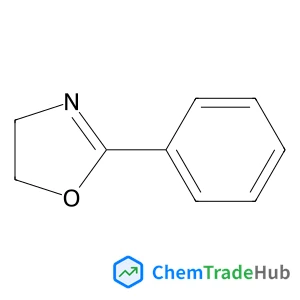
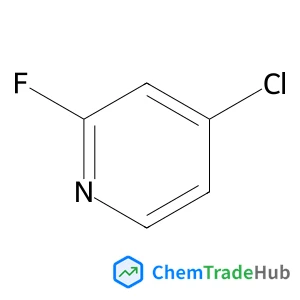
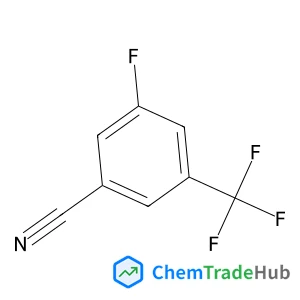
推荐供应商



免责声明
本页面提供的学术期刊信息仅供参考和研究使用。我们与任何期刊出版商均无关联,也不处理投稿事宜。如有投稿相关咨询,请直接联系相关期刊出版商。
如发现页面信息有误,请发送邮件至 support@chemtradehub.com 联系我们。我们将及时核实并处理您的问题。